Renting means living with someone else’s walls. The lease says no holes, no paint, nothing that leaves a mark, and the security deposit is the quiet leverage that keeps everyone honest. So most renters freeze. They spend years inside beige boxes because every decorating instinct they have starts with a drill or a paint roller.
I think that is a false limit. A rental can look collected, warm, and genuinely yours without a single screw going into the wall. The trick is to stop fighting the constraint and design around it.
Small spaces raise the stakes rather than lower them. When you only have a few hundred square feet, every wall is prime real estate, and one blank rental wall drags the whole room down with it. You cannot afford to leave three of your four walls empty just because you are nervous about the deposit.
This page is the map. Everything linked below is small-space, renter-first, and move-out-safe: no drilling, no painting, nothing that costs you your deposit on the way out.
My one rule: if it goes up, it has to come down clean
My whole approach comes down to that single test. It kills most of the bad ideas before they start. Cheap hooks that pull paint, over-tightened tension rods that dent drywall, giant vinyl decals that lift the primer when you peel them. All of it fails the come-down-clean test.
So I build rentals out of five methods, and almost everything I recommend fits one of them.
The five no-drill methods I actually use
Command strips and quality adhesive. Command picture-hanging strips and hooks are the workhorse. Used inside their weight rating and removed by stretching the tab straight down (never yanking outward), they release without a mark. The failures I see are always overloading or peeling sideways.
Tension. A tension rod braces between two surfaces with zero hardware. It carries curtains, adds a second shelf inside a closet, and holds a slim rod inside a window frame. Nothing touches the wall.
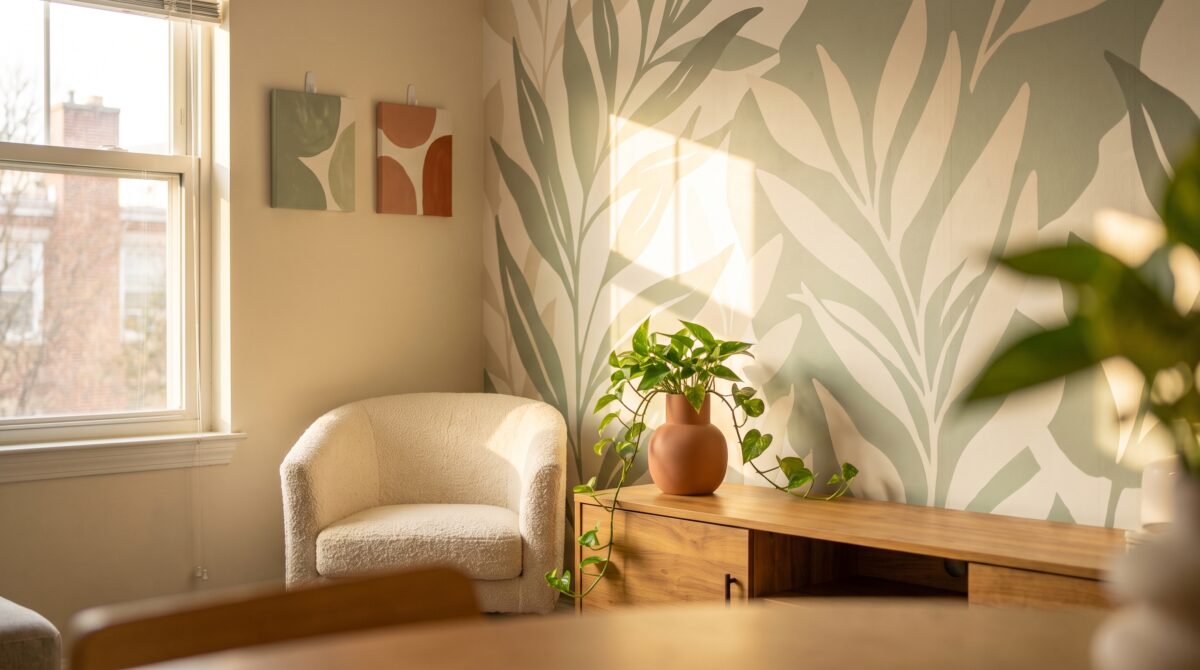
Peel-and-stick. Removable wallpaper, tile, and murals have gotten genuinely good. The honest catch is that “removable” depends on your paint. Fresh flat latex is the risky surface, so I test a low corner first and leave it a week before committing to a whole wall.
Leaning. The most underrated move in a small rental. A ladder shelf, a large framed print, a floor mirror propped against the wall. Zero installation, instant height, and it walks out with you when the lease ends.
Freestanding. Anything that stands on the floor and does its job without a wall anchor: a slim bookcase, a rolling cart, a bar cart standing in for a nightstand. In a rental, floor-standing beats wall-mounted almost every time.
Common mistakes renters make (and how to skip them)
The mistakes are predictable, and they cost deposits.
The big one is trusting adhesive on textured or freshly painted walls. New paint needs about three weeks to fully cure, and a strip stuck to uncured paint takes the paint with it when it comes off.
The second is going permanent too fast. People commit a full wall of peel-and-stick before testing a single strip, then find at move-out that it lifts the primer in sheets.
The third is scale. Renters under-decorate out of fear, hang one tiny frame dead-center on a big wall, and the room reads unfinished. Leaning a large piece, or clustering several small frames with strips, fixes it in an afternoon.
The last one is forgetting the exit. Every choice should have a removal plan before it goes up. If I cannot picture taking something down in ten minutes without a putty knife, I do not put it up.
Below I have grouped every renter-safe guide on the site by the problem it solves: walls, storage, windows, and seasonal styling. Start with whichever room is bugging you most.
Walls without holes
- No-drill floating shelves for small apartments. The Command-strip and adhesive picks I trust for books and plants when you cannot put a bracket in the wall.
- How to install wall bookshelves in a rental without losing your deposit. The four mounting methods that actually hold, ranked, plus the ones that quietly wreck drywall.
- Lean-and-go ladder bookshelves for renters. Real-wood and tension-mount leaners that give you vertical storage with zero installation.
- Dark cottagecore wall decor that keeps your deposit. Moody tapestries, framed prints, and battery sconces that hang with strips, not screws.
- The no-drill faux headboard tapestry trick. A large tapestry behind the bed reads as a headboard and hangs from one strip-mounted rod.
- Removable peel-and-stick wall art that comes off clean. My 12 no-nail murals, decals, and framed picks, with the peel test I run before committing to a wall.
No-damage storage
- Over-the-door closet storage organizers. Hanging organizers that use the one surface every rental has going spare: the back of a door.
- Small bedroom storage that uses the headboard wall. Picture ledges and floating-look nightstands that turn dead space above the bed into real storage.
- Nightstand storage when there is no room beside the bed. Clip-on shelves and slim wall-mounts for a phone, a glass of water, and a charger where a real nightstand will not fit.
- Cluttercore for renters on a budget. How to fake a collected, layered shelf for under $25 a piece without it tipping into actual mess.
Windows and light, no drilling
- No-drill cordless blinds for renters. Damage-free shades that mount with tension or adhesive brackets and come down clean at move-out.
- No-drill blackout curtains for renters. Tension, adhesive, and magnetic mounting for real darkness without a single screw in the frame.
- No-wiring plug-in and battery wall sconces. Warm sconce light with no electrician and no junction box, hung on strips or a tension surface.
Seasonal and aesthetic, renter-safe
- Cozy fall decor for a small apartment. Layered throws, amber light, and door styling that warms a rental for autumn, all no-drill.
- No-drill Halloween decor for small apartments. Tasteful, moody Halloween that goes up with strips and comes down without a trace.
- Dark cottagecore for renters who cannot paint. How to get the moody, mushroomy, candlelit look when every wall has to stay landlord-beige.
- The mob wife aesthetic in a small rental bedroom. Faux fur, gold, and drama scaled to a tiny room, with one signature piece per zone.
- Afrohemian decor for a renter’s small apartment. Eight no-drill steps with authentic mudcloth, raffia, and earth tones that layer without holes.
Where to go next
This pillar sits alongside a few sibling hubs. If you came for one specific problem, jump straight across.
- Small-Space Storage. Every small-apartment storage guide in one place, from closet doors to under-bed.
- Dark Cottagecore. The full moody, witchy, cottage-in-the-woods aesthetic hub, all scaled for renters.
- Small-Apartment Aesthetics. Browse every aesthetic I cover for tiny spaces, from mob wife to afrohemian.
Renter decor FAQ
Can I really decorate a rental without drilling any holes?
Yes. Between Command strips, tension rods, peel-and-stick, leaning, and freestanding pieces, you can cover walls, windows, lighting, and storage without a drill. The whole hub above is built on those five methods.
Will Command strips or peel-and-stick damage the paint at move-out?
Not if you respect two rules. Stay inside the product’s weight rating, and remove strips by stretching the tab slowly straight down instead of pulling outward. The one real risk is freshly painted walls, so test a low corner and give new paint about three weeks to cure first.
What is the safest way to hang curtains in a rental?
A tension rod inside the window frame, or adhesive and magnetic curtain brackets on a metal frame. Both hold real curtains and leave nothing behind. My no-drill blackout curtain guide walks through each option.
How do I add storage to a small apartment without wall anchors?
Go freestanding and vertical. Leaning ladder shelves, over-the-door organizers, and slim floor bookcases give you storage that never touches the wall and moves with you.
Is peel-and-stick wallpaper actually removable?
Usually, but it depends on your wall. It lifts cleanly off cured satin or semi-gloss paint and is riskiest on fresh flat latex. Always test one strip in an inconspicuous spot for a week before doing a full wall.