You rented a place with blinds you did not choose. Maybe they are yellowed vinyl mini blinds with a bent slat, maybe a cord is snapped, or maybe the window is bare and the streetlight pours straight onto your pillow at night. Either way, you cannot drill fresh brackets into the frame without risking your deposit, and you want the fix gone clean the day you hand back the keys.
That is the whole case for no-drill cordless shades. They press, stick, or hang into place with zero screws, they raise and lower without a dangling pull cord, and they come off without a mark. The cordless part matters beyond tidiness. Corded blinds are a genuine strangulation risk for young kids and pets, which is why US safety regulators now push cord-free coverings in any home where children live or visit.
One thing before the picks. This guide sticks to blinds and shades, the kind that raise and lower on the window itself. Curtains are a different no-drill route to privacy and darkness, and I cover those separately. Everything below goes up without a drill and stays firmly renter-safe.
This post contains affiliate links. If you buy something through one of my links, I may earn a small commission at no extra cost to you. I only recommend products I’d actually use myself.
As an Amazon Associate I earn from qualifying purchases.
LazBlinds Cordless Blackout Cellular Shade (No Tools, No Drill)
For a renter, this is the shade that does everything the headline promises. A patented spring rod tensions it into the window recess in about thirty seconds, with no screws, no brackets, and no holes to explain at move-out. The silver-lined honeycomb genuinely blacks the room out and insulates the glass, it raises and lowers cordless and child-safe, and it lifts right back out clean. It is the only cellular shade here that needs no extra hardware at all, and if you buy one thing off this list, buy this.
Check price on AmazonHow I picked
- No drill, no exception. Every pick mounts with tension, adhesive, or its own peel-and-stick strip. Where a shade only shipped with screw brackets, I paired it with a no-drill bracket instead.
- Comes off clean. I favored mounts that pop out or peel away without gouging the frame or pulling paint, because move-out day is the entire point of shopping this way.
- Cordless, child and pet safe. Nothing here has an accessible pull cord. Lift-and-lock bottom rails, spring rollers, and side tabs only.
- Honest about light. I flag which shades filter light, which darken a room, and which truly black it out, since those labels get thrown around loosely.
- Right mount for the window. I note whether each wants a deep enough recess for an inside mount or a smooth frame for adhesive, so you buy the one your window can actually take.
- Buyable now. I verified each shade on a live Amazon listing before it made the cut. Tier language (budget, mid, splurge) reflects where each sits, since prices move.
The no-drill mounting methods, decoded
Before you shop, it helps to know the four ways a shade goes up without a screw. Each suits a different window, and buying the wrong method for your frame is how people end up returning things.
Tension and spring inside-mount. The shade, or a pair of tension brackets, presses against the inside walls of the window recess and holds by spring pressure alone. Nothing touches the wall. This is the tidiest look because the shade sits flush inside the frame, and it suits a window with a deep enough recess. The catch is that depth: you need clearance front to back, and a very wide or heavy shade can creep down over time, so this route rewards standard-width windows.
No-screw adhesive brackets. Peel-and-stick or Command-style brackets stick to a smooth frame and cradle the shade’s top rail. They rescue the windows where the recess is too shallow to grip but the frame face is smooth, think painted wood, vinyl, or metal. Keep them off textured surfaces and flat matte paint, which the adhesive fights to hold, and warm the pads with a hairdryer at removal so they let go instead of lifting paint.
Peel-and-stick temporary shades. The cheapest route of all is a pleated paper or fabric shade with its own adhesive strip along the top edge. You trim it to width with scissors, press it to the inside of the frame, and lift it with a clip. It weighs almost nothing and peels off without a trace, which makes it my go-to for a sublet or an awkward window. It is the same forgiving logic behind my removable wall art picks for renters.
Tension and spring rods. For a lightweight fabric shade, or as a fix for a stubborn light gap, a spring-tension rod wedged inside the recess carries the load with no hardware at all. It is the same no-drill trick I lean on elsewhere, including the tension-rod hang behind my no-drill headboard guide.
Two numbers decide everything. Measure the window width at the top, middle, and bottom, then use the narrowest for an inside mount. Next measure the recess depth front to back, since most cordless cellular shades want an inch or two of clearance to sit flush. If the recess is too shallow to grip, mount on the frame face with adhesive brackets and add an inch of overlap on each side to cut the light leak.
How dark do you actually need?
The words on the box get used loosely, so match the shade to the room before you match it to your taste.
Light-filtering shades, a single honeycomb cell or a sheer roller, soften the daylight and give you daytime privacy while the window still glows. They are lovely in a living room. They will not darken a bedroom, and at night a lit room stays partly visible from the street.
Room-darkening shades, a thicker fabric or a double cell, block most of the light and most of the view. This is the right level for a bedroom where you want dim rather than pitch black, and it is where most renters land.
Blackout shades use an opaque, coated fabric that kills the light through the material itself. The honest caveat is the edges. Light still slips around the sides of any shade, so a shift worker or anyone blacking out a nursery should pair a blackout shade with the side channels and light-blocking strips in the last group.
Cordless cellular and honeycomb shades: the workhorse
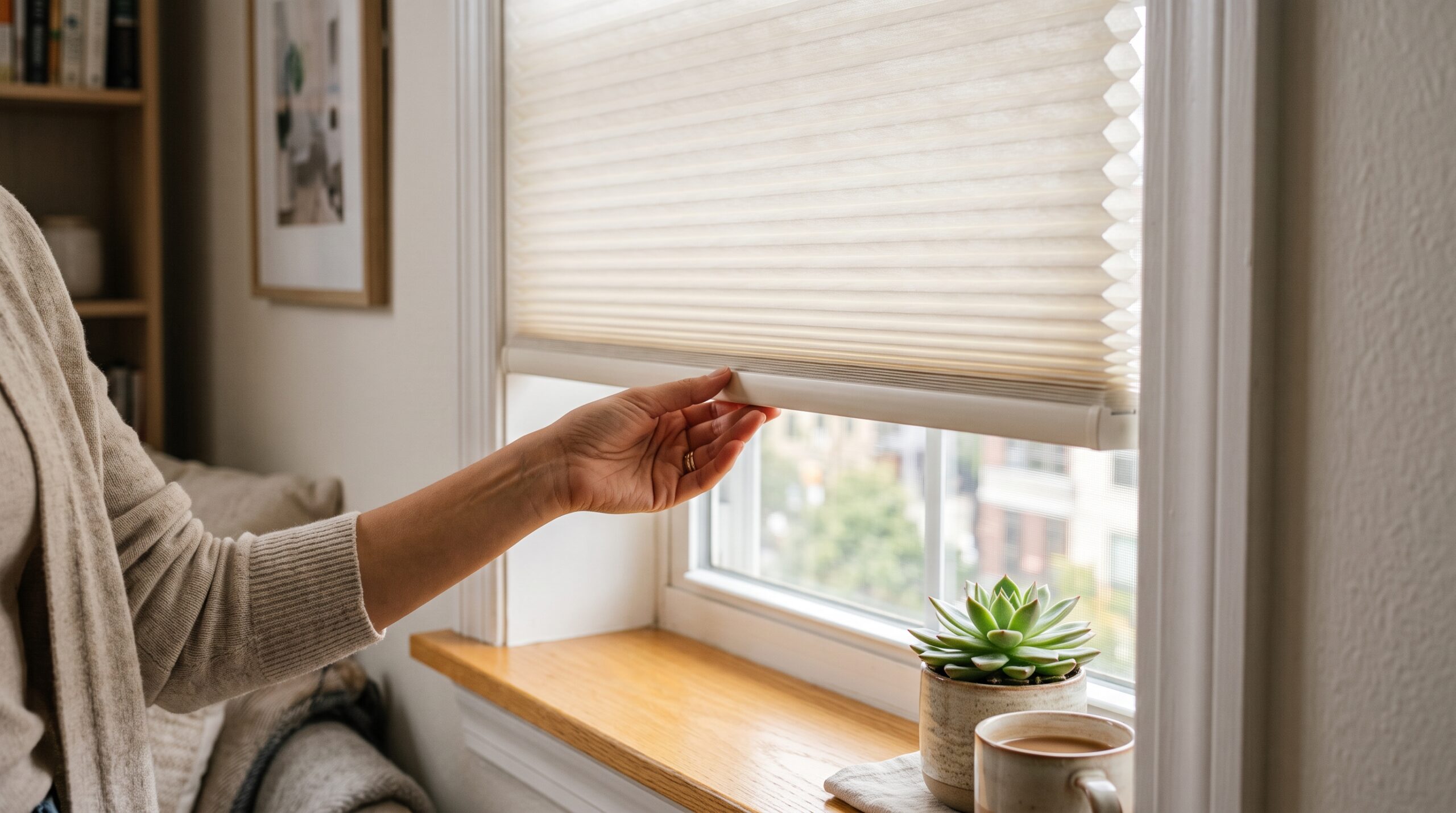
If I could put only one kind of no-drill shade on a small-space window, it would be a cordless cellular shade. The honeycomb cells trap a layer of air, so the same shade that buys you privacy also slows the draft and the heat at the glass, which matters in an apartment where the window is often your worst-insulated wall. Cellular shades have worked this way since the mid-1980s. Paired with tension mounting brackets, they go in with no drill and sit flush inside the frame. These are the inside-mount picks I would start with, and my small-bedroom setups lean on them for exactly this reason.
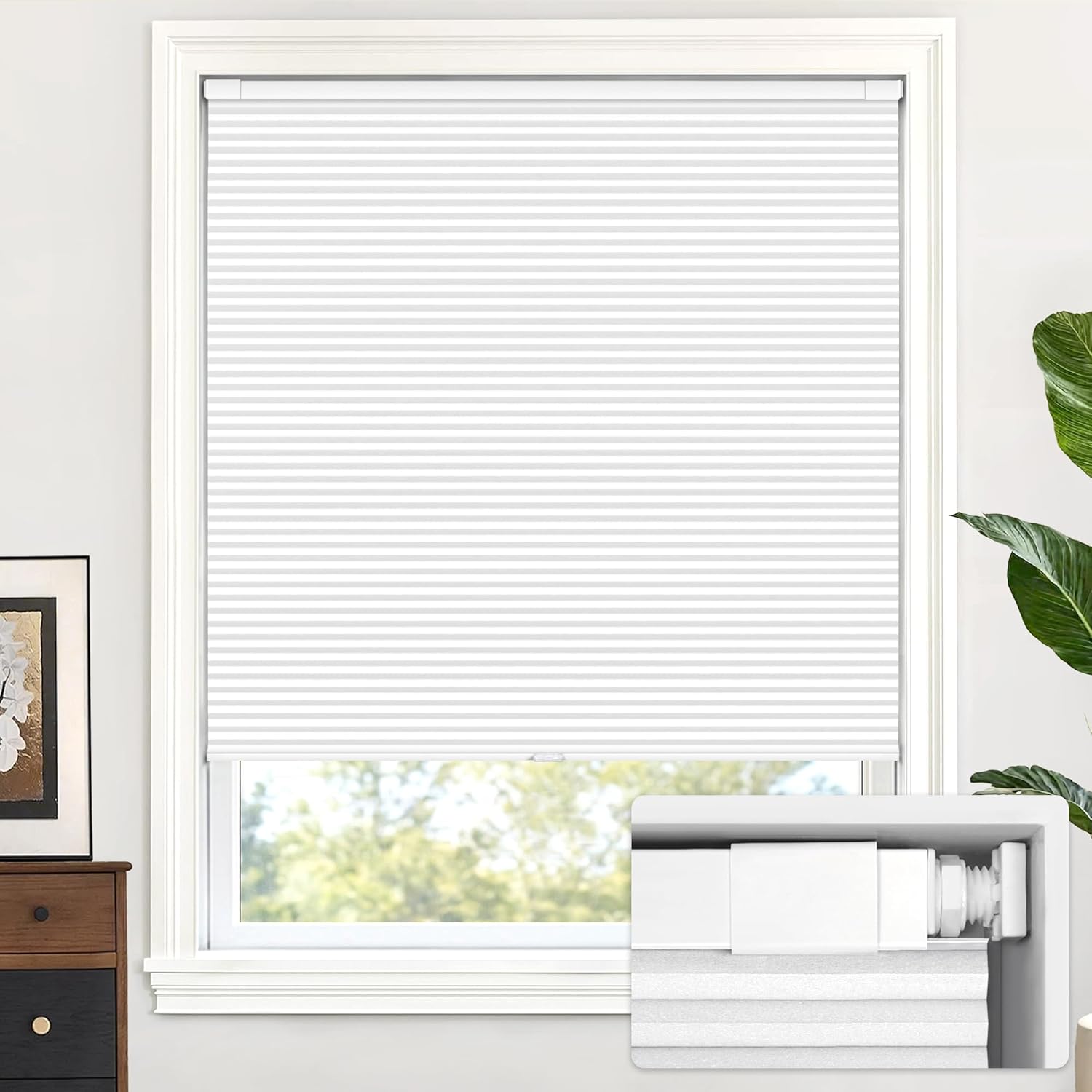
LazBlinds Cordless Blackout Cellular Shade (No Tools, No Drill)
This is the shade I hand to every renter who asks. The patented spring rod tensions into the recess in about thirty seconds with no screws, no brackets, and no holes, and the silver-lined honeycomb actually blacks the window out instead of merely dimming it. Cordless, insulating, and gone without a trace on move-out day, it answers the whole brief in one shade.
Check price on AmazonNot for: outside mounts or very shallow frames; it needs at least a 1.2-inch inside recess.
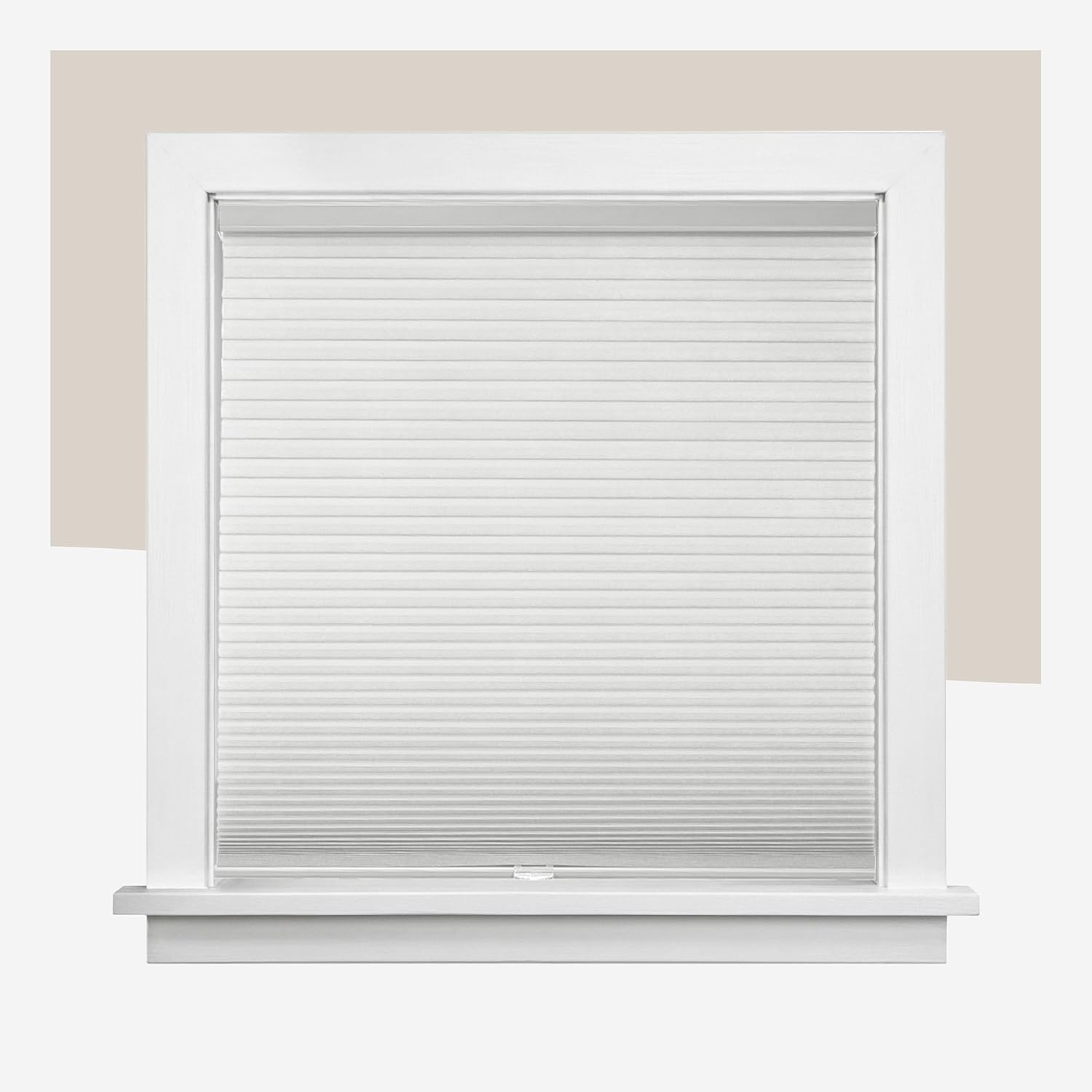
CHICOLOGY Cordless Room-Darkening Cellular Shade
If your apartment window is the coldest wall in the room, this is the shade that fixes it. The single-cell honeycomb rates around R-3, so it slows heat and cold at the glass while the room-darkening fabric cuts most of the incoming light. It ships with screw brackets, so mount it no-drill with a pair of tension mounting brackets and it goes up clean.
Check price on AmazonNot for: renters who want true pitch-black; this darkens rather than blacks out.
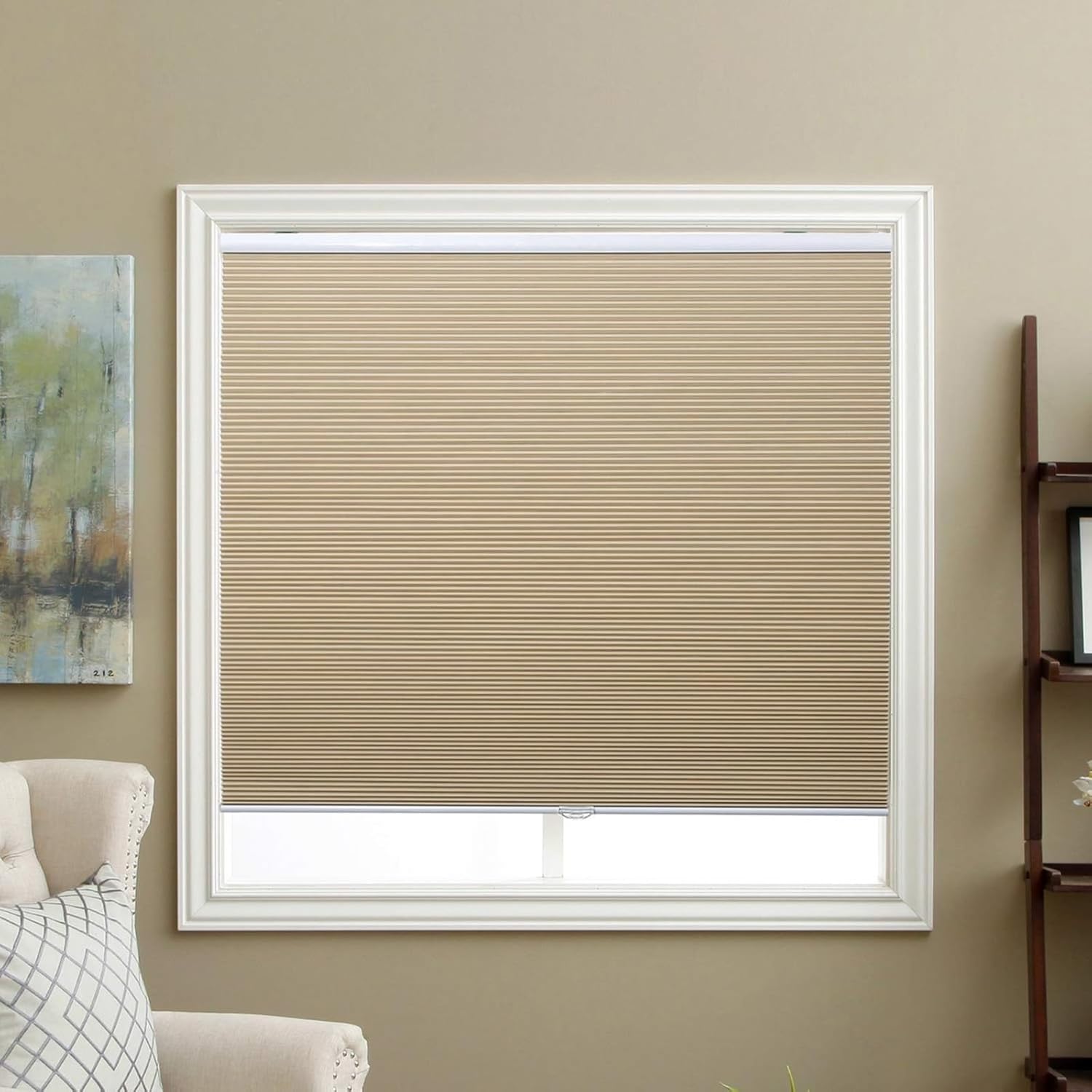
SBARTAR Blackout Cordless Cellular Shade
The value blackout of the group, and a genuinely good one. The honeycomb blocks light and UV, adds a little sound and thermal insulation, and lifts on a cordless bottom rail that is safe around kids and pets. Like most cellular shades it comes with screw brackets, so add tension mounting brackets to keep the frame hole-free.
Check price on AmazonNot for: very shallow recesses; it needs a 2-inch depth for an inside mount.
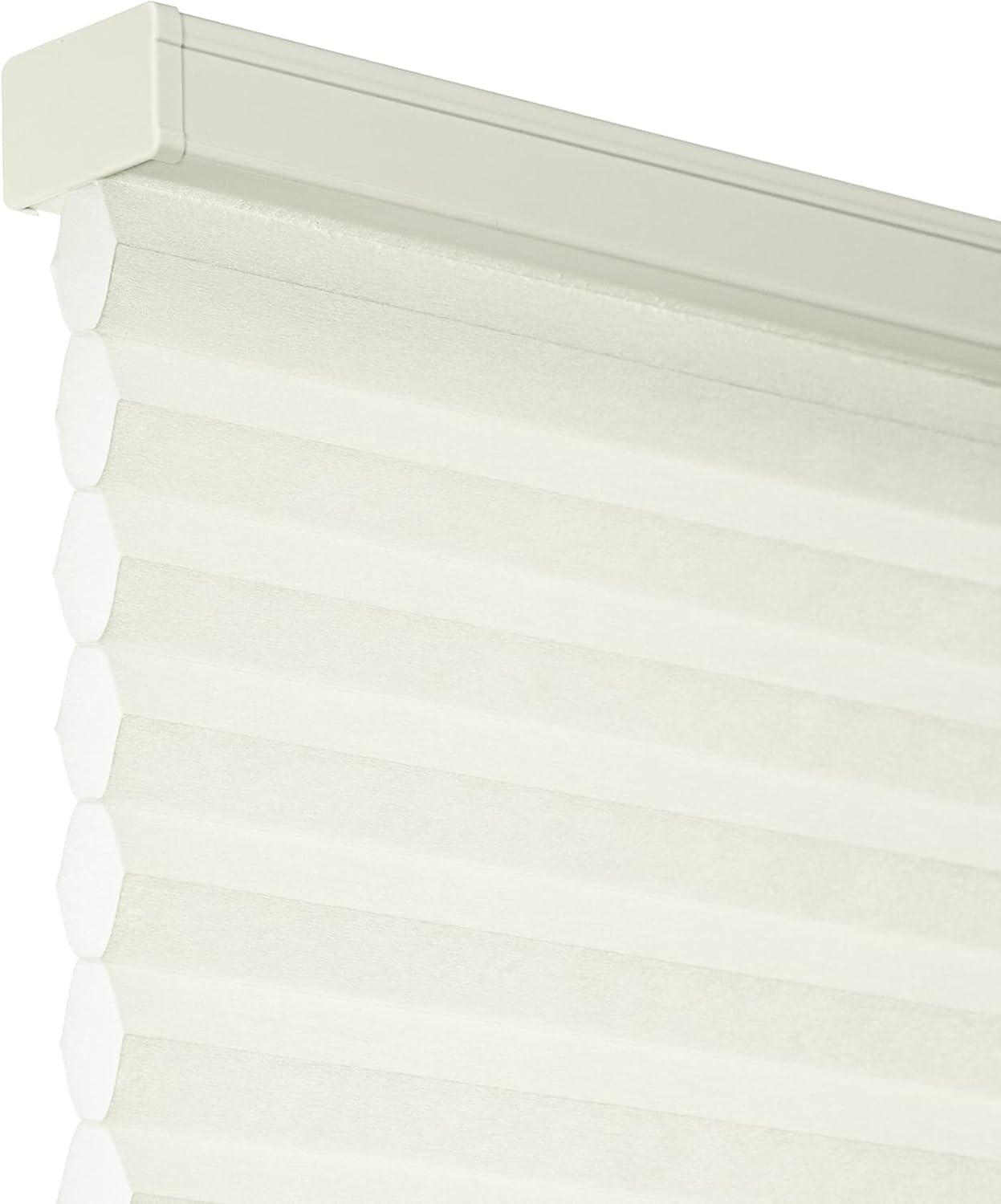
CHICOLOGY Light-Filtering Cordless Cellular Shade
When you want to keep the daylight but lose the fishbowl feeling, a light-filtering honeycomb is the answer. This one glows a soft neutral white, insulates like its darker siblings, and drops a full 72 inches, which suits a tall window or a balcony door. Pair it with tension mounting brackets for the no-drill install.
Check price on AmazonNot for: bedrooms that need darkness; this softens light, it does not block it.
Cordless roller and roman shades with no-drill mounts

When you want a cleaner, flatter line than a honeycomb, a roller or a soft roman shade is the move. A roller gives you a crisp modern edge and, in a blackout fabric, the darkest sleep of the bunch. A fabric roman brings the softness of a curtain without the sprawl, which earns its keep in a tight room. Both come cordless, and both mount here with adhesive or tension brackets so no screw goes near the frame.
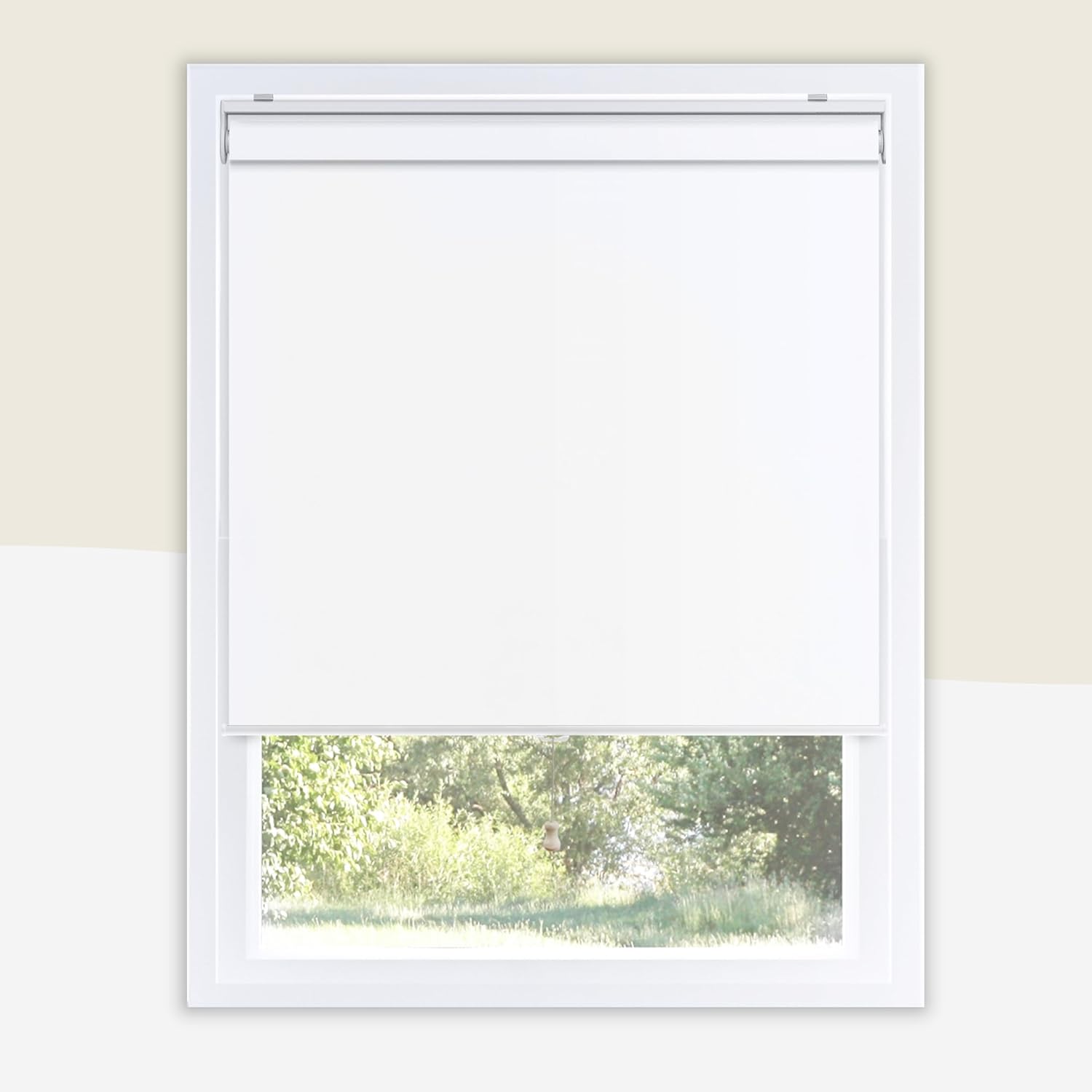
CHICOLOGY Cordless Room-Darkening Roller Shade
For a clean, modern flat line, a roller beats a honeycomb, and this cordless one pulls down smooth and darkens the room without a cord in sight. It is a real screw-mount shade rather than a temporary one, so I put it up with a no-drill tension rod or adhesive brackets across the recess. The crisp white reads tidy in a small space.
Check price on AmazonNot for: anyone who wants a soft, gathered look; this is a flat, minimal shade.
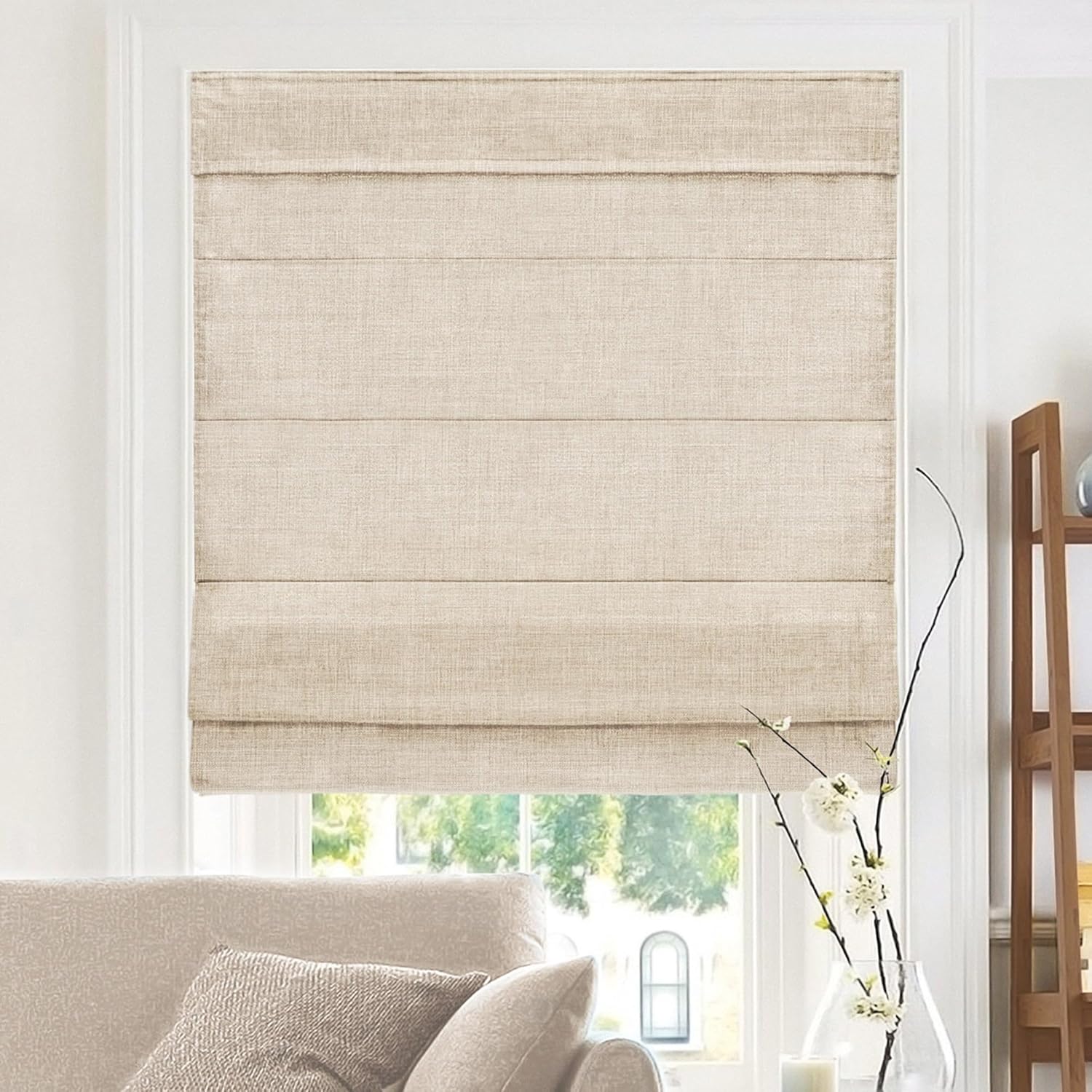
CHICOLOGY Cordless Belgian Flax Roman Shade
This is the shade for when you want the softness of a curtain without the sprawl. The Belgian flax fabric gathers into rich horizontal folds and brings real texture to a plain rented window, and it stays cordless and child-safe. It filters light rather than blocking it, and it arrives true-to-size with no cutting.
Check price on AmazonNot for: blackout seekers; expect a soft glow and a small side light gap.
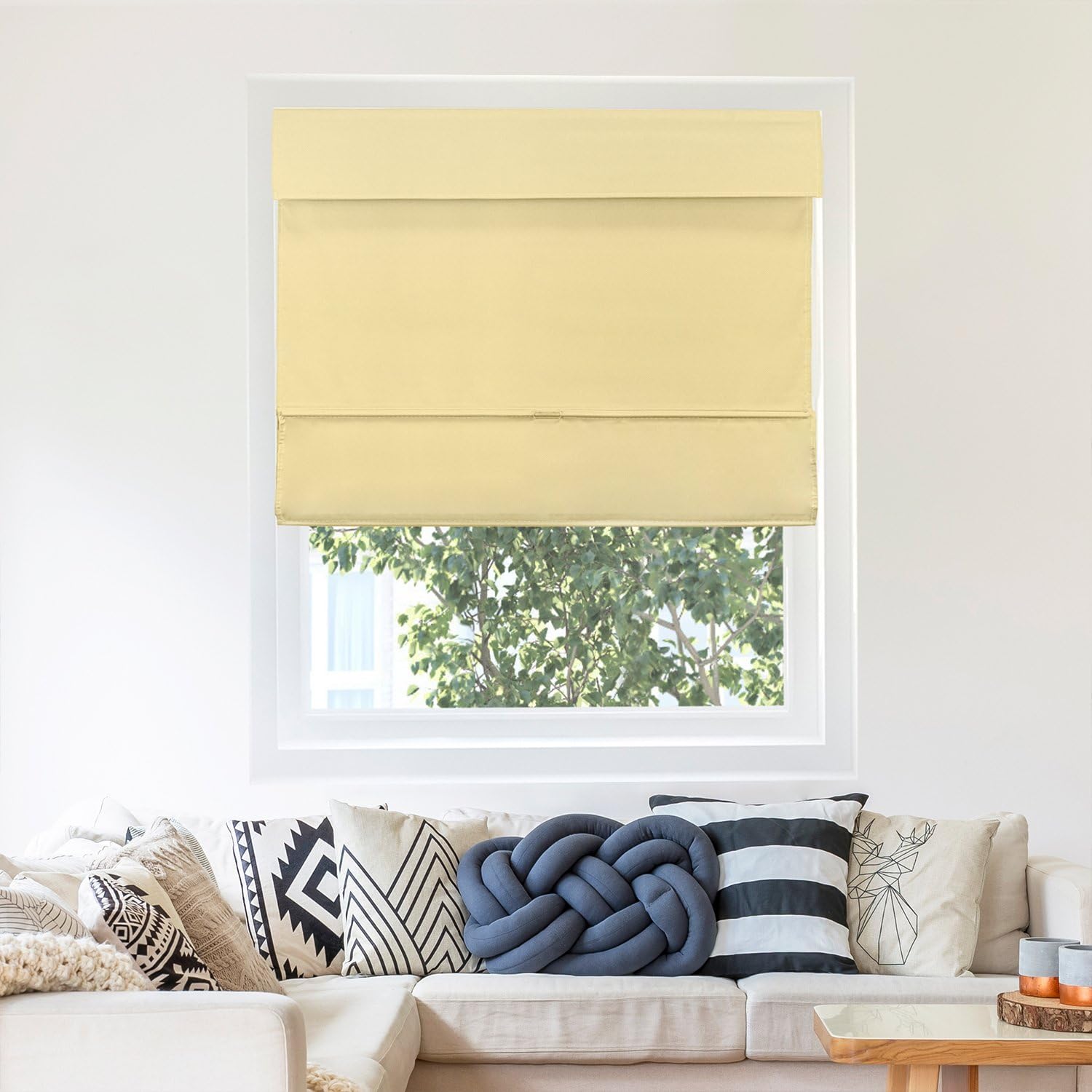
CHICOLOGY Cordless Magnetic Thermal Roman Shade
The affordable way into the roman-shade look, with a thermal backing that adds a little insulation as a bonus. It hangs cordless, includes its own valance, and the warm almond tone settles into a cozy room. Treat it as gentle light filtering, and mount it no-drill with the tension rod or adhesive brackets.
Check price on AmazonNot for: sleek-modern rooms; the gathered folds lean traditional.
Temporary peel-and-stick pleated shades: cut to fit, fully removable
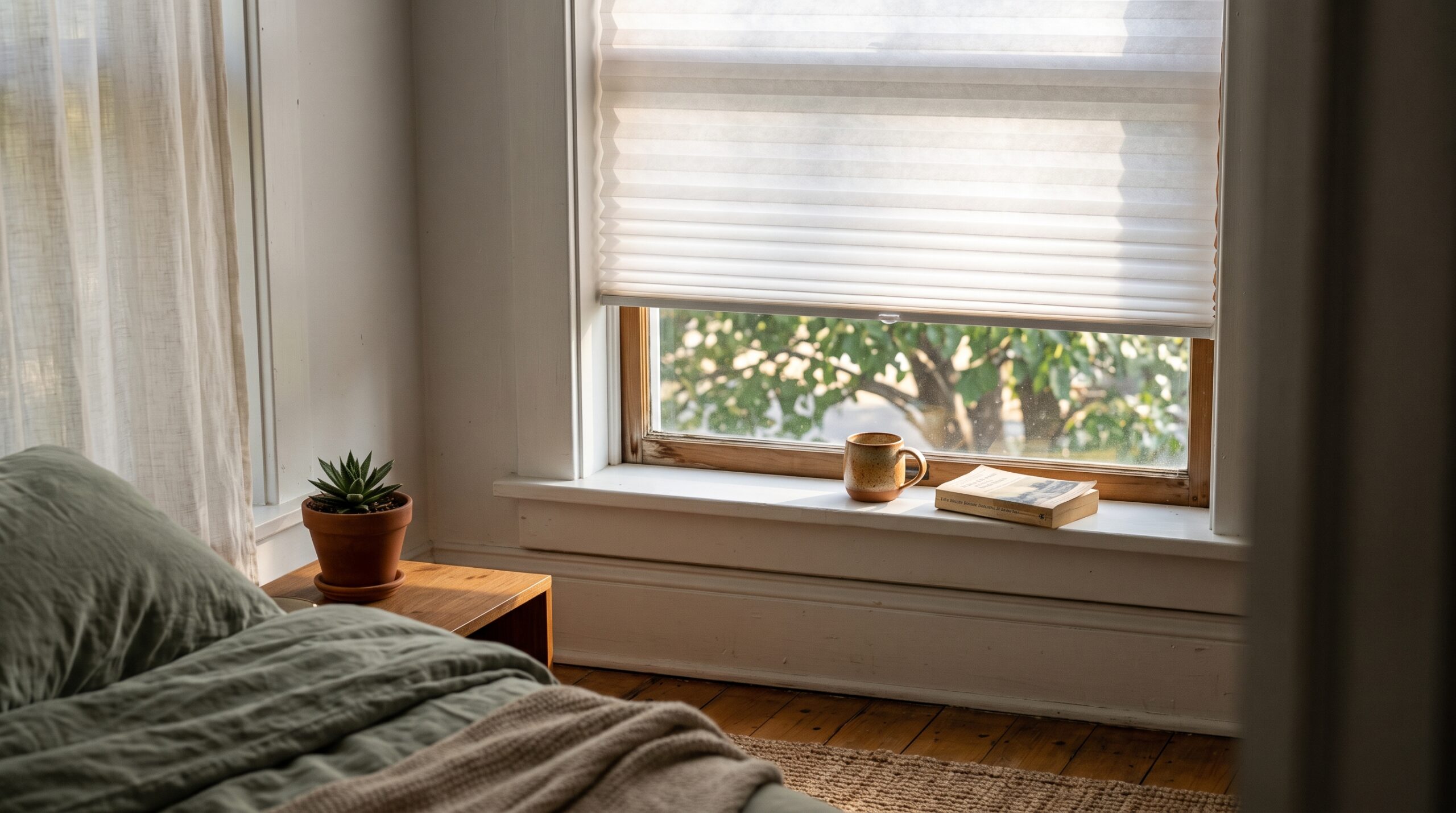
For the shortest lease, the oddest window, or the tightest budget, nothing beats a peel-and-stick pleated shade. You trim it to width with scissors, press the adhesive strip along the top of the frame, and lift it with a clip. It weighs almost nothing, comes down without a trace, and costs less than lunch. If you are furnishing a whole rental on a shoestring, it pairs with the same thrifty mindset in my budget renter decor guide.
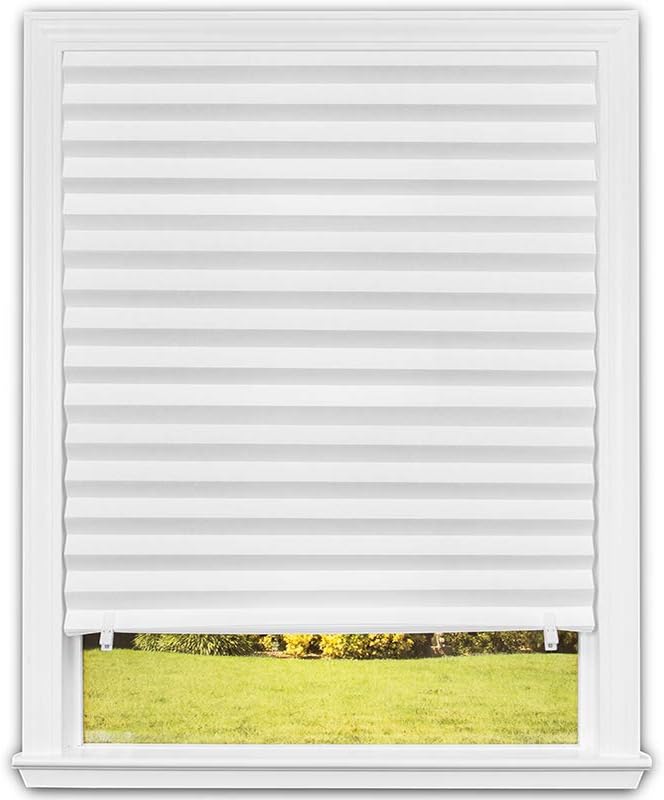
Redi Shade Original Light-Filtering Pleated Paper Shade (6-Pack)
The classic renter shade, and still the one I reach for first in a sublet. You trim it to your width with scissors, peel the adhesive strip, press it to the top of the frame, and you are done in under a minute with no tools at all. The paper softly filters light, never yellows, and a six-pack covers a whole apartment for the price of a takeout dinner.
Check price on AmazonNot for: anyone wanting a permanent, premium look; this is honest temporary cover.
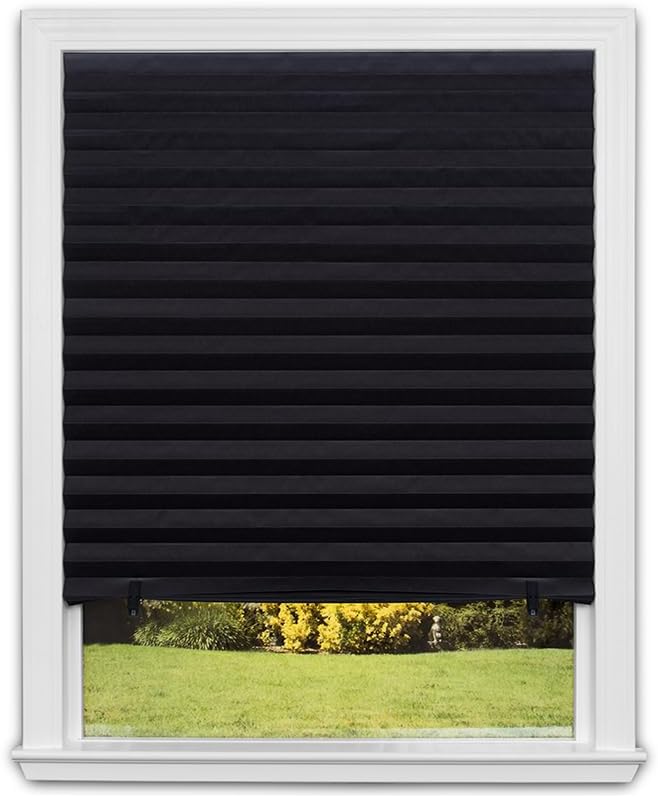
Redi Shade Original Blackout Pleated Paper Shade (6-Pack)
The same trim-and-stick shade in a blackout version that blocks about 99% of the light, which makes it a lifesaver for a bedroom, a nursery, or a night-shift sleeper on a budget. It installs in seconds with no drill and peels off clean when you move. In black it recedes against the glass at night.
Check price on AmazonNot for: readers who want a decorative fabric; this is pure blackout function.
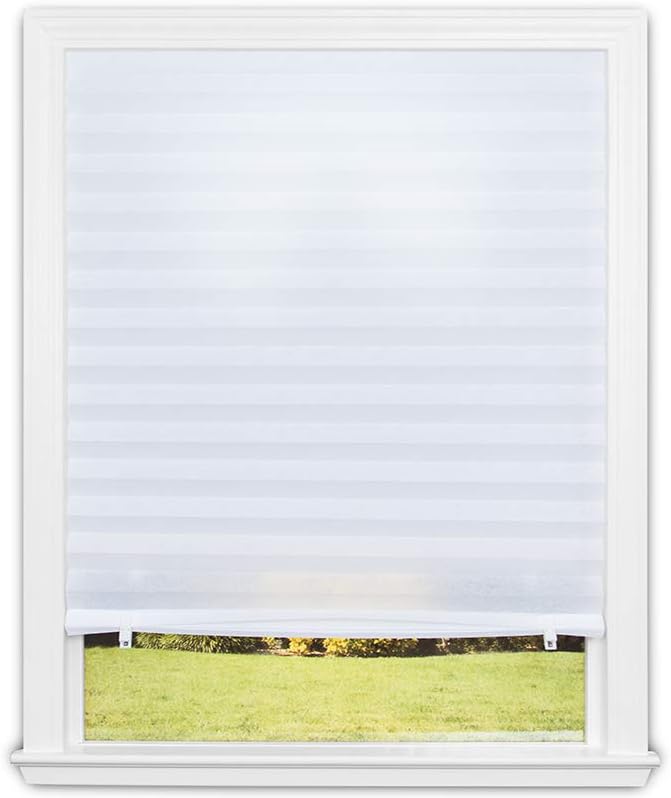
Redi Shade Original Light-Filtering Pleated Fabric Shade
A step up from the paper, this temporary shade uses a non-woven polyester fabric that looks and feels less disposable while keeping the same no-tools install. I like it layered behind an existing treatment to add privacy, or on its own where the paper version would feel too plain. Still cordless, still trim-to-width, still gone without a mark.
Check price on AmazonNot for: whole-apartment buyers on the tightest budget; the paper six-pack is cheaper per window.
No-drill hardware and light-gap fixers
The last group is the quiet hero pile: the rod and strips that solve the two problems left over from the shades above. A no-drill tension rod hangs a lightweight fabric shade or valance across a recess with zero screws, and it doubles as the hardware that makes a screw-mount shade renter-safe. And if a blackout shade still glows around the sides at 6 a.m., a light-blocking strip is the cheap cure for that halo.

Zenna Home No-Drill Tension Rod
Every no-drill window kit needs a good tension rod, and this expandable one is the workhorse. It springs into a recess with zero screws to carry a lightweight fabric shade or a valance, and the rubber endcaps grip without marking the walls. It stretches from 28 to 66 inches, so one rod covers most apartment windows.
Check price on AmazonNot for: heavy shades; a tension rod is for lightweight fabric, not a loaded roller.
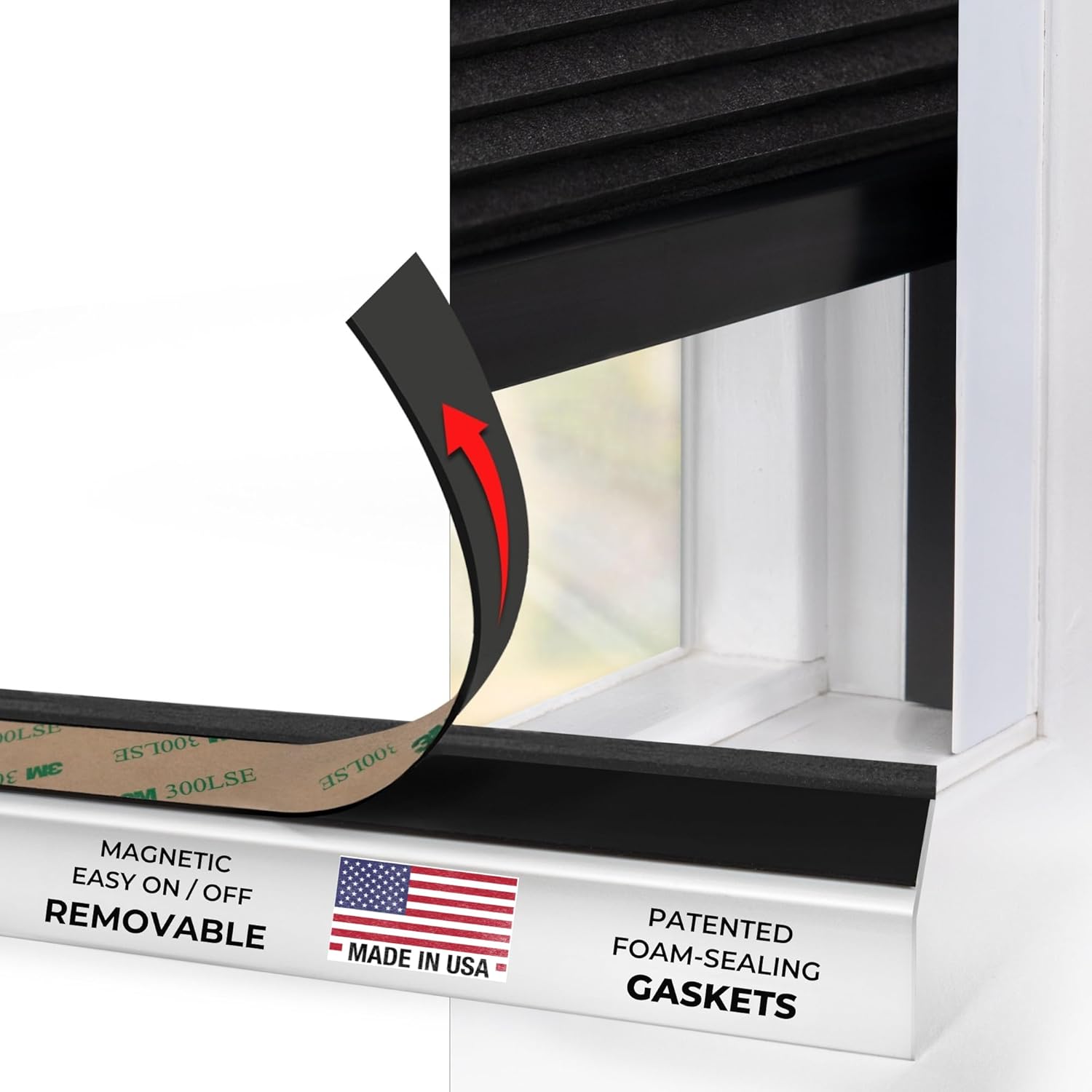
Sleepy Time Tracks Window Light Blocker Side Tracks
This is the fix for the halo of light that sneaks around the sides of every blackout shade. The magnetic side tracks pop onto the frame with no damage, and a foam gasket seals the gap for genuine darkness in a bedroom or nursery. You trim them to length with scissors, and they lift off clean the day you leave.
Check price on AmazonNot for: light-filtering setups; you only need these when you are chasing true blackout.
Taking them down clean on move-out day
The removal is easier than the install if you slow down. A tension-mounted shade or bracket pops out with a gentle push toward one side, no tools, no residue. Store the brackets with the shade so you can reuse the whole thing in the next place, which is how a $40 shade pays for itself across two leases.
Adhesive brackets and peel-and-stick strips want a little heat. Run a hairdryer over the pad for thirty seconds to soften the glue, then peel back slowly at a low angle rather than yanking straight out. On smooth semi-gloss or satin paint this leaves nothing behind. On flat matte paint, which any renter learns to distrust, test one small bracket first and be ready to touch up a spot, the same caution I give before hanging no-drill floating shelves.
Frequently asked questions
Can I really put up blinds without drilling any holes?
Yes, in three ways. A tension or spring inside-mount presses against the sides of the window recess and holds by pressure alone. No-screw adhesive brackets stick to a smooth frame and hold the shade’s top rail. And a peel-and-stick pleated shade carries its own adhesive strip that you press along the top edge. Deep recess, go tension. Shallow recess with a smooth frame, go adhesive. Short lease or odd window, go peel-and-stick.
Are no-drill blinds strong enough to actually stay up?
Within their weight limits, yes. Tension mounts hold best in a snug recess, so measure carefully and pick the narrowest width reading. Adhesive brackets rely on a clean, smooth surface and a stated weight rating, so wipe the frame with alcohol first and respect the limit. For a wide or heavy shade, tension mounting brackets carry more securely than adhesive, which is why I keep a set in the hardware group.
Do cordless shades block enough light to sleep?
A room-darkening shade dims a bedroom nicely, and a true blackout roller gets you close to dark. The honest weak spot on every shade is the edges, where a thin halo of light sneaks around the sides. If you need real darkness for shift sleep or a nursery, pair a blackout shade with side channels or light-blocking strips, and mount it with an inch of overlap on each side to shrink the gap.
Will adhesive brackets ruin the paint when I take them off?
On smooth semi-gloss or satin paint, a careful removal leaves no damage. Warm the adhesive with a hairdryer, then peel back slowly at a low angle so the pad releases rather than tearing. Flat matte paint is the risky one, because it bonds to the adhesive and can lift in a patch. Test a single bracket in a low spot first, and if you rent somewhere with matte walls, lean on tension mounts and peel-and-stick shades instead.
Cellular, roller, or pleated paper: which should a renter pick?
Start with a cordless cellular shade. It insulates the window, comes in light-filtering or blackout, and mounts cleanly with tension brackets, which makes it the best all-rounder for a small rental. Choose a blackout roller if a modern flat look and the darkest possible sleep are what you are after. Choose a peel-and-stick pleated shade if the lease is short, the window is strange, or the budget is tiny. All three come off clean.
Keep reading
As an Amazon Associate I earn from qualifying purchases.