A small rental bedroom almost always has the same gap in it, and I mean that literally. You want a headboard, but a real one eats floor space you do not have, and mounting anything solid means drilling into a wall you are not allowed to touch. So the bed floats against bare drywall and the whole room looks half-finished.
A fabric wall hanging fixes that in an afternoon, and wall tapestries are built for exactly this job. Hung behind the bed, a wide woven panel looks like a headboard from across the room and softens the whole wall. It costs a fraction of what furniture does, weighs almost nothing, and comes down clean at move-out with no patching.
I have hung enough of these to know which ones work behind a bed and which ones sag, crease, or slide off the wall by week two. Below are the fabric hangings I trust as a faux headboard, the no-drill hardware that actually holds them, and the lighting and greenery that turn the wall into a real focal point. My top pick is the ANPHSIN extra-large macrame hanging, because it is the rare fabric panel that is both wide enough to sit behind a full or queen bed and heavy enough to hang flat instead of curling at the corners.
This post contains affiliate links. If you buy something through one of my links, I may earn a small commission at no extra cost to you. I only recommend products I would actually use myself. As an Amazon Associate I earn from qualifying purchases.
ANPHSIN Extra-Large Boho Macrame Wall Hanging (70.8 in)
Wide enough to span a full or queen at 70.8 inches, heavy enough to hang flat, and it ships with its own wooden rod so you can mount it on a few Command strips in about ten minutes. The neutral beige works with almost any bedding, which is why it is the one I would buy first.
Check price on AmazonHow I picked these
- Sized for a bed, not a dorm door. I favored hangings wide enough to fill the wall behind a twin, full, or queen, roughly bed-width or a little wider. A skinny panel floating in the middle looks like an afterthought.
- Hangs flat. Thin polyester creases and billows. I leaned toward woven cotton, heavier textile weaves, and pieces with a rod pocket or weighted bottom so they sit flat against the wall instead of curling.
- Comes down clean. Every hanging method here is damage-free: adhesive strips, tension rods, and removable hooks rated for the weight. Nothing that leaves a hole to patch.
- Renter budget. Most picks land in budget or mid-tier territory, so you can change the look next year without wincing.
- Actually buyable. Every product here was in stock on Amazon when I wrote this, not a sold-out screenshot from someone’s mood board.
The fabric hangings that work as a headboard
This is the piece that does the heavy lifting, so it is worth getting right. The job of a faux headboard is to fill the wall behind your pillows with something wide and soft. Woven and knotted styles like macrame add the most texture, while printed cotton panels bring color and pattern. Whatever style you pick, size it to your mattress: aim for a hanging at least as wide as the bed, hung so the bottom edge disappears a few inches behind your pillows.

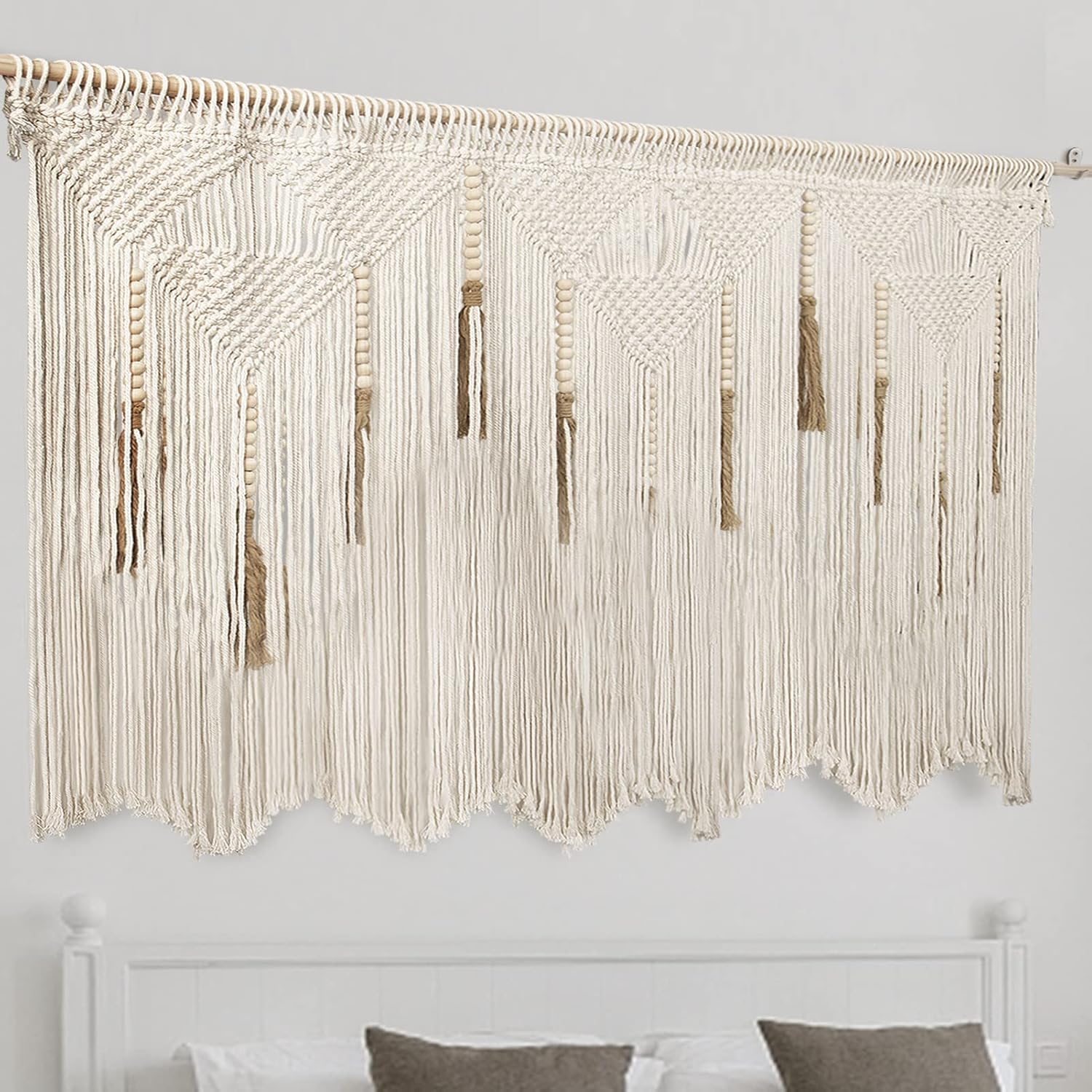
ANPHSIN Extra-Large Boho Macrame Wall Hanging (70.8 in)
This is the one I reach for first. At 70.8 inches wide it spans a full or queen like a real headboard, and the heavy cotton fringe hangs flat instead of curling because it ships with its own wooden rod. The neutral beige works with almost any bedding, so it earns the top spot.
Check price on AmazonNot for: anyone who wants color. This one is firmly in cream-and-natural territory.
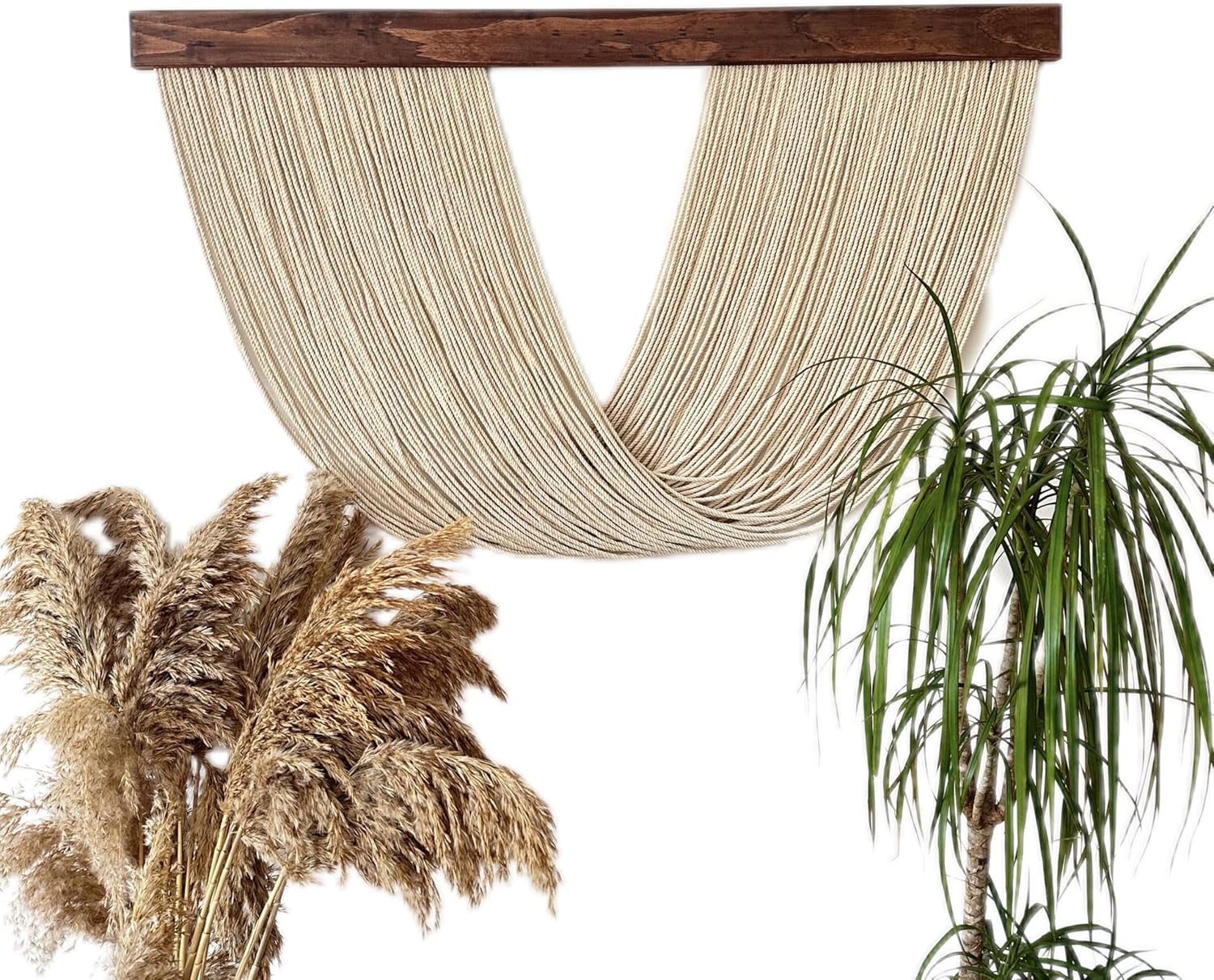
Handmade XL Macrame Headboard Wall Hanging (60 x 30 in)
This weave is cut in a headboard shape on purpose, so it looks intentional the second it goes up behind the bed. At 60 inches it suits a full, and the dense hand-knotting gives it real weight to hang flat. It costs a little more than a printed panel, but the texture is the payoff.
Check price on AmazonNot for: a queen or king, where you would want something wider.

LB Moon Phase Celestial Wall Hanging (80 x 60 in)
If you want a moody night-sky backdrop, this moon-phase textile is a lot of drama for very little money. At 80 inches it swallows the wall behind a queen, and the soft fabric washes easily when it gets dusty. Steam it first, because it arrives creased.
Check price on AmazonNot for: minimalists. This print is a full-on statement.
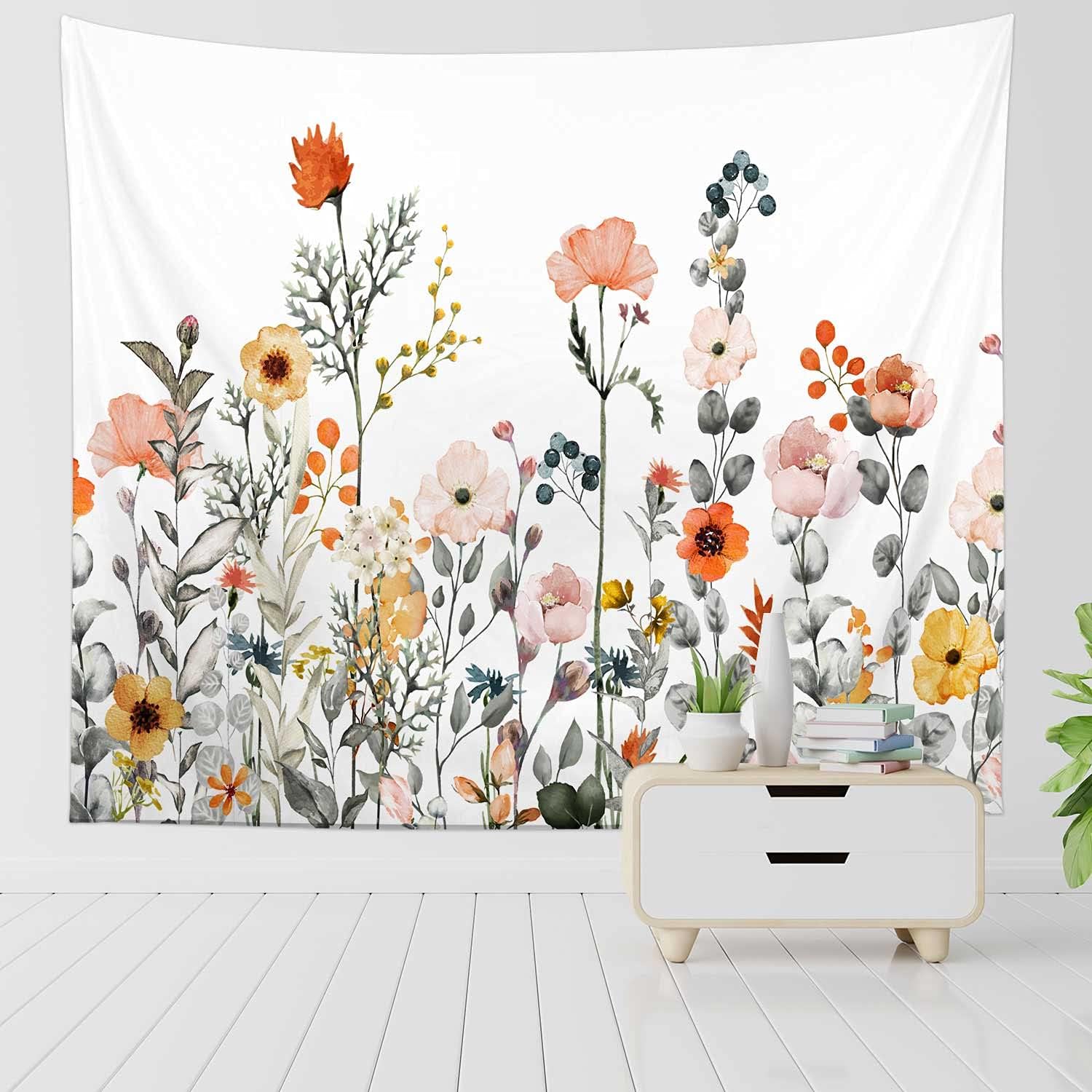
RosieLily Vintage Botanical Wildflower Wall Hanging (51 x 57 in)
This is the softest, most cottage-leaning panel on the list, all pressed-wildflower prints on a warm ground. At 51 by 57 inches it sits nicely behind a twin or a slim full, and it is the cheapest pick here. I would layer it with linen bedding and a trailing vine or two.
Check price on AmazonNot for: a queen headboard span, it runs on the smaller side.
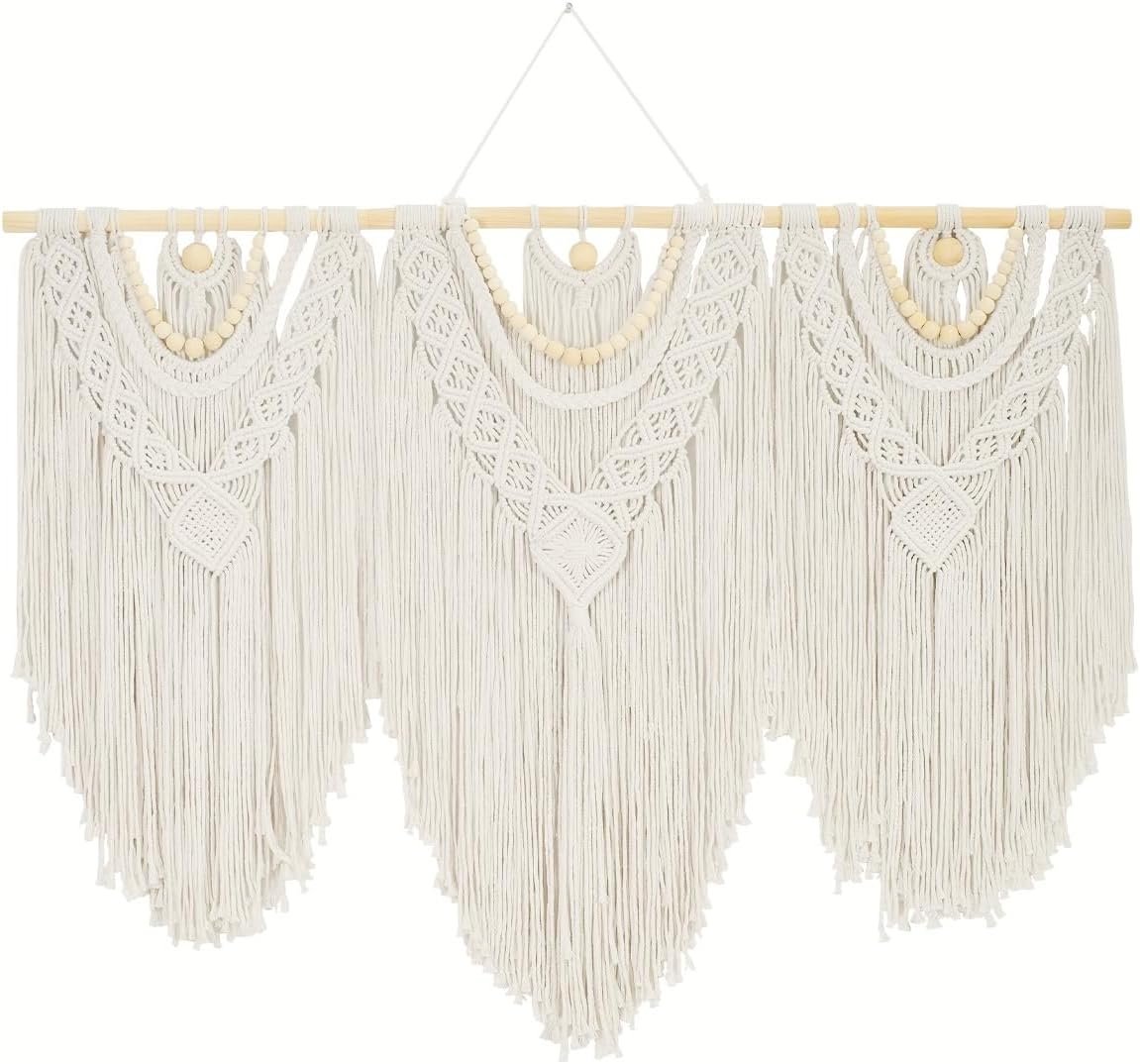
CYTJ Hand-Woven Cotton Above-Bed Wall Hanging (white)
For a calmer, Scandinavian-boho look I like this hand-woven cotton piece with its wood-bead detailing. It is designed to hang above a bed, so the proportions are right, and the tonal white keeps a small room feeling airy instead of busy. This is my pick when the rest of the room is already doing a lot.
Check price on AmazonNot for: anyone who wants a bold focal point. This one whispers.

Edeesky Black and Gold Mandala Medallion Wall Hanging
The high-contrast mandala gives you one big centered motif, which is exactly what a bare wall behind a bed wants. The print is crisp, and the black ground makes brass and amber lighting pop against it. Center it so the medallion lands right behind your pillows.
Check price on AmazonNot for: pale, airy rooms. The black ground feels heavy.
The no-drill kit that actually holds it up
A fabric headboard is only as renter-safe as the way you hang it. This is where most people go wrong, either taping a heavy weave with a strip rated for a photo frame or, worse, reaching for the drill. You have three damage-free methods, and which one you use depends on the panel. Light woven hangings go up on adhesive hooks or picture-hanging strips. Anything with a top hem or rod pocket wants a slim tension rod so the whole thing clips on and lifts off in one piece. Keep the weight under what the hardware is rated for and check the strips after the first warm day, since heat softens adhesive.
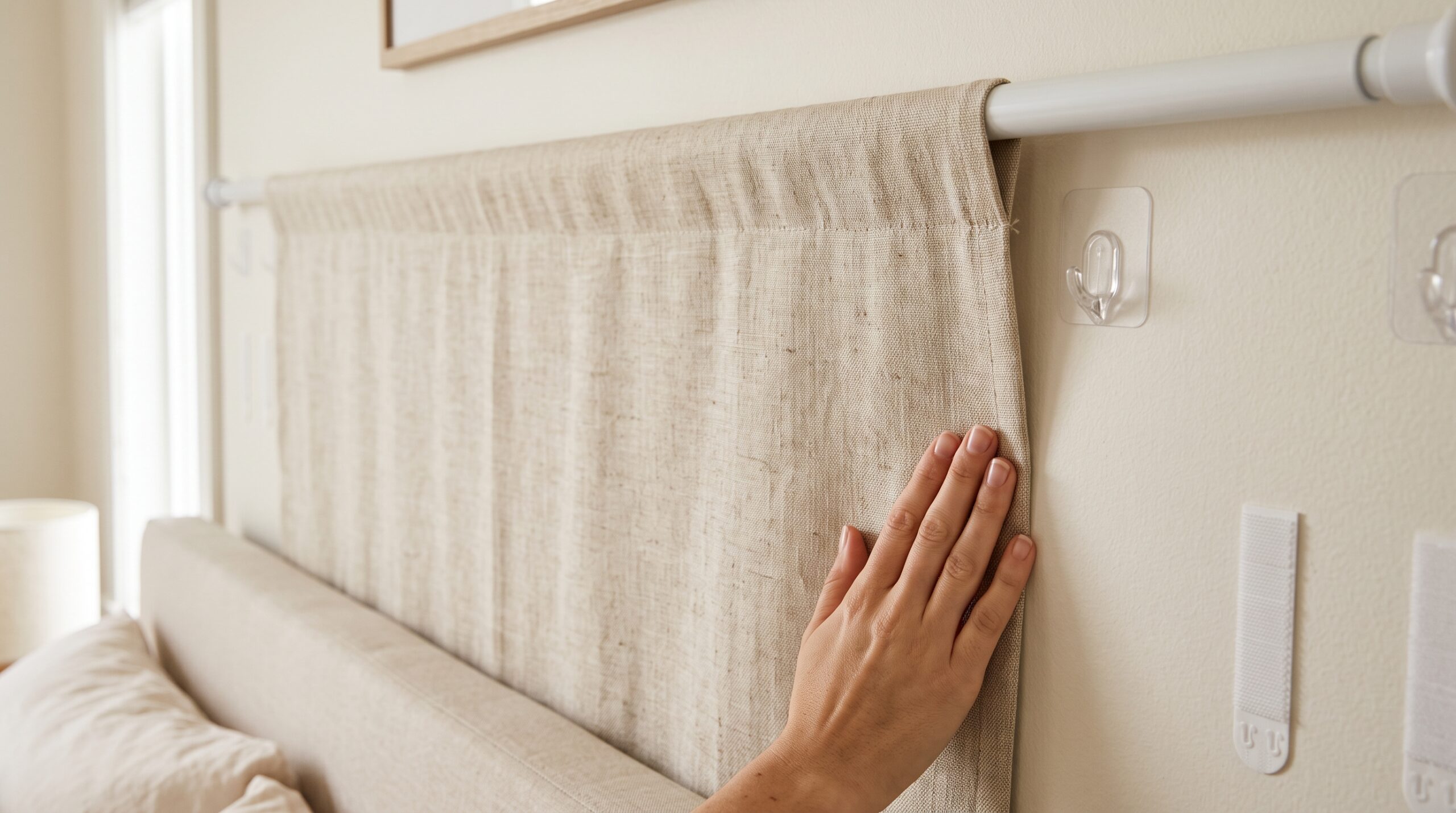

Command Large Picture Hanging Strips (12 pairs)
These are my default for mounting a rod-topped hanging. Each pair holds up to four pounds, they lock together like Velcro, and they peel off with no holes at move-out. Spread several pairs along the rod and you can put up a surprisingly substantial weave.
Check price on AmazonNot for: heavy hand-knotted pieces on their own. Pair them with a rod and hooks.

Ginbel Tension Curtain Rod and Clip Rings Bundle
This is the cleanest lift-off method, and my favorite for a bed tucked into a nook or alcove. The spring rod wedges between two walls with zero hardware, and the clip rings let you attach any hanging and take it down in one motion. Nothing touches the wall, so there is nothing to patch.
Check price on AmazonNot for: an open wall with no side walls to brace against.
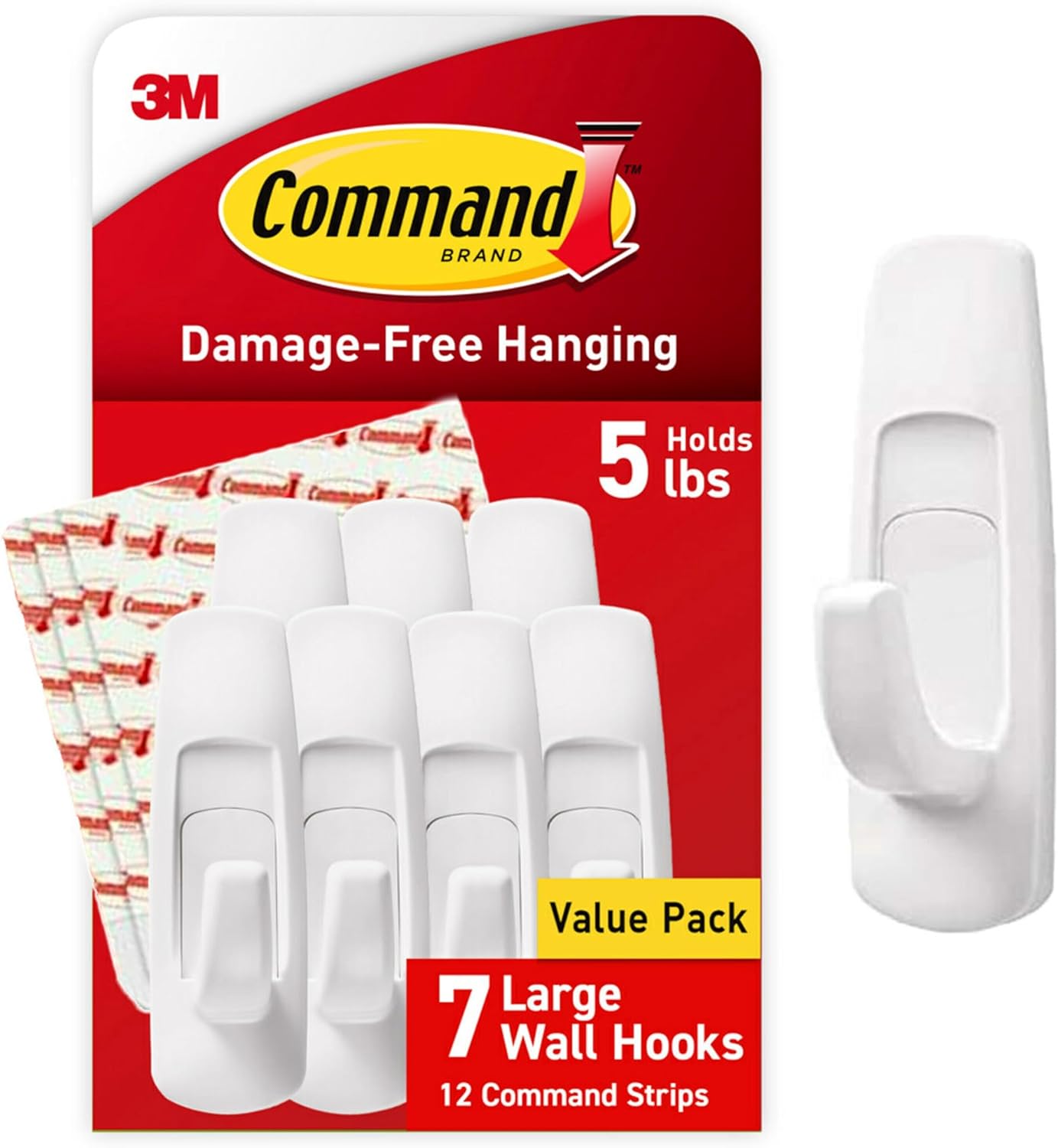
Command Large Utility Hooks (7 hooks, 12 strips)
When a hanging has loops or its own dowel, these hooks carry it without a single nail. Each holds up to five pounds, and two of them under a rod spread the load better than adhesive strips alone. I keep a pack around for exactly this job.
Check price on AmazonNot for: very lightweight panels, where strips alone are tidier.
The styling layer that frames the wall
A hanging alone can still read a little flat. The layer that makes it look intentional is light and greenery. Warm string lights traced along the top edge give the wall a glow at night, a no-wiring sconce adds a real light source you can actually read by, and a trailing faux vine breaks up the straight edges so the panel looks styled instead of stuck up. None of this needs a drill either.

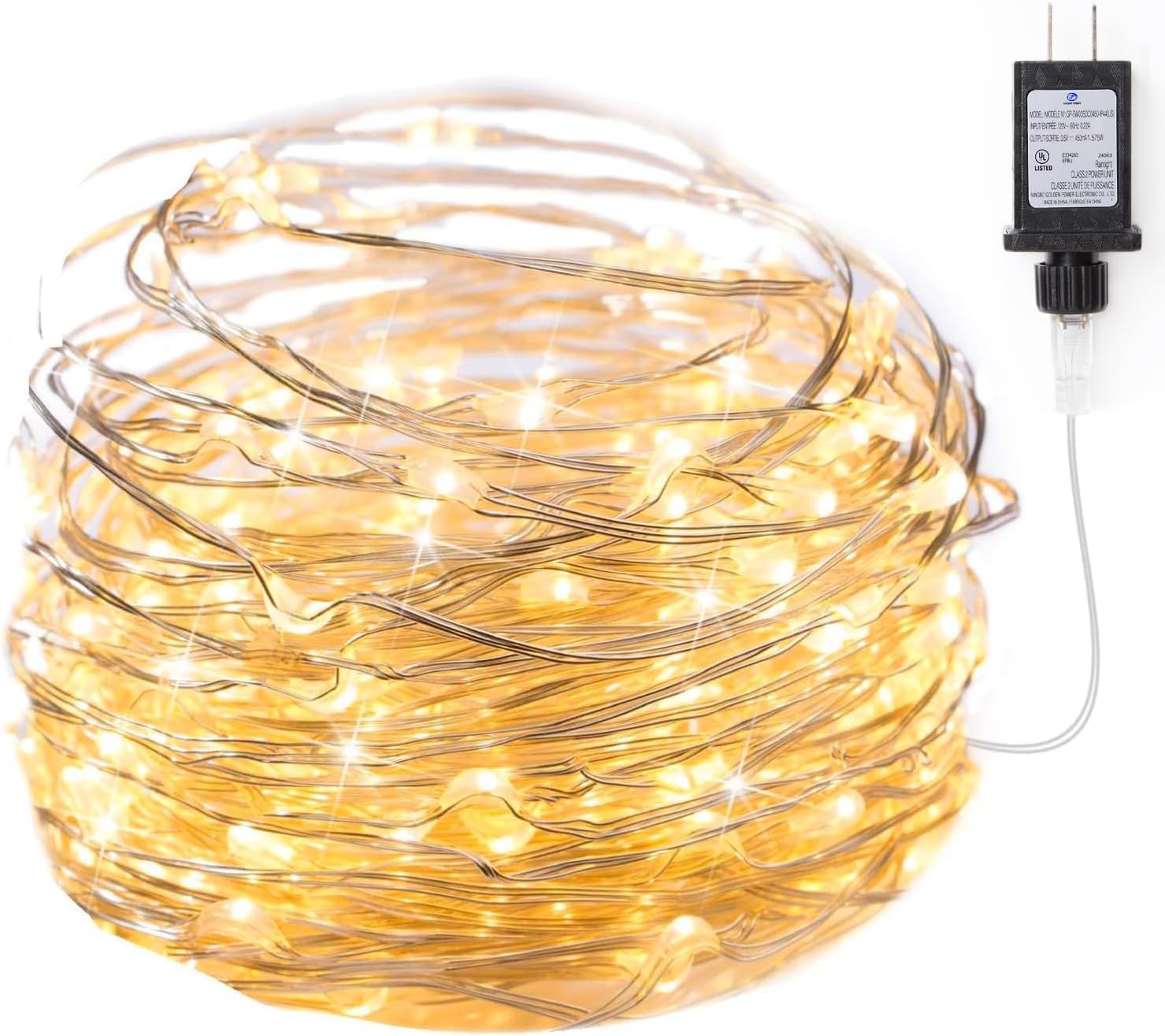
Minetom Warm White Plug-In Fairy Lights (33 ft)
Tracing these along the top edge of the hanging is the single fastest way to make the wall look styled. The wire is bendable and nearly invisible, the light is a warm white rather than a harsh blue, and 33 feet frames a headboard-size piece with room to spare. Plug-in, so no battery swaps.
Check price on AmazonNot for: a spot with no reachable outlet. Get a battery set instead.

jengush Not-Hardwired Wall Sconces, Set of 2 (Gold, 21 in)
These give you a real, dimmable light source flanking the bed with no electrician and no drilled hole. They run on batteries and take a remote, so you can warm the whole headboard wall from bed. As a pair they look deliberate and symmetrical, not an afterthought.
Check price on AmazonNot for: anyone who forgets to swap batteries. These are not plug-in.

DearHouse Faux Eucalyptus Garland, 2 Pack (6 ft each)
Draped over the top corner of the hanging, this trailing greenery breaks up the straight edges so the whole thing looks collected instead of flat. The faux eucalyptus is UV-treated so it will not fade, and two six-foot lengths give you room to play. It is the cheap finishing touch that pulls the look together.
Check price on AmazonNot for: a strict modern room. This leans boho and soft.
How to hang a fabric headboard with no drilling
The method matters more than the panel. Here is the order I follow every time.
- Size it first. A twin wants a hanging around 40 to 50 inches wide, a full or queen wants 50 to 60 inches or more. Wider always looks better than narrow behind a bed. Height is flexible, but the bottom edge should tuck a few inches behind your pillows.
- Get it flat before it goes up. Most fabric panels ship folded and arrive creased. Steam it, or hang it in the bathroom during a hot shower, or drape it overnight. A weighted rod pocket at the bottom keeps it flat once it is on the wall.
- Match the hardware to the weight. Light cotton weaves go up on removable adhesive hooks or picture-hanging strips. For a hemmed panel, thread a slim tension rod through the top and rest it on two adhesive hooks so nothing bears directly on the strips.
- Press and wait. Adhesive strips need firm pressure and about an hour to cure before you load them. I press, walk away, and come back before hanging anything heavier.
- Frame it. Add the string lights and vine last, once the panel is centered and flat, so you are styling around a finished shape.
Keeping it flat and getting it off the wall clean
The two questions I get most are how to stop the fabric from wrinkling and how to avoid losing your deposit. Both come down to the same thing: weight and patience. A panel that hangs from a rod pocket with a little weight at the hem will always sit flatter than one tacked at four corners. If yours curls, a slim tension rod at the bottom hem pulls it taut.
At move-out, warm the adhesive strip with a hair dryer for a few seconds and stretch the release tab straight down slowly, the way the packaging shows. Before you trust a heavy piece to strips, read the weight rating on the pack, since that number is the whole ballgame. Pull slow, and the wall stays blank.
A fabric headboard versus a storage one
A fabric hanging is a decorative fix, not a functional one. It gives you the look of a headboard and a softer wall, but it holds nothing. If what you actually want behind the bed is a shelf for your phone, a book, and a glass of water, that is a different project, and I walked through it in my guide to turning the headboard wall into storage. Some people do both: a slim ledge low on the wall, a soft panel above it. If you want the wall to earn its keep beyond looks, start there. If you want maximum impact for the least effort and money, a hanging wins every time.
For more renter-safe wall ideas, I have a full roundup of no-damage wall decor for renters, and if you are styling a whole small bedroom around a mood, my Danish pastel small-bedroom guide and coquette renter bedroom both lean on soft textiles the same way. A celestial fabric panel is also the anchor of my whimsigoth small-apartment look. And if you would rather add a real shelf beside the bed, my no-drill floating shelves guide pairs well with any of these.
FAQ
Will Command strips really hold a fabric wall hanging?
Yes, for light to medium weaves, as long as you match the strip rating to the weight and spread the load across several hooks or strips. A cotton panel is lighter than the framed art most strips are sold for. For anything heavy or a large full or queen piece, rest a tension rod on two adhesive hooks so the load sits on the hooks, not the adhesive tabs alone.
How wide should the hanging be for my bed?
Match it to the mattress or go a little wider. A twin looks right with something around 40 to 50 inches across, and a full or queen wants 50 to 60 inches or more. A panel narrower than the bed looks like a small piece of art rather than a headboard, so err wide.
How do I get the wrinkles out so it hangs flat?
Steam it or hang it in the bathroom during a hot shower, then let gravity finish the job overnight. A rod pocket with a slim tension rod through the bottom hem keeps it taut long-term. Heavier woven fabric wrinkles far less than thin printed polyester, which is why I lean toward cotton and textured weaves for this job.
Will this damage the wall when I move out?
Not if you use removable hardware and take it down the right way. Warm the adhesive strip briefly with a hair dryer and pull the release tab straight down and slow. Tension rods leave nothing behind at all since they press between surfaces. Skip nails, screws, and permanent hooks entirely.
Can I use a tension rod instead of adhesive?
If your panel has a rod pocket or you can add clip rings, yes, and it is my favorite method for anything with weight. A slim spring tension rod between two side walls, or a rod resting on two removable hooks, lets the whole hanging clip on and lift off in one piece. It is the easiest one to take down and re-hang if you move.
As an Amazon Associate I earn from qualifying purchases. Stock and prices shift, so check the current listing before you buy.