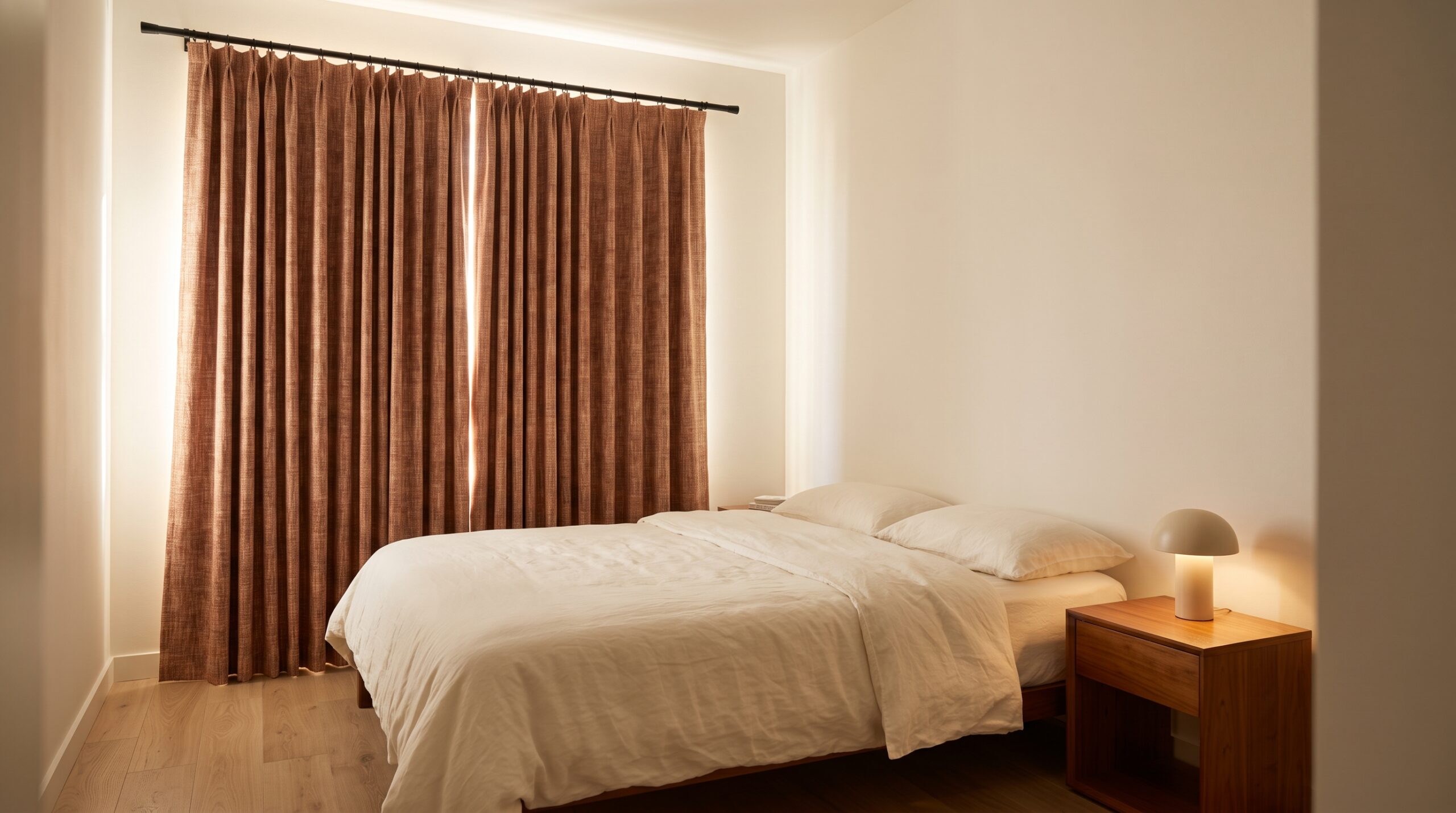
Streetlight through the blinds at 2 a.m. A 5:40 sunrise landing square on your face. A lease that says no holes in the walls. If you rent a small place, you know the exact spot where light sneaks in and wrecks your sleep, and you know you are not allowed to sink an anchor into the drywall to stop it.
Blackout curtains are the fix, with one catch nobody says out loud. The fabric is the easy part. Any dense woven panel will darken a room. The renter problem is holding that panel up without a drill, and getting it to seal at the edges so light stops crawling in around the sides.
So I built this list methods-first. I picked the drapes I actually trust to kill the light, then the no-drill rods and mounts that hold them, then the small fixes for the edge gap that ruins most blackout setups. Everything here goes up with tension, adhesive, or a magnet, and comes down clean on move-out day. If you would rather have a shade that rolls up instead of fabric that draws across, I wrote a companion guide to no-drill cordless blinds that covers the same window a different way.
This post contains affiliate links. If you buy something through one of my links, I may earn a small commission at no extra cost to you. I only recommend products I would actually use myself.
As an Amazon Associate I earn from qualifying purchases.
My top pick
NICETOWN Thermal Insulated 100% Blackout Curtains (Biscotti Beige)
Out of everything I looked at for a renter, this is the one I would buy first. It is honestly 100% blackout thanks to a bonded black lining, the warm biscotti beige suits a small cozy room instead of washing it out, and the grommet top drops onto a no-drill tension rod in a minute and lifts off clean at move-out. Buy the length that fits your window, then hang it high and wide.
Check price on AmazonHow I picked
- True darkness, not “dim.” I favored panels rated 100% blackout or triple-weave thermal, the ones that black out a room at noon, over thin “room darkening” fabric that only takes the edge off.
- Zero drilling, honestly. Every mount here works with tension, peel-and-stick adhesive, or magnets. No screws, no anchors, no spackle at move-out.
- The edge gap gets solved, not ignored. Most blackout complaints are about light leaking around the sides and top. I included wraparound rods and liners that close it.
- Small-window sizing. I flagged shorter lengths and single-panel picks that fit an apartment window, instead of the 96-inch drops made for a great room.
- Renter reversibility. If it damages paint or leaves a mark behind, it did not make the list.
The no-drill part is the rod, not the curtain
Here is the reframe that makes this whole thing work. A curtain is just fabric. What decides whether you can hang it without a drill is the hardware. There are three no-drill mounting methods, and each fits a different window.
Tension and spring rods. A spring-loaded rod wedges inside the window recess with pressure alone. This is the cleanest renter option when your window sits in a deep enough frame. Match the rod’s weight rating to your panel, because heavy triple-weave fabric can droop a flimsy rod.
Adhesive brackets. Stick-on brackets mount a standard rod to the wall or trim with a strong adhesive pad, no anchor needed. They hold a rod outside the frame, which is exactly what you want for blackout, since a rod wider than the window lets the fabric overlap the wall and block side light. Command-style strips release clean with a slow pull.
Magnetic rods. If your window sits in a steel frame, or you are covering a metal entry door, magnetic rods clamp on with no hardware at all. They are the fastest install in the list and leave nothing behind.
Prefer a shade instead?
If drawing fabric across a window is not your thing, a shade that raises and lowers might suit you better. My roundup of no-drill cordless blinds for renters covers the same tension-and-adhesive approach with cellular shades, rollers, and peel-and-stick pleated blinds instead of drapes. Curtains win on warmth and softness; shades win on a clean, tailored look. Read both and pick the one your window wants.
True blackout vs room-darkening (the label trick)
The words on the package are not regulated, so read them closely. “Room darkening” usually means a single layer that dims the room but still passes a soft glow. “Blackout” or “100% blackout” means a tight triple-weave or a coated panel that stops light through the fabric itself. For a bedroom, a night-shift sleeper, or a nursery, you want the second kind. Total darkness is also the version your body reads as night, which is the whole point if you are trying to protect your sleep from stray light.
There is a bonus most people underrate. A dense thermal panel is also insulation. The same tight weave that blocks light slows heat moving through the glass, so the room holds temperature better in summer and winter, and it muffles street noise a little too. In a small apartment with one thin window, that is a real comfort upgrade, not a marketing line.
The light gap is the whole game
If you have ever hung blackout curtains and still woken up to a bright halo around the window, you have met the real enemy. The fabric works. The gap does not. Light sneaks in three places: the sides where the panel meets the wall, the top above the rod, and the seam where two panels meet in the middle.
Three fixes handle all of it. A wraparound or curved rod bends back to the wall at each end so the drape wraps the corner and seals the sides. A panel hung high and wide, on a rod mounted above and past the frame, closes the top and side leaks at once. And overlapping the two panels in the center, or clipping them together, kills the middle seam. I call out a product for each below.
The blackout panels I trust
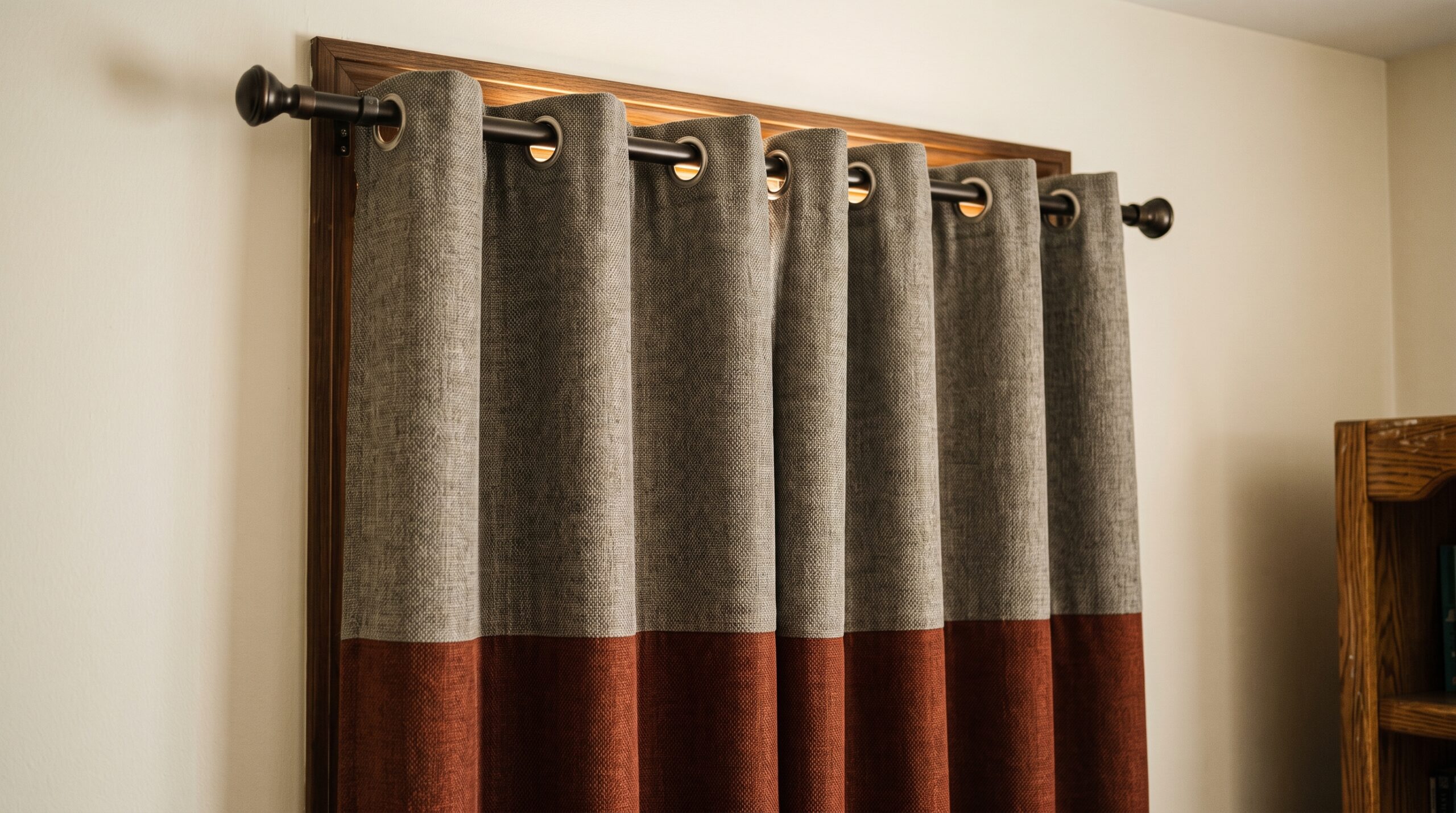
Start with the fabric. These are the panels that genuinely darken a room, in weights and tops that suit a small window and the no-drill rods further down. A grommet top slides onto a rod fast; a rod pocket seals tighter against a slim tension rod.

NICETOWN 100% Blackout Thermal Curtains (Biscotti Beige)
This is the panel I hand people first. The bonded black lining actually hits 100% blackout, not the wishful kind, and the biscotti beige reads warm instead of hospital-white in a small bedroom. The grommet top drops onto a tension rod in about a minute, and it lifts off at move-out with nothing left behind.
Check price on AmazonNot for: tiny windows, since the shortest drop on this pair is a long 95 inches.
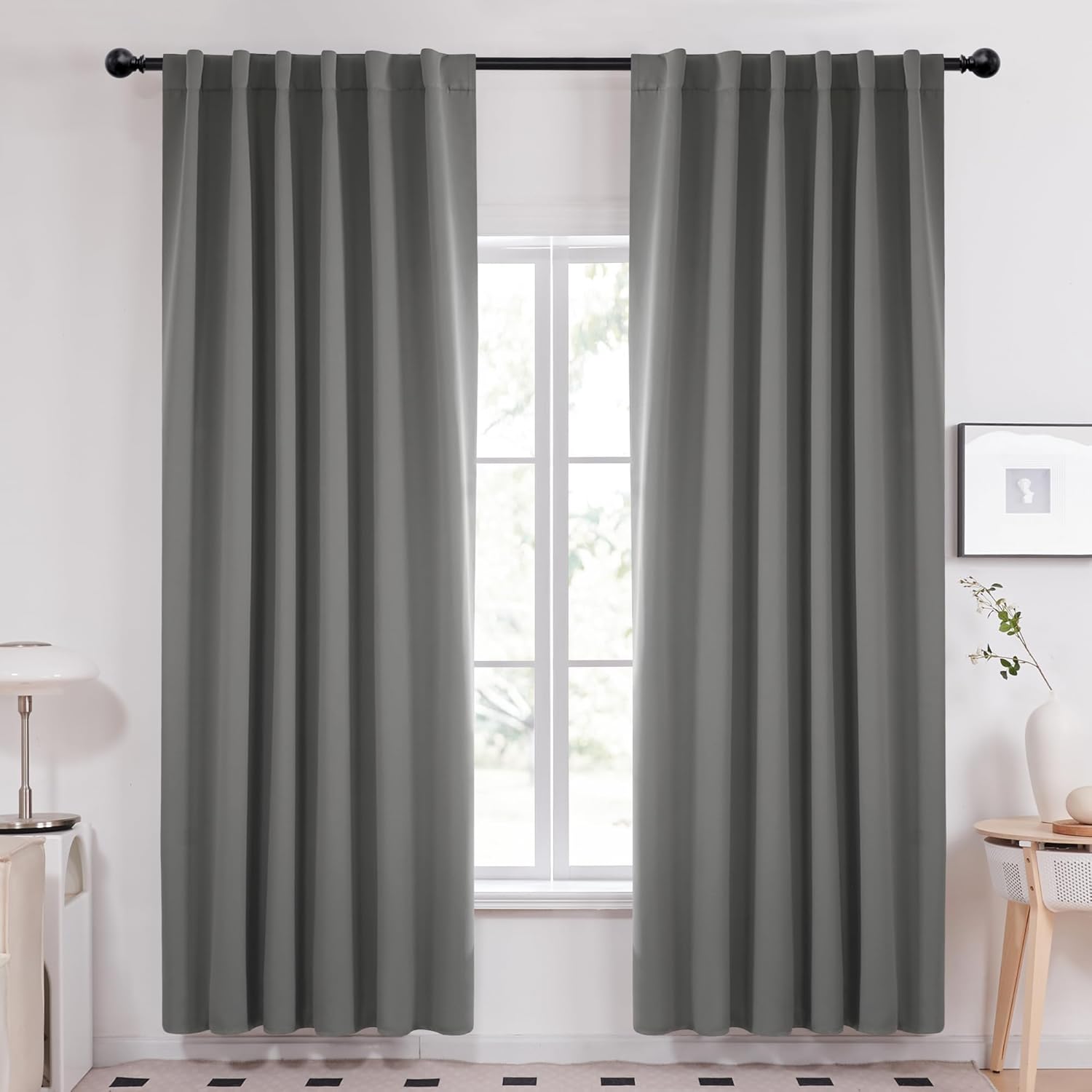
Deconovo Rod-Pocket Blackout Curtains
If you are hanging on a spring or tension rod, the rod pocket is what you want, because the fabric gathers tight against the pole with no rings to rattle. Deconovo’s weave darkens a room well for the price, and the light grey disappears into most walls. The back tabs give you a cleaner pleat if you move to a bracket rod later.
Check price on AmazonNot for: anyone who wants true pitch-black, since this is strong room-darkening, a notch below the lined top pick.
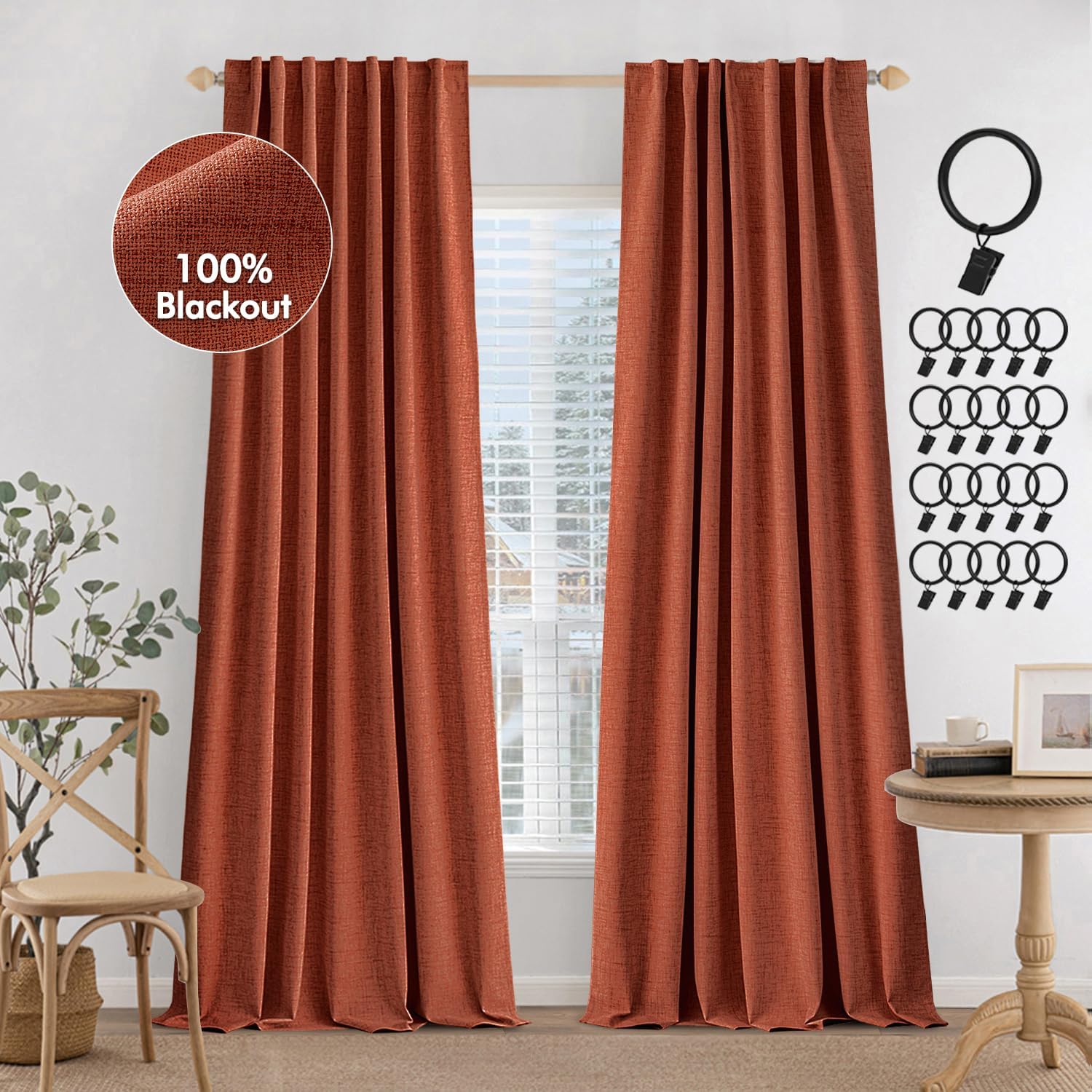
MIULEE Terracotta 100% Blackout Linen-Look Curtains
When a reader wants color instead of another beige box, this is where I point them. The terracotta has a linen-look texture that keeps it from going flat, and it still rates 100% blackout underneath. It leans warm and autumnal, which suits the cozy small-space palette I keep coming back to.
Check price on AmazonNot for: cool-toned or minimalist rooms where a rust panel would fight the scheme.
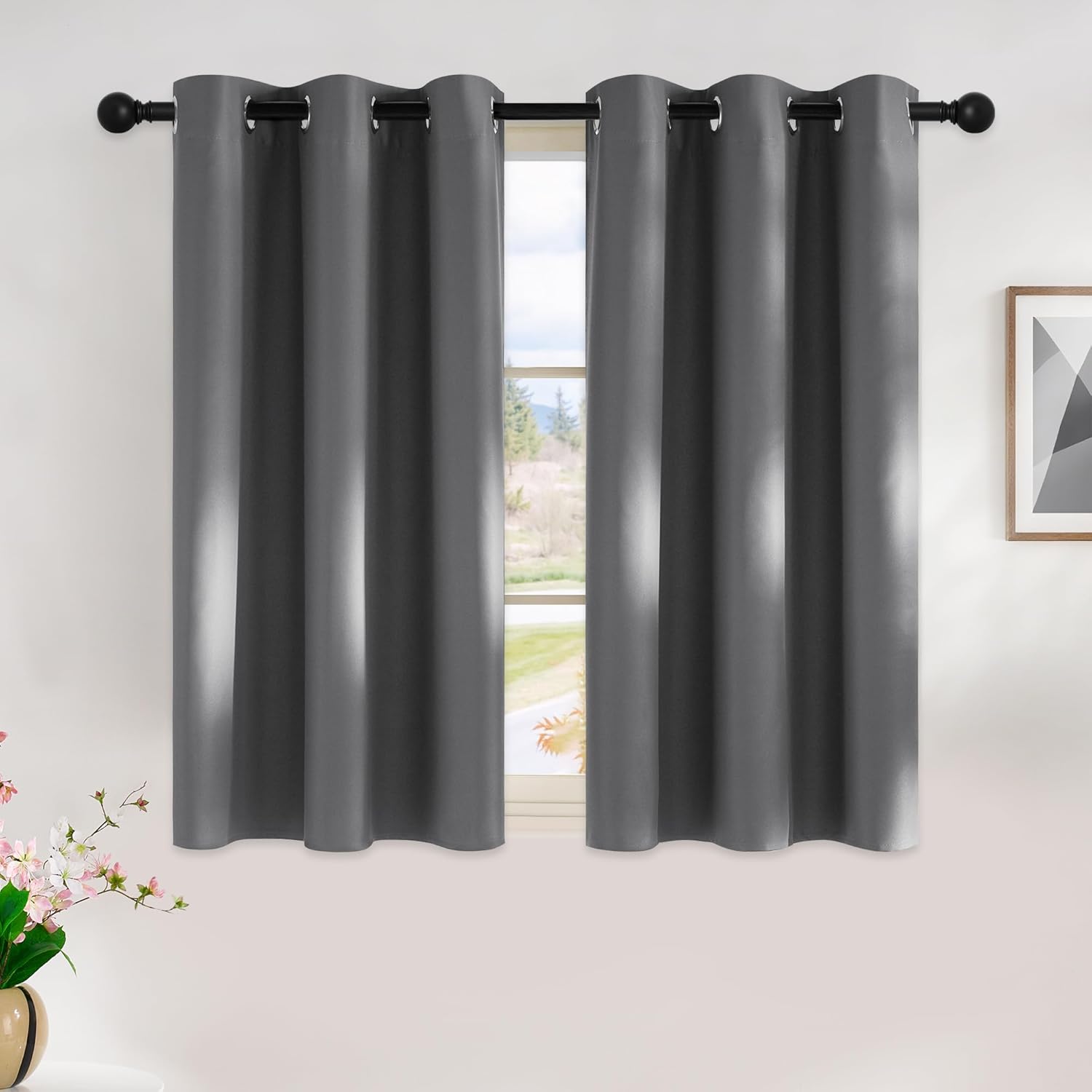
NICETOWN 45-Inch Short Grommet Blackout Curtains
Most blackout drapes assume you have a nine-foot wall. This short 45-inch pair is sized for the windows renters actually have, over a radiator, a kitchen sink, or a half-height bedroom window. Grommets, a thermal weave, two panels for pocket change, and it slides onto a tension rod without a bracket in sight.
Check price on AmazonNot for: full-length windows or sliding doors, where 45 inches leaves you short.
The no-drill rods that hold them up

This is where the “no-drill” promise lives or dies. Pick the mount that matches your window: tension for a snug recess, adhesive brackets to hang a rod wide of the frame, magnets for a metal door or steel frame.
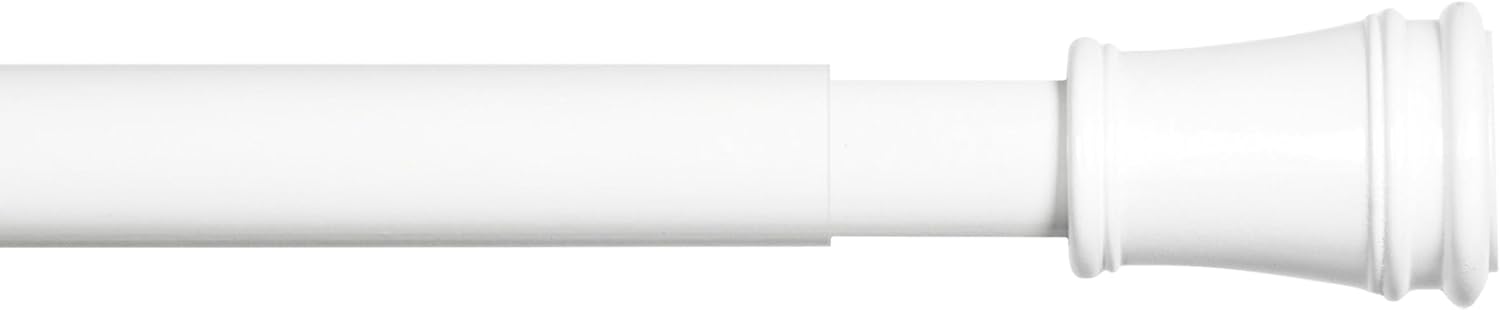
Kenney Rogers Twist and Fit No-Tools Tension Rod
The rod is where no-drill lives or dies, and this Kenney twist-and-fit is the one I trust with real curtain weight. It tensions inside the frame with a twist, no tools and no anchors, and it holds a lined blackout panel without slowly creeping down the wall. When you leave, it twists off and the trim is untouched.
Check price on AmazonNot for: windows without a snug recess to press against; use adhesive brackets instead.

Self-Adhesive No-Drill Curtain Rod Brackets
For a window too wide to tension, these stick-on brackets let you hang a rod above and past the frame, which is the whole secret to sealing side light. The adhesive holds a lightweight rod and pulls off clean. I would keep the drape on the lighter side with these, and save the heavy triple-weave for a tension setup.
Check price on AmazonNot for: heavy velvet drapes or textured wallpaper the pad cannot grip.
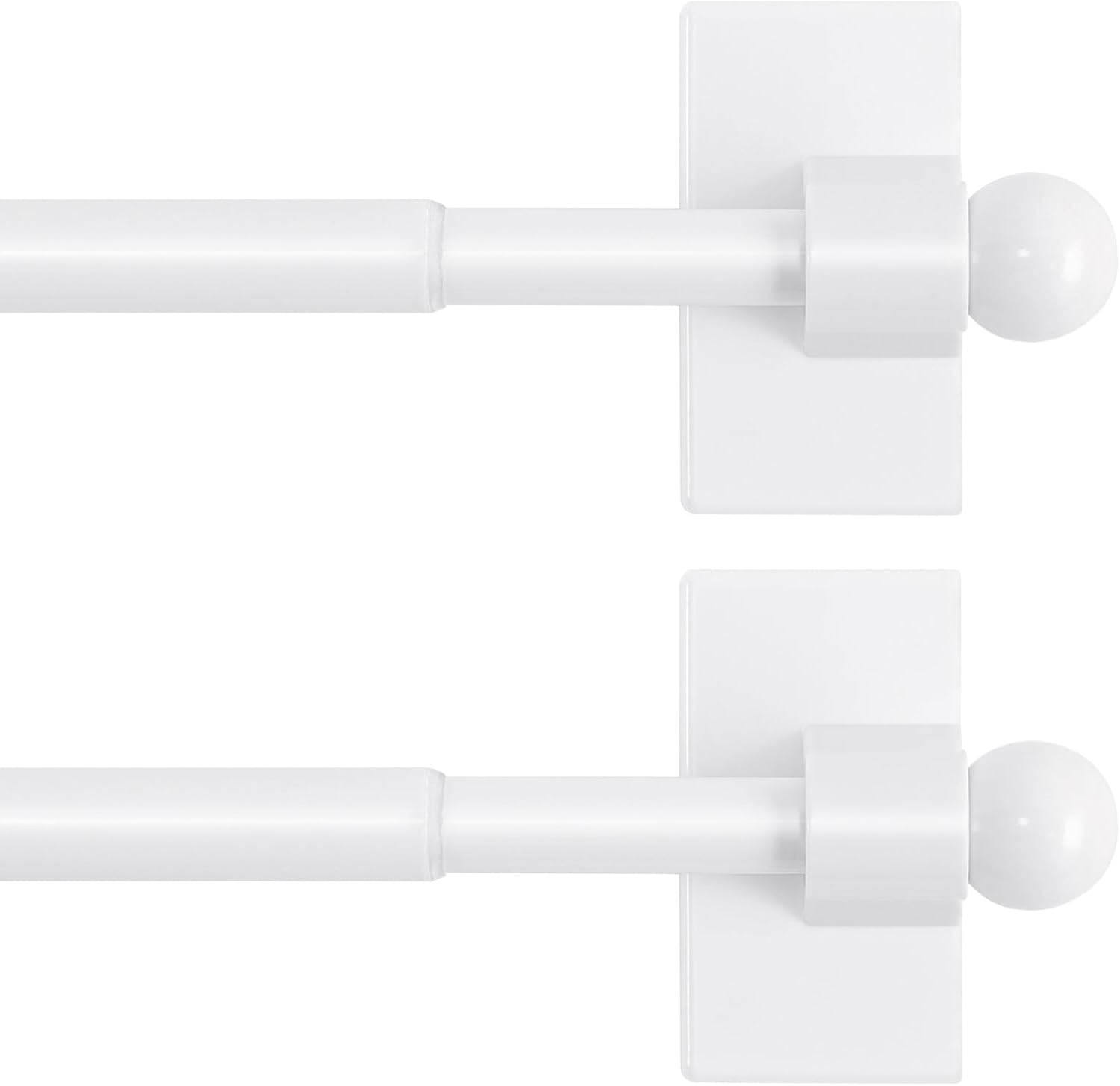
H.VERSAILTEX Magnetic Curtain Rods (2-Pack)
Steel entry doors and metal-framed windows are the ones that stump people, and magnets solve them instantly. These clamp on with zero tools and zero holes, and the two-pack lets you cage a door light top and bottom so the panel stays flat. Fastest install in the whole list, and it leaves nothing behind.
Check price on AmazonNot for: wood or fiberglass doors, where there is no metal for the magnet to grab.
Fixers for the light gap
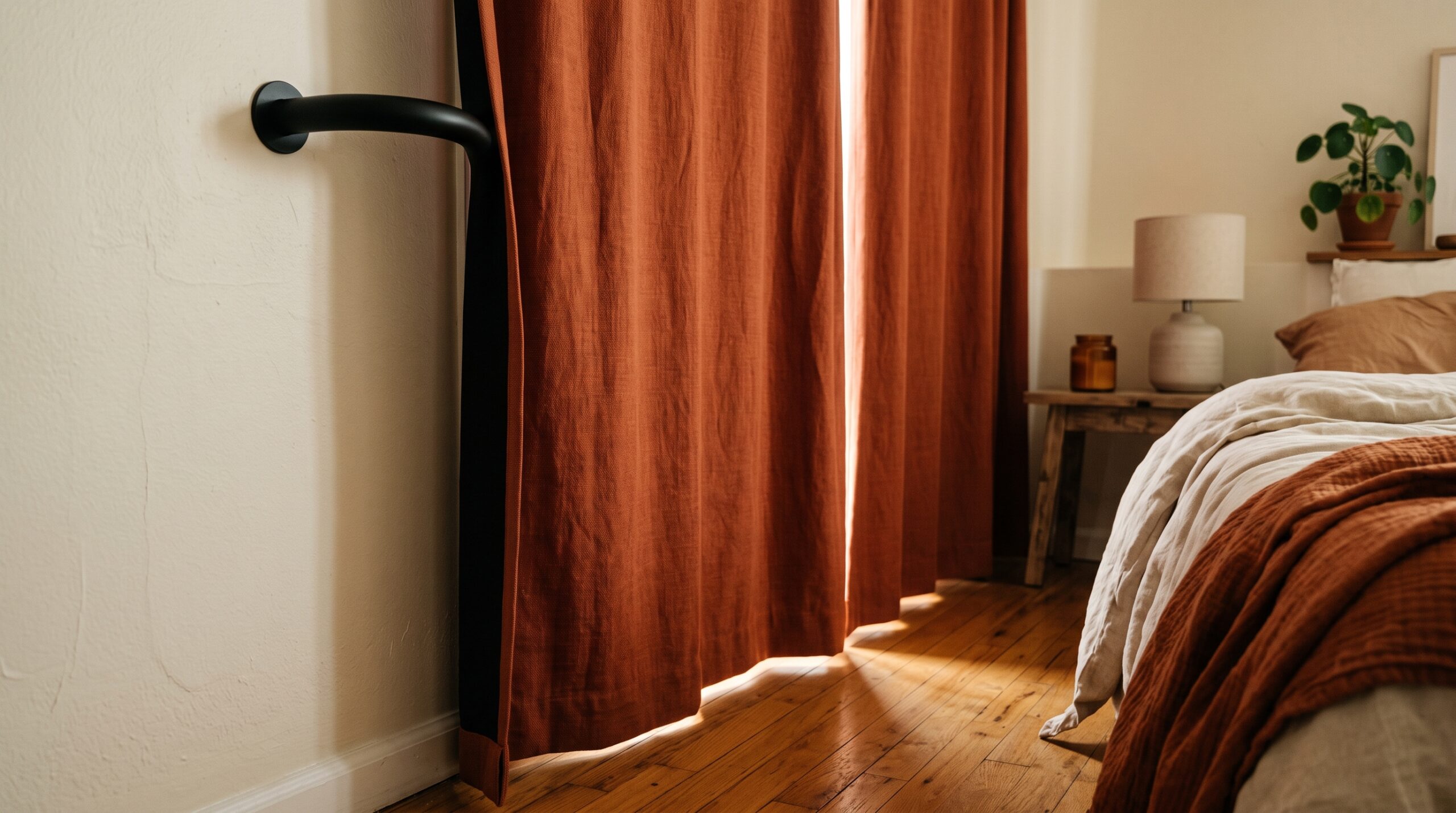
If your panels are dark but light still rings the window, these close the gap. A wraparound rod seals the sides, a liner boosts a panel you already own, and a topper handles the leak above the rod.
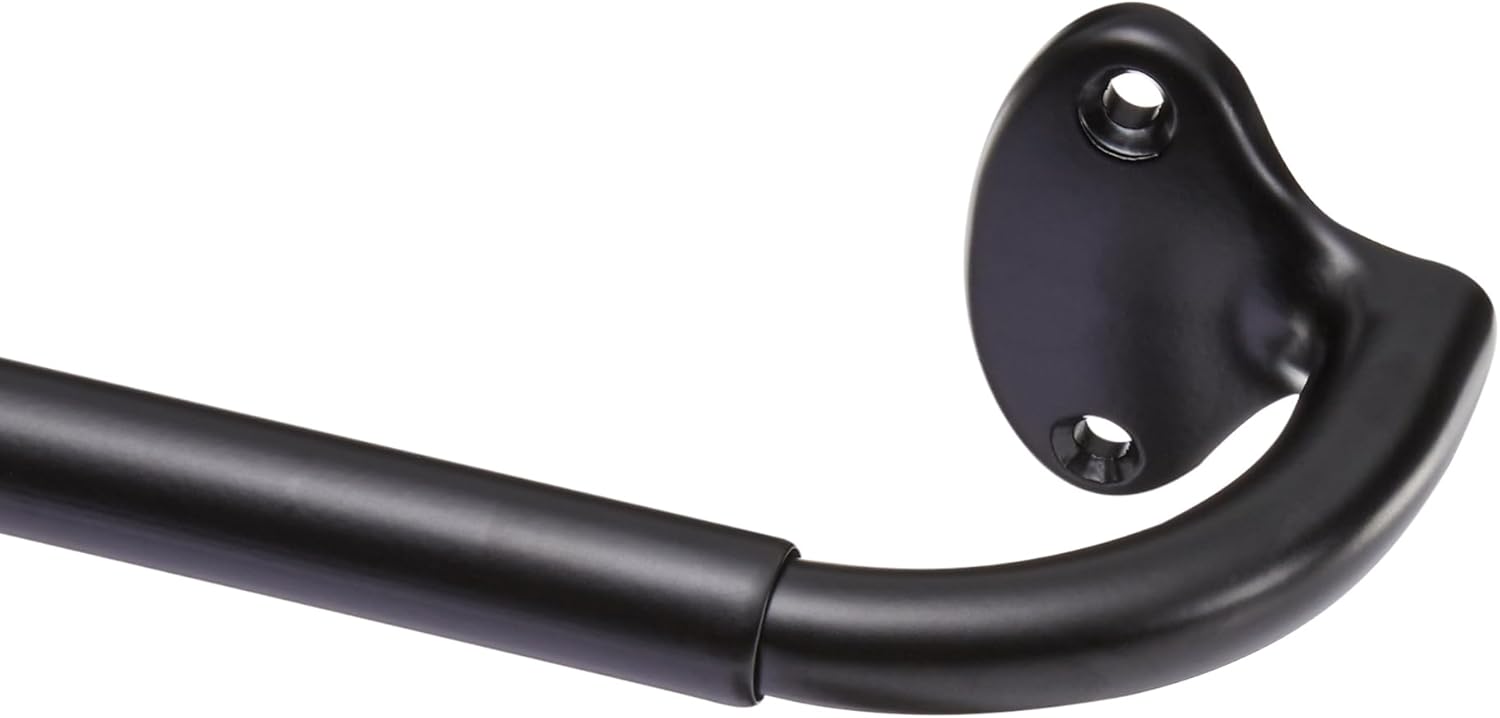
Amazon Basics Wrap-Around Blackout Curtain Rod
If light rings the sides of your window no matter what you hang, this is the fix. The curved ends wrap the panel back to the wall so the fabric seals the corner instead of stopping at the glass. It is rated for heavy blackout drapes, and swapping a straight rod for this one is the single biggest upgrade to how dark a room actually gets.
Check price on AmazonNot for: inside-mount setups; a wrap-around rod needs wall room on each side of the frame.
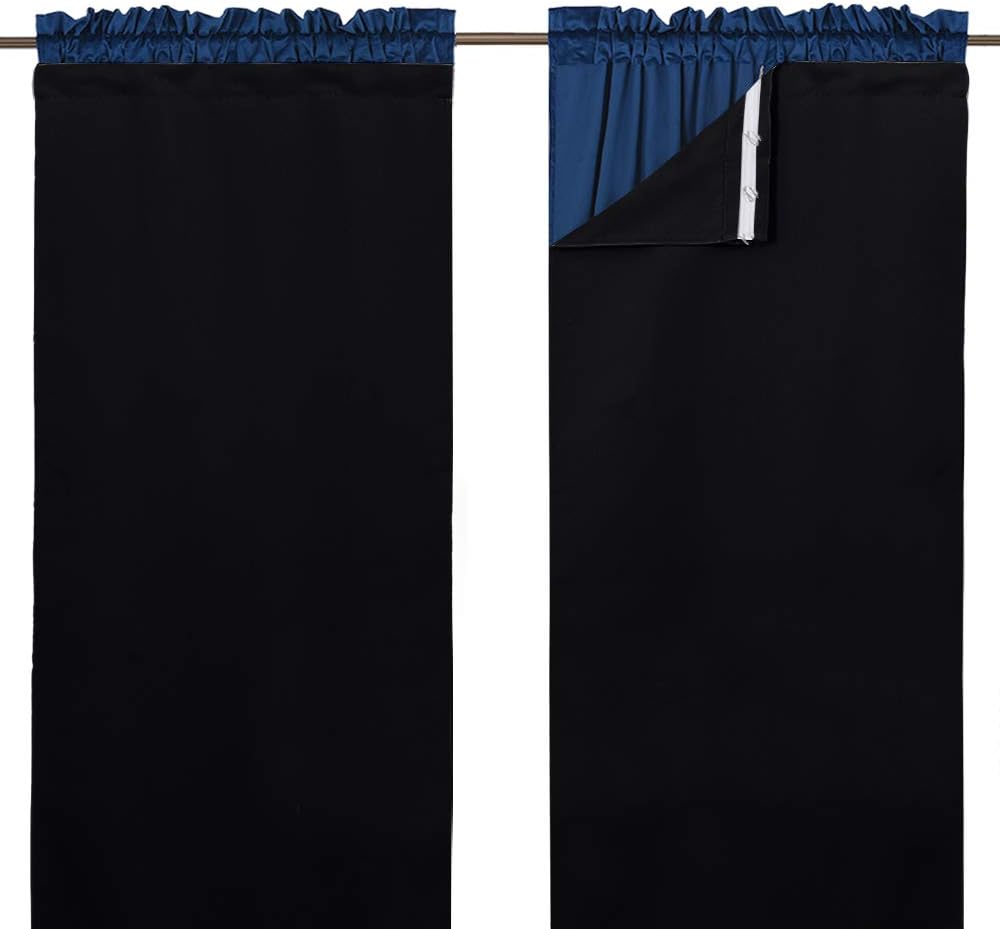
NICETOWN Thermal Blackout Curtain Liner
Stuck with the thin curtains a landlord left up? Hook this liner behind them and they turn into a blackout setup, no new panels needed. The hooks are included, so there is no sewing and no hardware, and it layers on thermal insulation and a little quiet along with the dark. It is the cheapest way to upgrade drapes you already own.
Check price on AmazonNot for: curtains without header hooks or rings to attach the liner to.
Budget, travel, and single-window picks
Last, the odd cases: the cheapest honest blackout pair, a portable panel for a rental you will leave in a year, and a fix for a door or sidelight where a normal rod will not work.

Amazon Basics Portable Blackout Shade with Suction Cups
For a one-year rental or a work trip, skip the rod entirely. This panel suctions straight to the glass, trims to fit, and rolls up in a bag when you move on. Shift workers and anyone sleeping in a bright Airbnb will get the most out of it. Up close it looks utilitarian, but at 2 p.m. in a pitch-dark room, nobody cares.
Check price on AmazonNot for: textured or frosted glass the suction cups cannot seal against.

Deconovo Blackout Door and Sidelight Panel
French doors and entry sidelights need a panel that stays taut, and this one uses rod pockets top and bottom to pull flat over the glass. The narrow 12-inch width is cut for exactly those skinny lights, and it blacks out the gap where a normal curtain would billow. Pair it with the magnetic rods above and the whole door goes dark with no drilling at all.
Check price on AmazonNot for: standard wide windows; this panel is deliberately narrow.
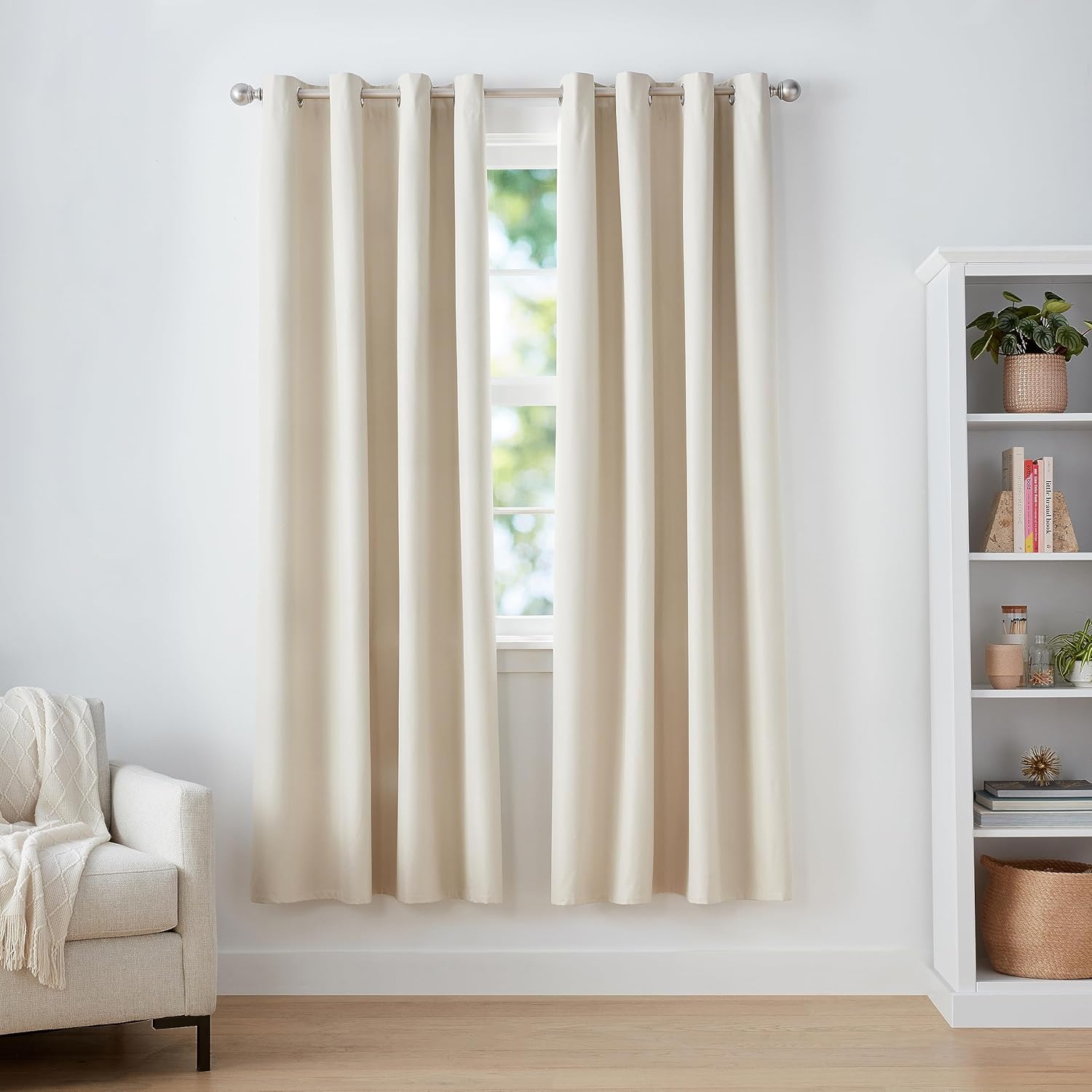
Amazon Basics 100% Blackout Grommet Curtains (Beige)
When budget is the only spec that matters, this is the honest pick. It claims 100% blackout, arrives as a warm beige pair, and the grommets slide onto a tension rod the same way the pricier panels do. The hand-feel is a touch thinner than my top pick, but hung high and wide it still takes a bright room down to sleepable.
Check price on AmazonNot for: anyone chasing the plushest fabric; this trades a little quality for the low price.
How to hang them so the room actually goes dark
Buying the right panel is half the job. Hang it high and wide. Mount the rod several inches above the frame and let it run past the sides, so the fabric overlaps the wall instead of stopping at the glass. Overlap the two panels in the center by a few inches. If light still leaks along the sides, switch to a wraparound rod or add a liner. Do that, and even a cheap panel can take a bright room down to near-black. For more no-drill rental upgrades that come down clean, see my guides to no-drill fabric headboards and removable peel-and-stick wall art.
Frequently asked questions
Do no-drill blackout curtains really block all the light?
The fabric can, if you buy a true 100% blackout or triple-weave panel. Total darkness also depends on sealing the edges. Hang the rod above and wider than the window, use a wraparound rod or add a liner, and overlap the panels in the middle. Fabric alone gets you most of the way; closing the gap gets you the rest.
Will a tension rod hold heavy blackout curtains?
A good spring tension rod holds a standard panel fine, but heavy triple-weave thermal drapes can sag a lightweight rod over time. Check the weight rating, mount it inside a snug frame, and if the window is wide, an adhesive-bracket rod outside the frame carries the load better than tension alone.
How do I hang curtains in a rental without damaging the walls?
Three ways, all reversible. Wedge a tension rod inside the window recess, stick adhesive brackets to the trim and rest a rod on them, or clamp a magnetic rod onto a steel window frame or metal door. Adhesive strips release with a slow straight pull and leave no hole.
What is the difference between blackout and room-darkening curtains?
Room-darkening dims a space but still lets a soft glow through. Blackout, when the label is honest, uses a tight triple-weave or a coated backing that stops light through the fabric. For sleep, buy blackout and confirm the panel is lined or rated 100%.
Can renters get true blackout on a door or an odd window?
Yes. For a metal entry door or a steel-framed window, a magnetic rod plus a panel is the move. For French doors and sidelights, a rod-pocket panel gathered top and bottom stays flat against the glass. For travel or a short-term fix, a portable blackout panel with suction cups goes up in seconds.
Keep reading
- No-drill cordless blinds for renters, the shade version of this same window fix.
- Renter-safe wall decor that leaves no holes, more damage-free ways to make a rental yours.
- No-drill floating shelves for small apartments, storage that goes up and comes down clean.