
A studio is one room pretending to be three. You sleep, work, and eat in the same 400 square feet, and by 9pm the whole place looks like a bedroom that swallowed a living room. I got tired of my bed being the first thing every guest saw, so I hung a curtain across the middle of the room. No drill, no anchors, no note to my landlord. It comes down in about two minutes when I move.
The trick is a heavy-duty spring tension rod spanning the width of the room with a thick curtain panel on it. Done right, it gives you a “bedroom” that did not exist that morning, hides a work corner during a video call, and softens a boxy rental in a way a folding screen never will. Done wrong, the rod sags in the middle by week two and the whole thing slumps to the floor at 3am.
So this is the honest version. I will show you the picks I trust, but first the engineering, because that is where renters lose. Span, weight rating, and curtain density decide whether you get a soft wall or a laundry line.
This post contains affiliate links. If you buy something through one of my links, I may earn a small commission at no extra cost to you. I only recommend products I’d actually use myself.
As an Amazon Associate I earn from qualifying purchases.
My top pick
YNL 41-173 in Heavy-Duty No-Drill Tension Rod
It spans a full studio width, grips drywall or tile with oversized silicone end caps, and carries a real floor-length panel without walking down the wall. Load it with a blackout or velvet drape and you have a bedroom by bedtime. That combination is the whole method in two purchases.
How I picked
- Span first. I only trusted rods that hold their rating across the width a studio actually needs, roughly 7 to 12 feet, without a mid-span droop.
- Load rating over length. A rod that spans 10 feet but only carries a sheer is useless here. I checked the weight rating against a real floor-length panel, which pulls harder than people expect.
- Renter-safe grip. Everything mounts by tension or leans freestanding. Nothing needs a screw, an anchor, or a patch of spackle at move-out.
- Opacity that divides. A partition has to block the sightline. I favored blackout, velvet, and thick woven panels over anything you can see a lamp through.
- It has to look intentional. This is the difference between a cozy zoned studio and a shower curtain in the middle of your living room. Fabric and rod finish both matter.
The engineering renters get wrong
Almost every failed curtain wall I have seen comes down to three mistakes. Fix these and the rest is just picking fabric you like.
1. Rod rating versus actual span
Cheap spring rods are built for a cabinet or a window, not a room. Most start to bow and slip somewhere past six feet, and once the middle dips, the tension at the ends loosens and the whole rod walks its way down the wall. A studio partition usually needs to span 8 to 11 feet, so you want a thick rod, ideally an inch or more in diameter, with a stated weight rating that clears the panel you plan to hang. If a listing only gives you a length and no load number, treat that as a warning. For a genuinely wide gap, a rod built as a room divider beats a repurposed shower rod every time.
2. Wall-to-wall versus ceiling tension
Wall-to-wall is the strong mount. The rod pushes against two opposing walls, and the harder it pushes, the more it grips. This is the setup I use, and it is why the end caps matter (more on that below). If you do not have two facing walls at the right spot, a floor-to-ceiling tension pole is the backup: it jacks between the floor and the ceiling and holds a shorter run of curtain out in open space. Ceiling tension is fussier to level and carries less, so I reach for it only when wall-to-wall is off the table.
3. A curtain heavy enough to be a wall
This is the one people skimp on, and it is the one that decides everything. A sheer panel moves in the draft and shows every shadow behind it, so your “bedroom” still feels like the living room with a scarf hung across it. A blackout or velvet panel hangs dead straight, blocks the sightline, and quietly absorbs sound between the two zones. Go floor-length and let it just kiss the floor, because a curtain that stops at your knees announces itself as a curtain. Density is what turns fabric into architecture.
One more renter note before the picks. If you also want to kill the light from a window in your new sleep zone, the same fabric logic applies there, and I go deeper on it in my guide to no-drill blackout curtains for renters. And if you would rather zone with a floor covering than fabric in the air, my walkthrough on rug placement for studio apartment zoning pairs beautifully with a curtain wall, one on the floor and one overhead.
The load-bearing tension rods
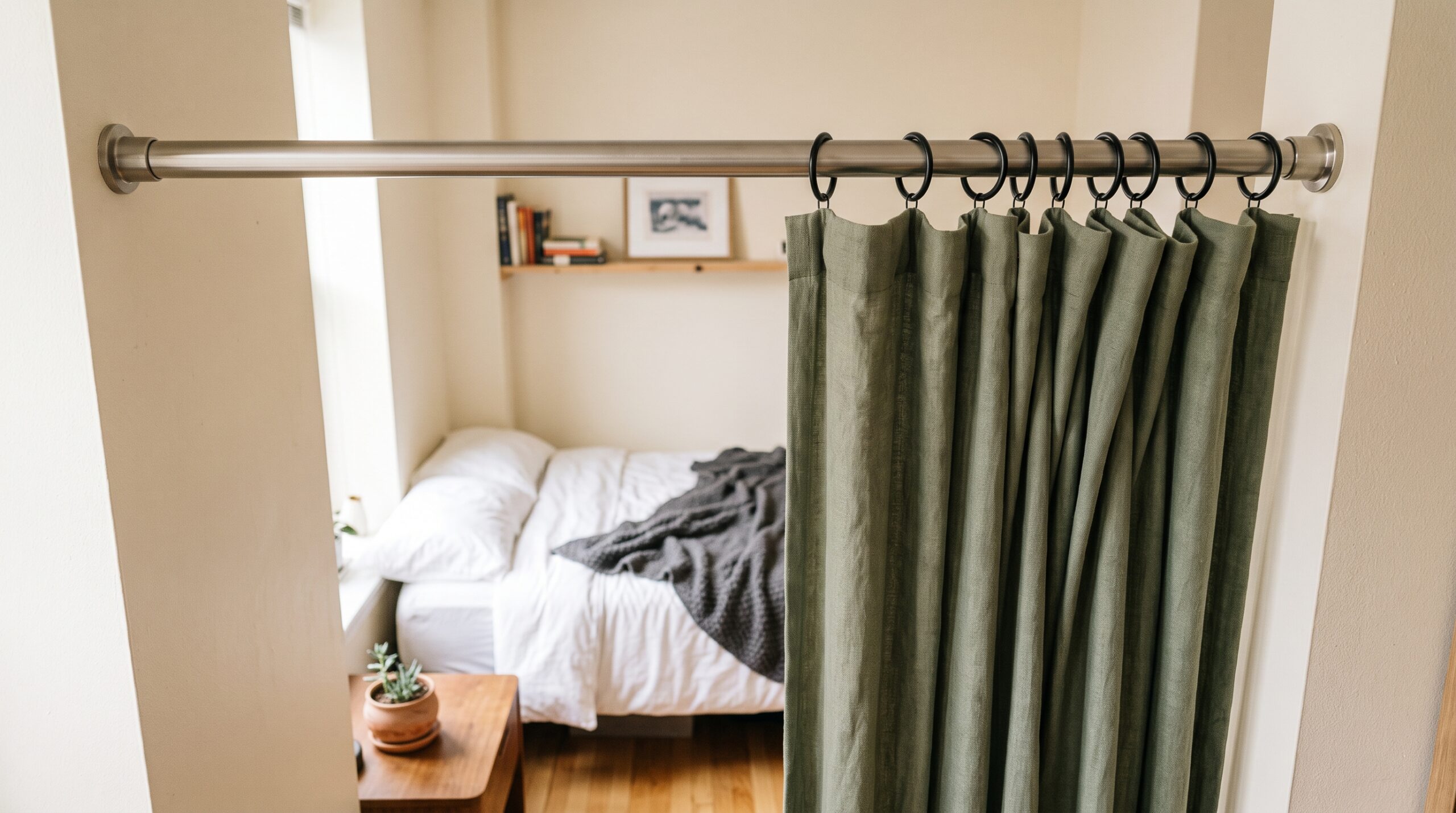
This is the piece that holds your whole partition up, so it is the piece to spend on. A wide-span rod with a real weight rating is the hero of the entire method. Everything else hangs off it.
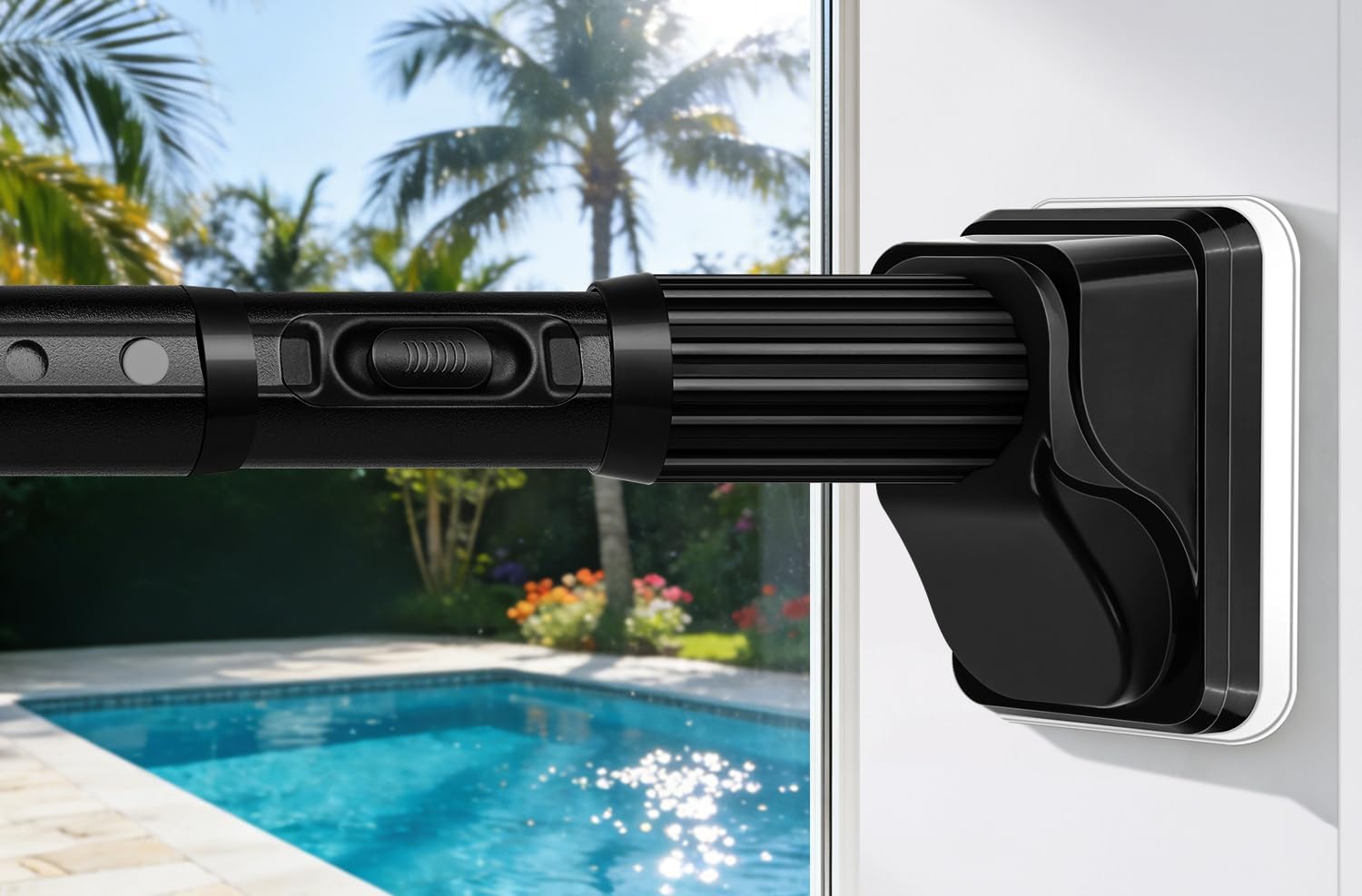
YNL Heavy-Duty No-Drill Tension Rod (41-173 in)
This is the rod I trust to hold a real curtain across a whole studio. The 1.26 inch iron barely flexes at a wide span, and the fat silicone end caps bite into drywall or tile so it stops sliding down the wall by week two. One-click extension had it up in under a minute with no tools.
Check price on AmazonNot for: spans over 14 feet, or anyone who wants a decorative finial look.

STARLATTA 1.1-inch Stainless Tension Rod (31-120 in)
For a narrower studio gap, this thick stainless pole does the job for less. It bills itself as a room divider, stretches to 10 feet, and gives you three ways to mount it: pure tension, adhesive, or screws if you ever own the place. The matte black finish looks intentional instead of bathroom-adjacent.
Check price on AmazonNot for: openings wider than 10 feet (size up to the YNL or a floor-to-ceiling pole).
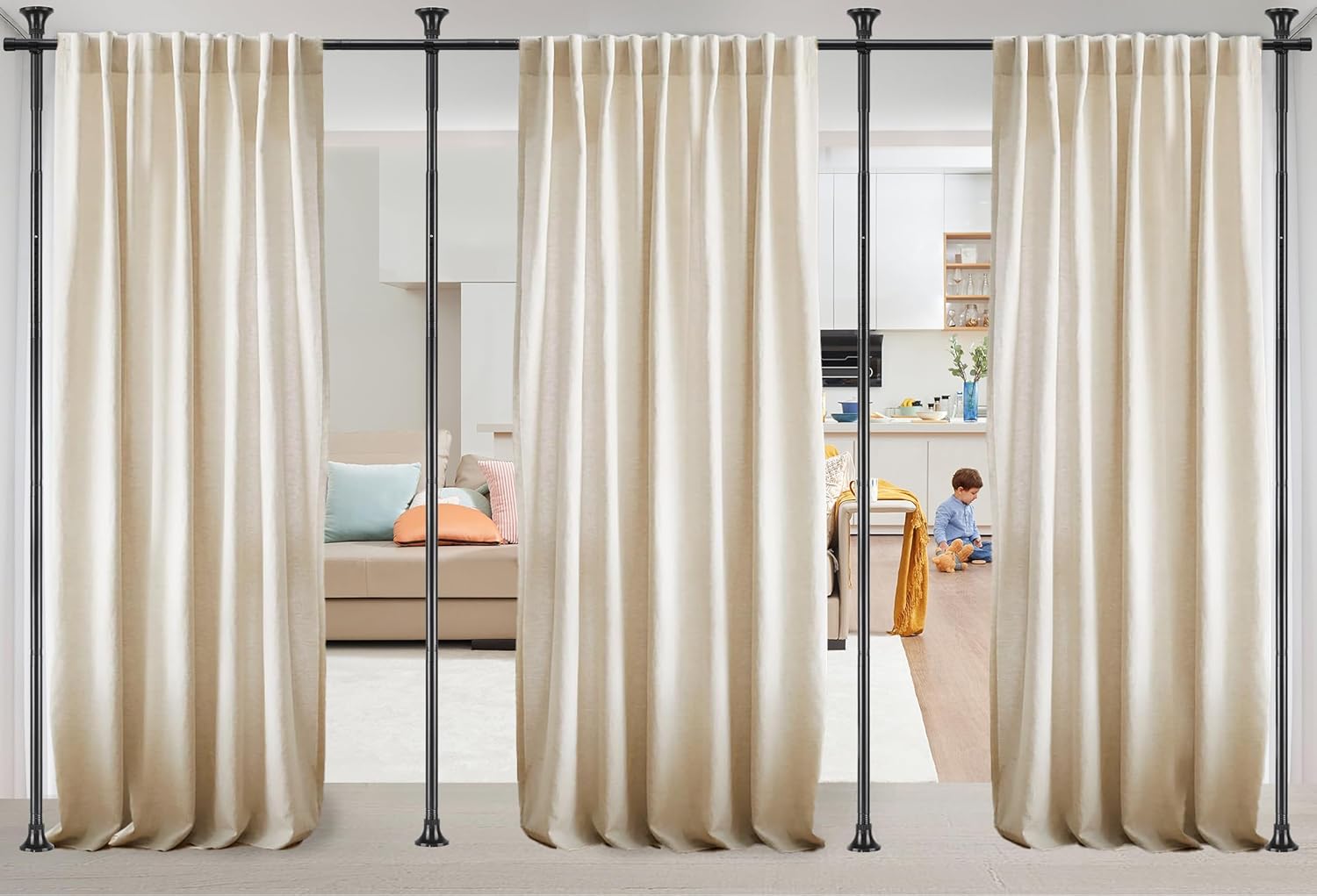
DIOVPLX Floor-to-Ceiling Tension Room Divider
When you do not have two facing walls, this is the answer. Vertical poles jack between floor and ceiling, and the horizontal rod hangs your curtain out in open space, up to 40 lbs of it. You can run it straight, in an L, or curved around a bed corner. It takes more patience to level, so I save it for the layouts a simple wall-to-wall rod cannot reach.
Check price on AmazonNot for: quick five-minute installs, or ceilings taller than 10 feet.
The divider curtain panels
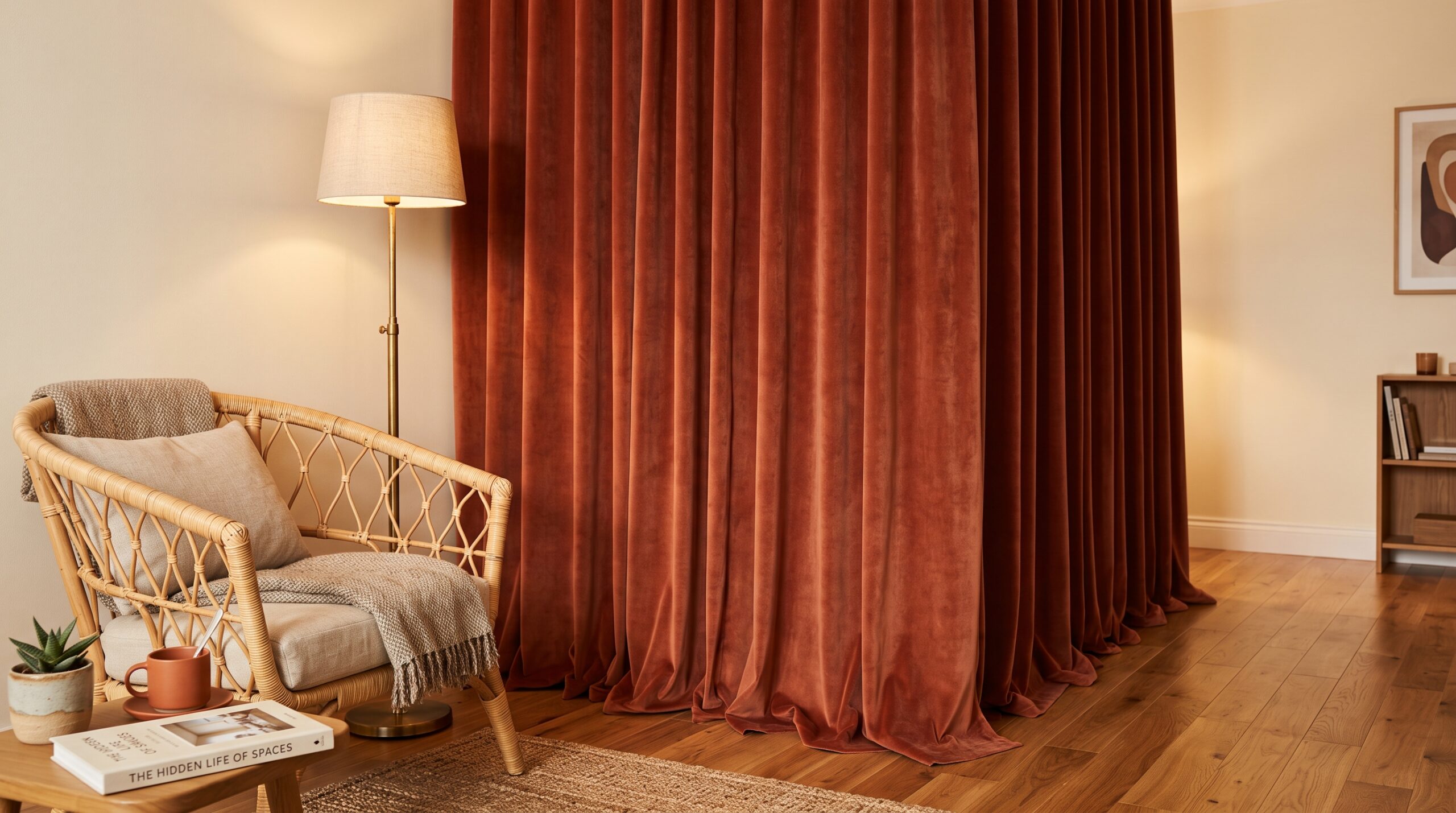
Here is where the partition earns its keep. You want weight and opacity, in a color that works from both sides, because you will see the back of this panel from your bed every morning. Floor-length, always.

RYB HOME Extra-Wide 100% Blackout Room Divider Panel
A single 100 inch panel means no gap down the middle where two curtains meet, which is exactly what you want when the job is blocking a sightline. The three-layer build hangs heavy and dead straight, and the warm mocha looks good from the living side and the bed side. This is my default divider fabric.
Check price on AmazonNot for: ceilings that need a longer than 84 inch drop (size up to the Joydeco).
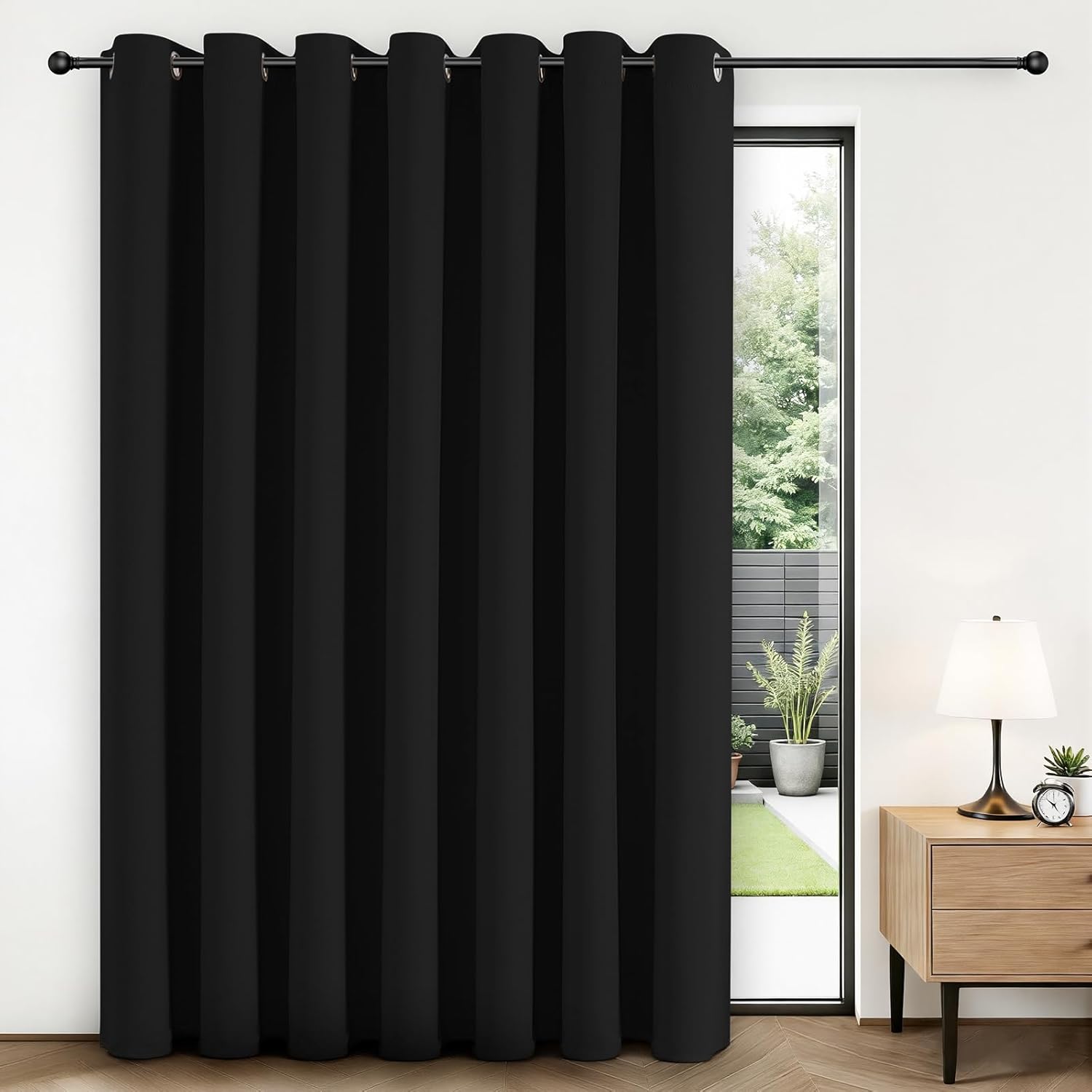
Joydeco Extra-Wide Blackout Divider, 108-inch Drop
Tall studio or a high-mounted rod? The 108 inch length pools at the floor and hides every inch of what is behind it. It runs a wide 100 inches, it is thermal, and it stops glare, so it doubles as a light block if your sleep zone catches the morning sun. The extra length is the whole reason to buy it.
Check price on AmazonNot for: standard 8 foot ceilings, where the length puddles more than you may want.
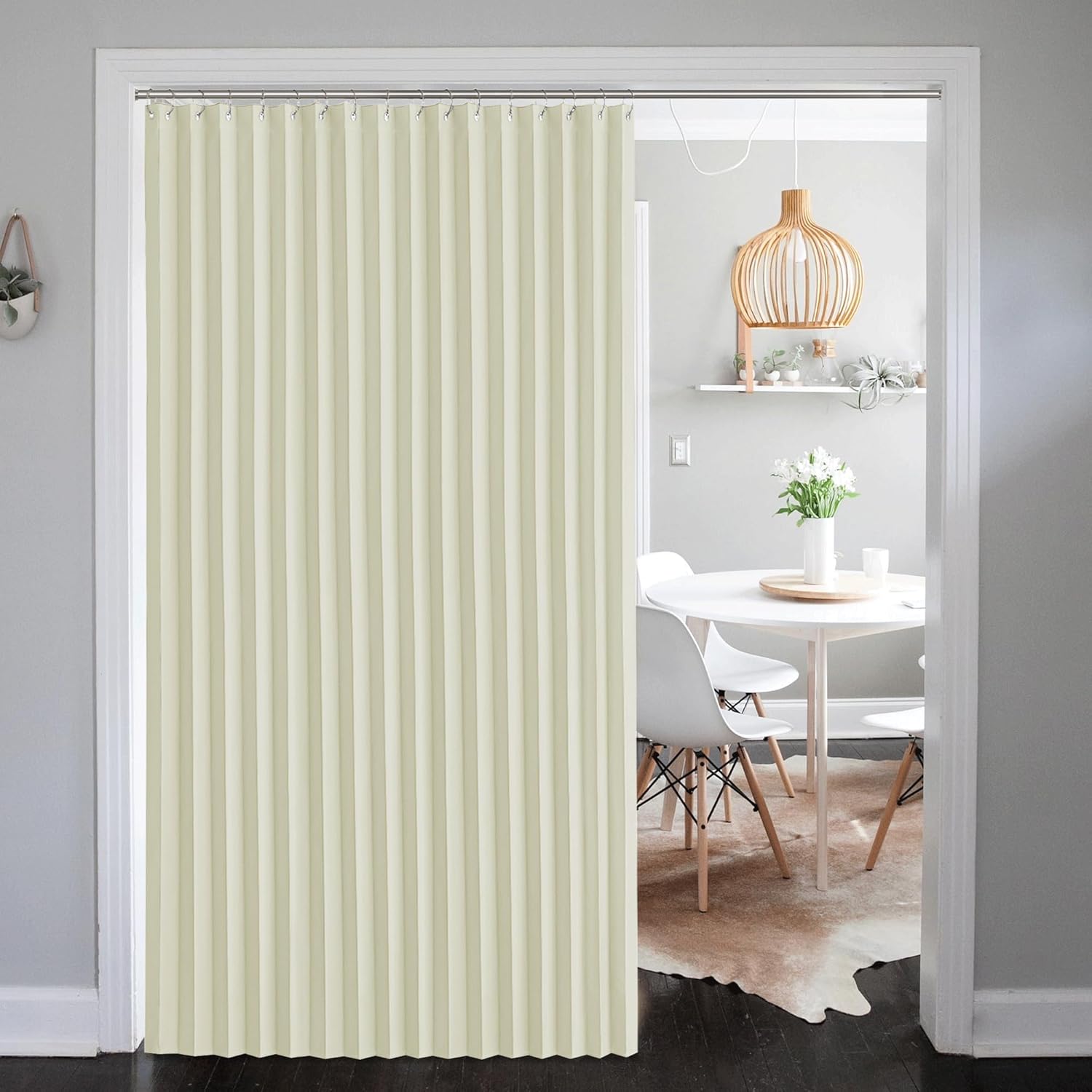
NICETOWN Extra-Wide Blackout Panel, Light Beige
The cheapest way to get a real soft wall. It is a genuine blackout weave, not a flimsy liner, and the neutral beige melts into most rooms so the partition feels calm instead of loud. I hang these on clip rings and swap them when I want a new look without spending much.
Check price on AmazonNot for: anyone who wants a plush hand-feel (this one is practical, not luxe).
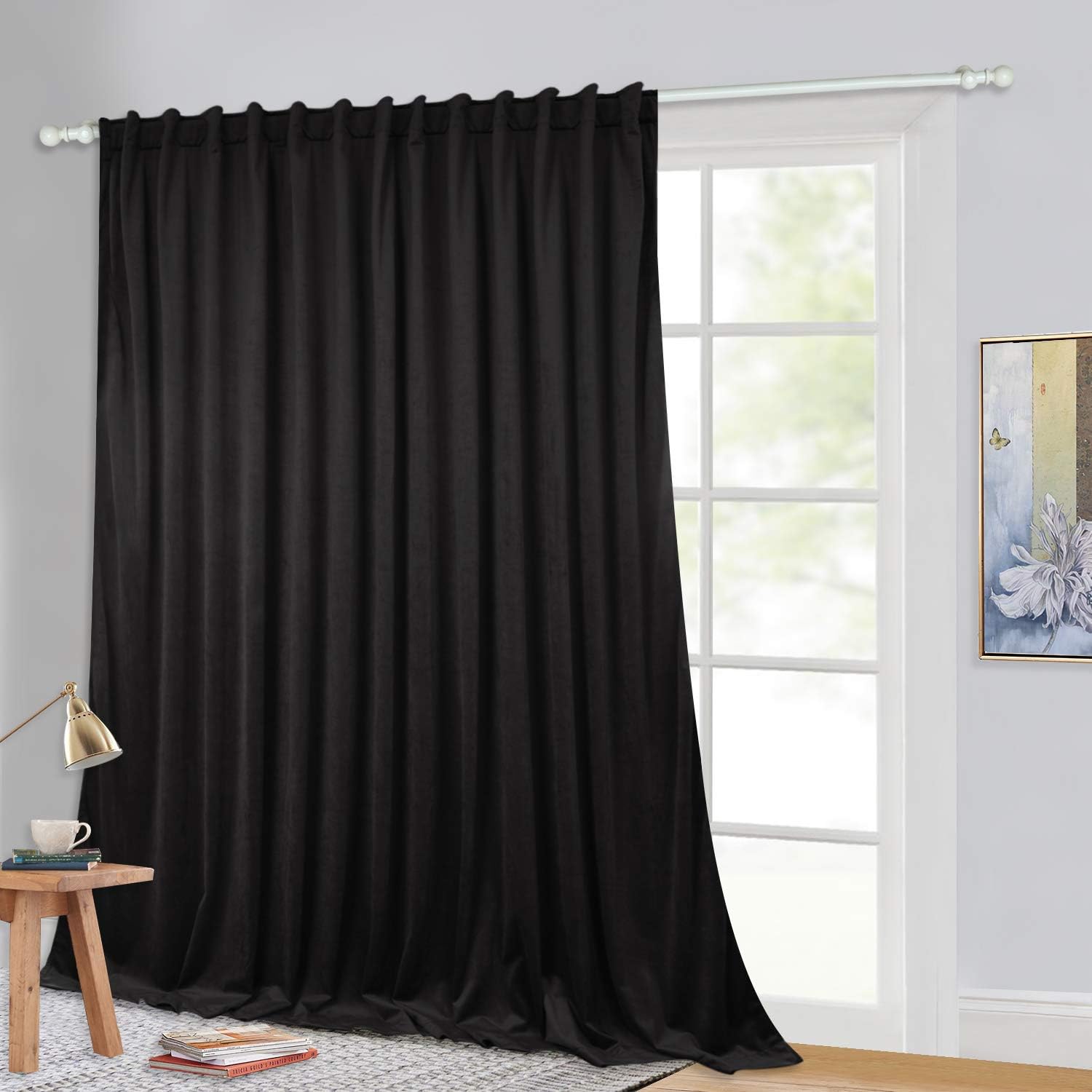
StangH Wide Velvet Backdrop Panel (100 x 96 in)
Velvet is the move if you want the partition to feel like a design decision instead of a fix. At 300 GSM this drapes with real weight, muffles sound between zones, and catches lamp light in a way flat blackout never does. It is the panel guests notice and ask about.
Check price on AmazonNot for: tight budgets, or anyone who fights pet hair (velvet grabs it).
The hardware that makes it work

Small parts, big difference. Clip rings let you hang any panel without sewing a pocket, a connector lets you join two rods for a really wide gap, and protective end caps keep the rod from denting the paint you will want back at move-out.
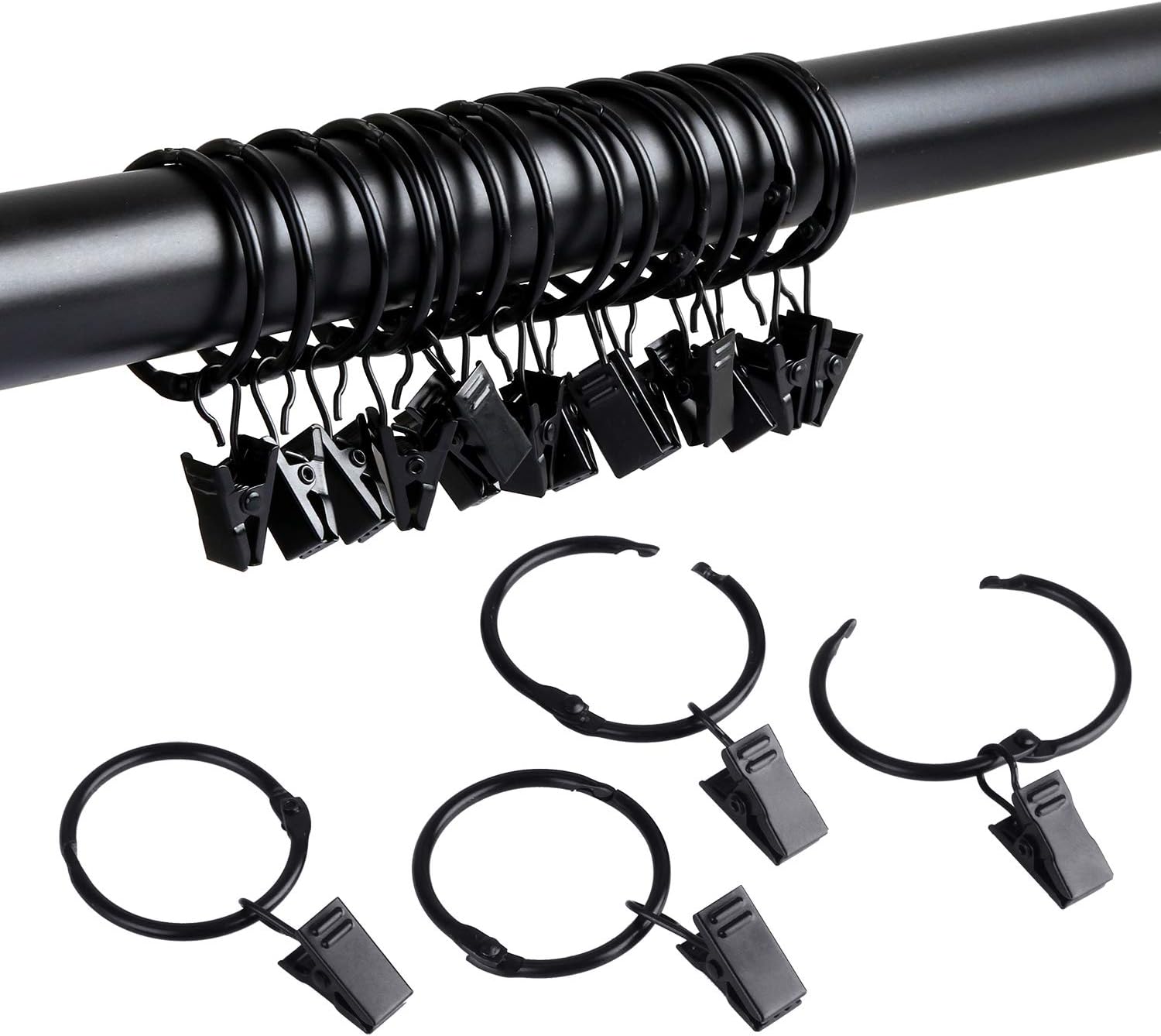
SPLF Openable Curtain Ring Clips (36 pack)
These turn any panel into a divider with no sewing and no grommets. The rings open, so I clip them onto a rod that is already up, and they pop off in seconds when the curtain needs a wash. A 36 pack covers a wide panel with clips to spare.
Check price on AmazonNot for: rods thicker than 1 inch (measure first).
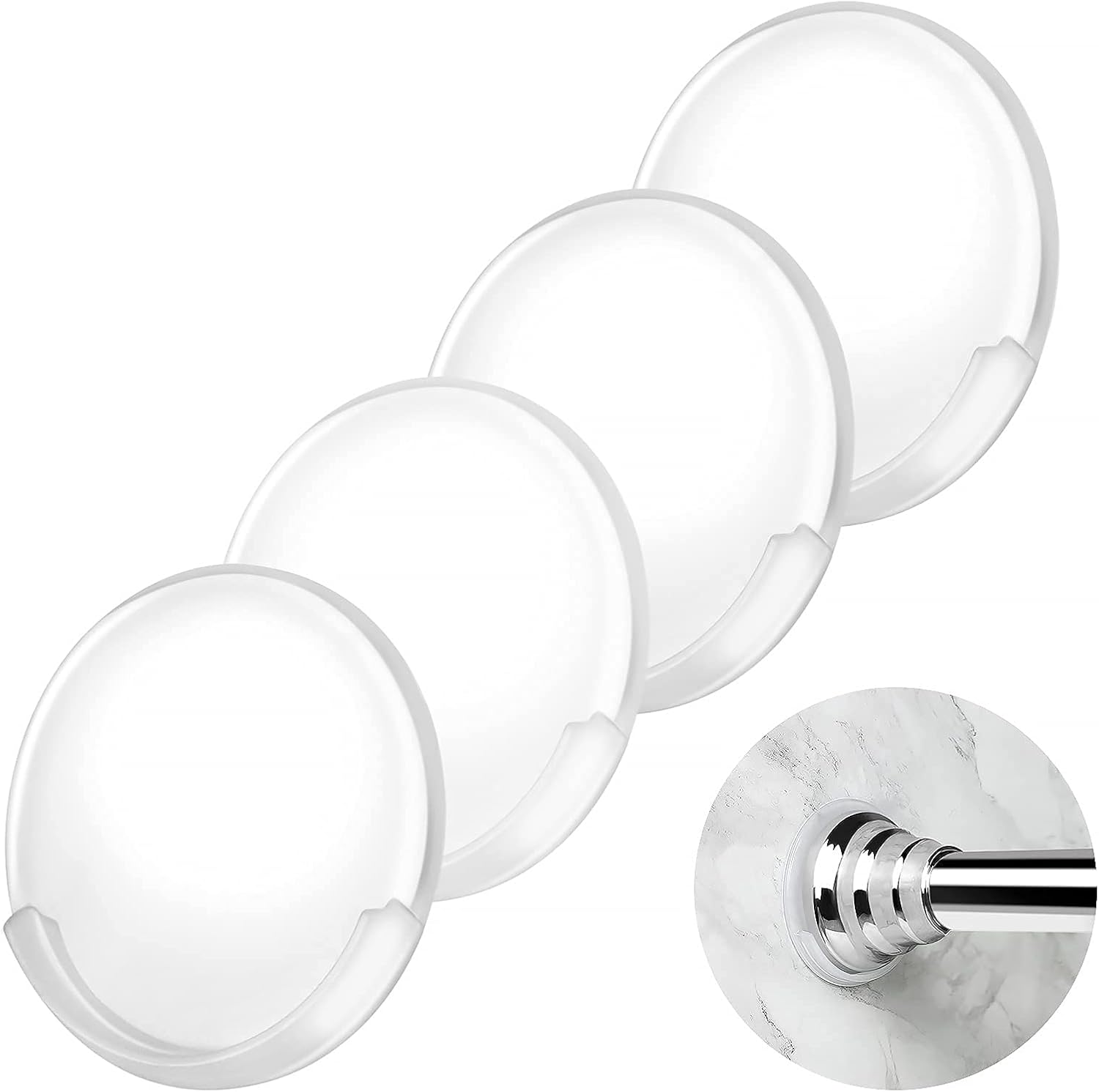
AYAYASTORY Adhesive No-Slip Rod Holder Cups (4 pack)
The quiet fix that stops a wide tension rod from creeping down the wall. These stick-on cups catch each rod end so gravity and a heavy panel cannot drag it loose. They are clear, peel away without a mark, and cost almost nothing, so I add them to every wide span as insurance.
Check price on AmazonNot for: textured or freshly painted walls where adhesive struggles.
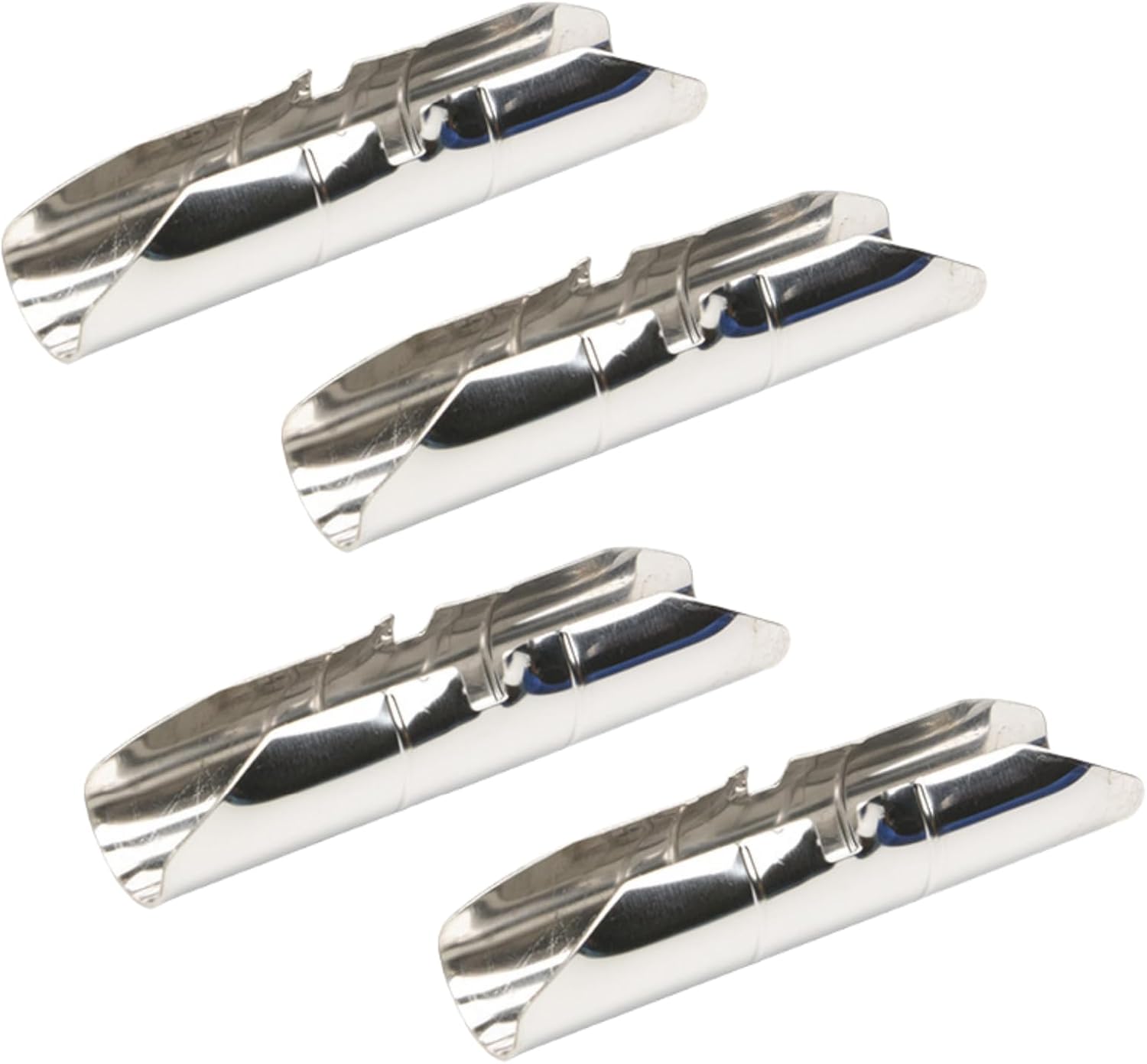
Suwzuqn Stainless Curtain Rod Connectors (4 pcs)
For a gap wider than any single rod, these joiners slide two rods into one long run. The connection is smooth enough that clip rings glide right past it. A small part that quietly solves the widest studio openings.
Check price on AmazonNot for: heavy unsupported spans (a joined rod still needs end support).
When tension will not reach: freestanding backups
Sometimes there is no facing wall, or the run is simply too long for any single rod. That is not the end of the plan. A freestanding folding screen or a portable curtain stand gives you the same zoning with zero contact to the walls at all.
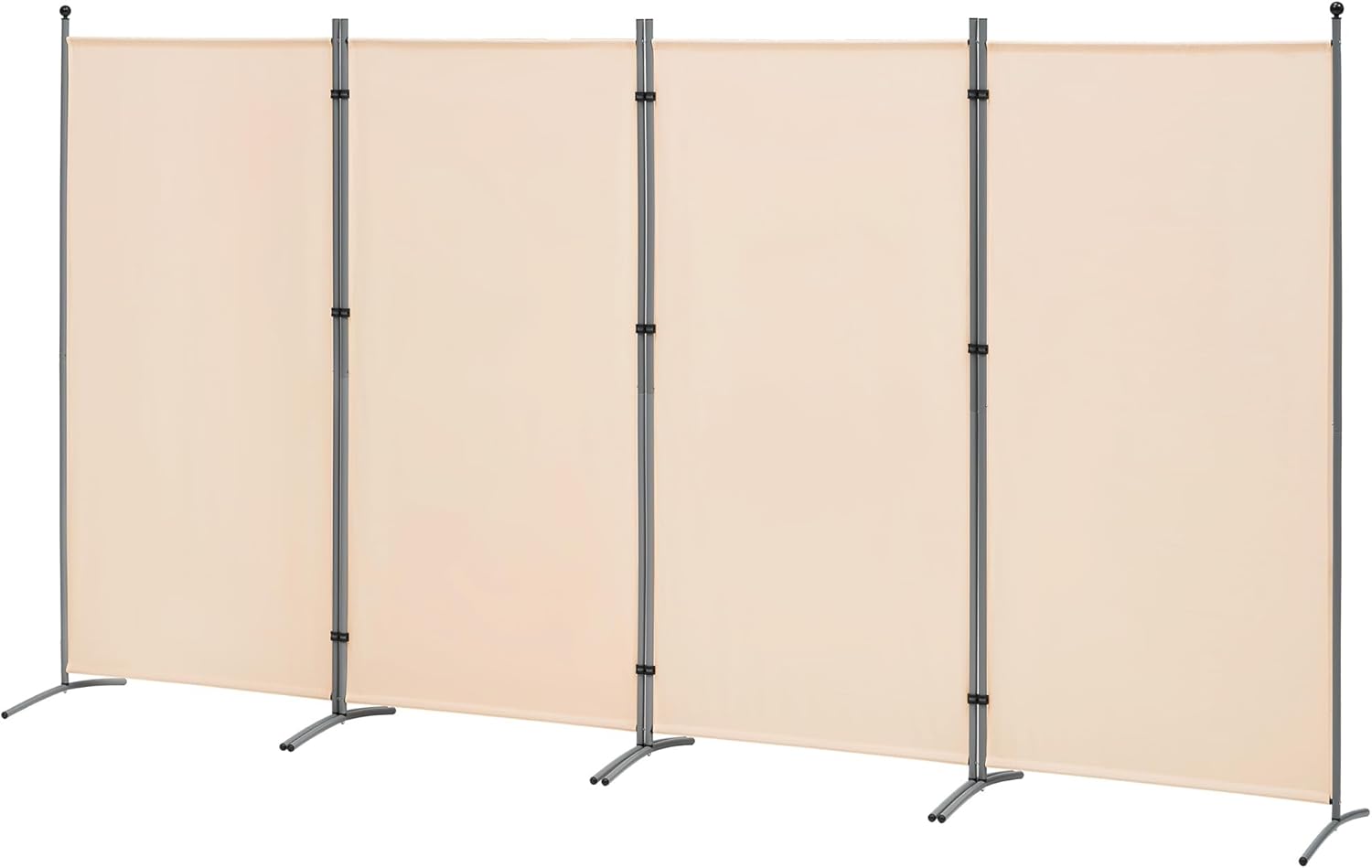
Spurgehom 4-Panel Freestanding Folding Screen (136 in wide)
When tension is off the table, this folding screen zones a room by just standing there. It stretches to 136 inches across four panels, the fabric is fully opaque, and the buckles let you use one panel or all four. It folds flat into a closet when you want the floor back, which is the renter dream.
Check price on AmazonNot for: floor-to-ceiling privacy (it stops at 72 inches tall).

AKTOP Freestanding No-Drill Curtain Divider Stand
This is the freestanding version of the curtain-on-a-rod method: a weighted stand that holds your own panel with zero wall contact. It adjusts from 46 to 91 inches wide, breaks down into a carry bag, and moves with you to the next lease. I reach for it in the middle of a room where no wall or ceiling will help.
Check price on AmazonNot for: very wide openings past 91 inches.
Renter-Friendly Alternative
No two facing walls and a ceiling pole feels wobbly? Lean a four-panel folding screen where you want the break instead. It touches nothing, folds flat in a closet when guests need floor space, and travels to your next place. You lose the full-height coverage of a curtain, but you keep every square inch of your deposit.
Want the softer, whole-room version of this look? I break down zoning a studio end to end, curtain wall included, in my dark cottagecore studio apartment guide. And if a shade suits your sleep zone better than fabric, compare it against my roundup of no-drill cordless blinds for renters.
Frequently asked questions
How wide a room can a tension rod actually divide?
With a purpose-built heavy-duty room-divider rod, a wall-to-wall span of 8 to 12 feet is realistic as long as the weight rating clears your panel. Past that, join two rods with a connector or switch to a freestanding screen. Skip standard shower or window rods for anything over six feet, since they bow and slip in the middle.
Will a tension rod damage my walls?
Not if you cap the ends. A bare metal rod pressed hard into paint can leave a dent or a scuff, so add rubber end caps or small protective pads where it meets the wall. That spreads the pressure and keeps the paint intact, which is the whole point of going no-drill as a renter.
What kind of curtain actually blocks the view like a wall?
Weight and opacity. Blackout, velvet, and thick woven panels hang straight, block the sightline, and even damp the sound between zones. Sheers and thin linens let light and shadow through, so the partition never quite convinces. Buy floor-length and let the hem just touch the floor.
How do I hang a panel that has no rod pocket?
Clip rings. Slide a set of ring clips onto the rod, pinch them along the top edge of any panel, and you are done, no sewing and no grommets required. They also let you take the curtain down for washing in seconds, which matters when it hangs in the middle of a room you live in.
Can I mount a divider if I only have one wall?
Yes, two ways. A floor-to-ceiling tension pole jacks between floor and ceiling and holds a shorter curtain run out in open space. Or go fully freestanding with a folding screen or a portable curtain stand that leans where you want the break. Both keep you drill-free.
Zoning a studio gives each part of your day its own corner, and it lets the whole place breathe again. A curtain wall on a rod that actually holds does that for the price of a nice dinner, and it leaves with you when the lease ends. That is my kind of upgrade.
Keep reading
- Rug placement for studio apartment zoning
- No-drill blackout curtains for renters
- Dark cottagecore studio apartment ideas
For the broader history and forms of these partitions, the overview of the room divider is a useful primer on why fabric, screens, and half-walls each solve the problem differently.