This post contains affiliate links. If you buy something through one of my links, I may earn a small commission at no extra cost to you. I only recommend products I’d actually use myself.
As an Amazon Associate I earn from qualifying purchases.
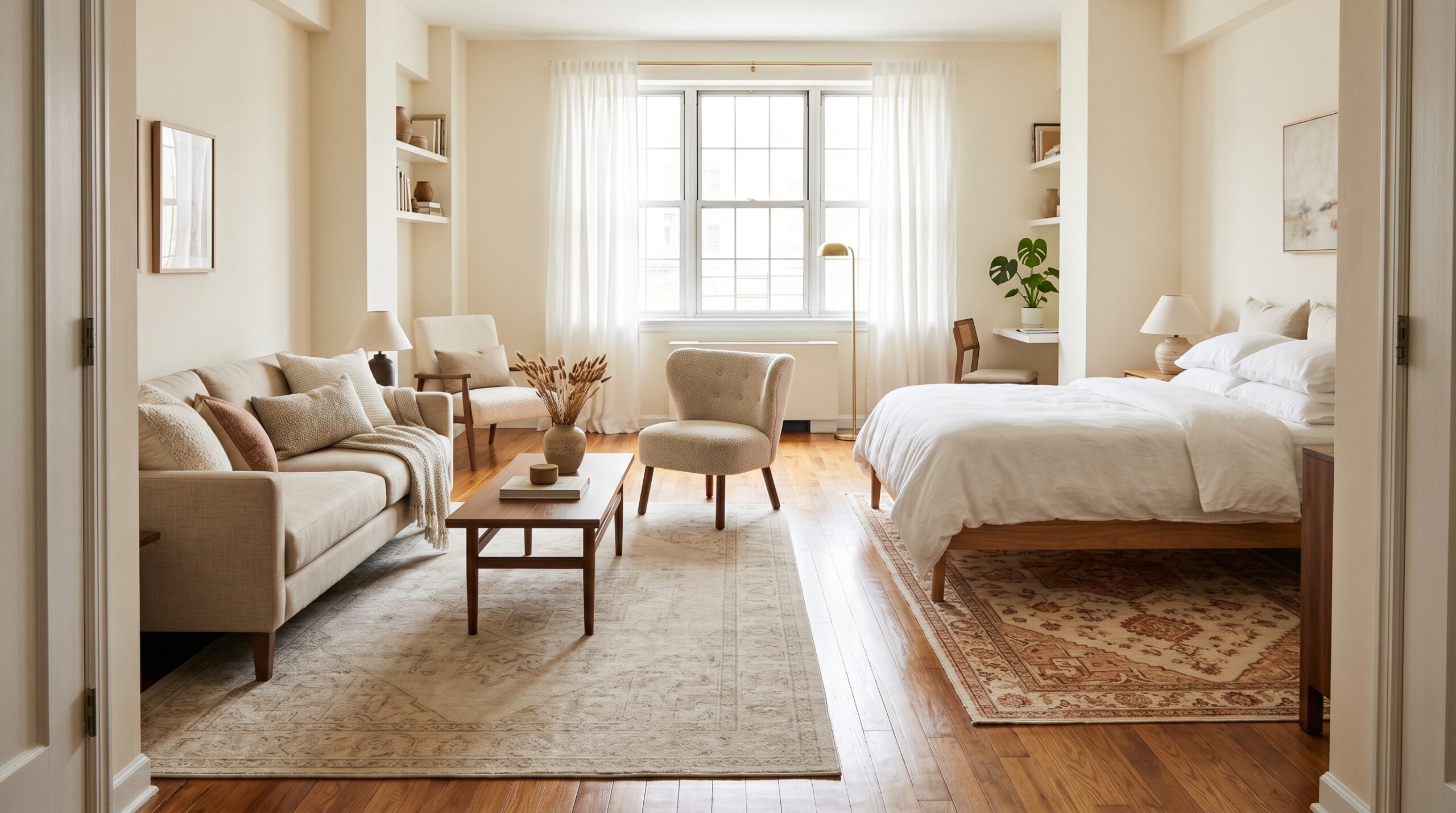
A studio has no walls. The rugs are the walls.
That sentence does most of the work in this post. Once you accept that two cheap area rugs are doing the job a 1990s landlord would have done with drywall, the rug placement decisions get easier. You stop asking “what’s the prettiest rug” and start asking “where does the living zone end and the sleeping zone begin.”
I’ve laid out four studios under 500 square feet using two rugs as the only zoning device. Same logic every time. One bigger rug anchors the social zone (sofa, coffee table, TV). One smaller rug anchors the sleep zone (bed and one nightstand). The bare floor between them reads as a hallway, which is exactly what a studio needs to feel like more than one room.
For more studio-zoning ideas, see my reading nook studio apartment guide, my small kitchen rug placement post, and my apartment-sized sofa roundup for the piece the living-zone rug has to fit under.
The two-rug rule
One rug per zone. Two zones in a studio: living and sleeping. Sometimes a third if you have a galley kitchen or entry foyer that’s clearly its own space.
Three rugs is the maximum, and the third one has to be a runner or a small circle, not a third area rug. Four rugs and the floor reads cluttered, which is the exact problem a studio is trying not to have.
If you’re trying to zone with one giant rug that covers most of the floor, you’re not zoning, you’re carpeting. A single 9×12 in a 400-square-foot studio reads like wall-to-wall in a smaller apartment. The eye sees one floor, one room.
How I think about studio zone rugs
- Which zone has the larger furniture footprint. Sofa-and-coffee-table almost always wins, so that zone gets the bigger rug.
- Whether the sleep zone is visible from the living zone. If it is, the two rugs need to read as the same family without matching.
- How many people walk between zones daily. Solo studio can use higher-pile rugs; a two-person studio wants flatweave or low-pile because foot traffic doubles.
- What’s under the rug. Hardwood and LVP need pads. Tile and laminate need pads with extra grip.
- Whether the bed is against a wall. Against a wall, a 5×7 with front 2/3 on rug works; centered in a zone, you want a 5×8 or larger that the whole frame sits on.
Step 1. Map your zones before you shop
Stand at the entrance. Look at the longest sightline. That’s the line your zones live along.
In most studios that sightline is door-to-window, and the rooms break up like this: entry foyer (small, optional), galley kitchen (small, optional), living zone (largest), sleep zone (smaller, often farthest from door).
Draw it on graph paper. One square per foot. Mark the sofa, the bed, the coffee table, the dresser. Two rectangles where furniture actually clusters. Those rectangles tell you the rug sizes you need before you ever scroll a listing.
A common map for a 400-square-foot studio: living zone roughly 10 by 12 feet, sleep zone roughly 8 by 9 feet. That math says an 8×10 in the living zone and a 5×7 or 5×8 in the sleep zone. The bare floor between them, 2 to 4 feet of clear path, is the hallway.
Step 2. Size each zone’s rug
Living zone. Sofa front legs (or all legs, if your studio is big enough) sit on the rug. Coffee table sits fully on the rug. Accent chair has at least its front legs on the rug. The rug extends 6 to 12 inches past the furniture footprint on the sides where you walk. That lands at 8×10 for almost every studio with a 70- to 84-inch sofa. Go to 9×12 if the sofa is bigger.
Sleep zone. A full-size bed with bedside tables wants a 5×7 with the bottom 2/3 of the bed on the rug. A queen wants a 5×8 minimum (a 5×7 fits but barely, the rug ends right at the foot of the bed). A queen freestanding in the middle of the sleep zone wants a 6×9. A king centered in a sleep zone wants a 6×9 or 8×10.
The mistake I see most often: a 4×6 in the sleep zone. The bed completely covers it, the rug looks like a bath mat that escaped, the zone reads incomplete.
Step 3. Pick two palettes that talk to each other
Two rugs in one room is one design decision, not two. Pick them together or at least with the other one in your hand.
The rule I use: same warmth, different pattern. If the living rug is a warm beige with a faded tile pattern, the sleep rug is a warm cream with a small medallion. Both warm, different motifs, reads intentional.
Opposite is also fine: same pattern, different scale. Small-scale Persian in the sleep zone, large-scale faded Moroccan in the living zone. Same family.
What does not read intentional: warm cream living rug, cool grey sleep rug. The temperature mismatch makes the floor look like two unfinished rooms.
Step 4. Place each rug deliberately
Living zone. Pull the rug 4 to 6 inches off the back wall. The gap reads as “the rug ends here, the wall is over there.” The sofa centers on the rug or sits 2 inches in front of center, leaving a slightly larger strip behind the sofa than in front of the coffee table. That asymmetry is what makes the zone read settled.
Sleep zone. Bottom 2/3 of the bed sits on the rug, headboard end on bare floor. The rug extends 12 to 18 inches past the foot of the bed and 18 to 24 inches past each side. Against a wall: 18 to 24 inches off the open side, 6 to 12 inches off the foot.
The hallway between. Bare floor. No third rug, no runner connecting the two zones. A connecting runner cancels the zoning you just paid for.
Common zoning mistakes
Centering one rug across both zones. If the same rug touches the sofa legs and the bed legs, you don’t have two zones, you have one room. Worth doing if you’re going for studio-as-open-concept. Not worth doing if you wanted the sleep zone to feel separate.
Two rugs that match exactly. Same brand, same color, same pattern, two sizes. Reads as a hotel suite, not a home. Vary the pattern scale or the secondary color.
Sleep-zone rug too small. 4×6 under a queen is the most common version. Buy the 5×7 minimum.
Living-zone rug pushed against the TV wall. The rug should anchor the seating, not the screen. Pull it toward the sofa.
No rug pad in either zone. Hardwood plus no pad plus a few months of traffic equals curling corners and a rug that walks toward the kitchen by itself.
Galley runner aligned to the kitchen instead of the studio. If the galley is visible from the living zone, the runner’s palette has to match the living-zone rug’s palette.
Shop the rugs I actually use
These are the ten rugs I would put in a studio apartment to do zone work, sorted by zone. All are in stock on Amazon at the time of writing, all are renter-friendly, and most are machine washable or wipeable.
Living-zone anchor (the 8×10)
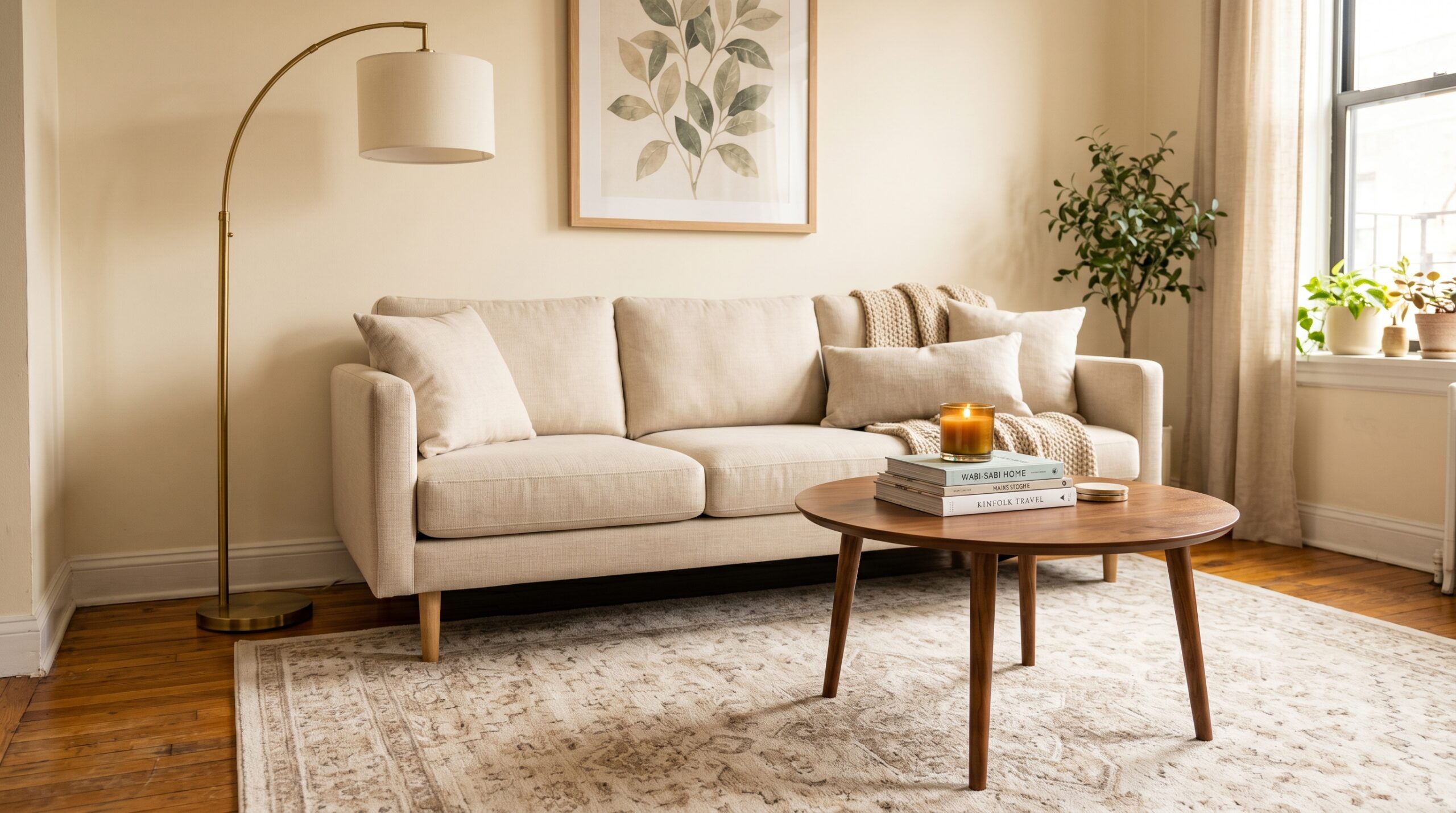
1. nuLOOM Becca Traditional Tiled, Beige (top pick)
The default living-zone pick for a studio under 500 square feet. Faded tile pattern reads neutral from the bed-side of the room, which is what you want from a rug that’s the largest object in the studio. Polypropylene, stain resistant, low pile, all of which matters when this rug has to take sofa-leg pressure, coffee-table pressure, and the occasional dropped wine glass. Shop the nuLOOM Becca on Amazon
nuLOOM · 8′ x 10′ (rectangular) · polypropylene, faded transitional tile, beige · stain resistant, non-shed, power loomed
Not for: cool-palette studios. The beige reads orange against grey walls; use the Moroccan Blythe instead.
2. nuLOOM Moroccan Blythe, Grey (cool-palette alternate)
Same 8×10 footprint, cooler palette. Faded Moroccan pattern stays quiet from across the studio, holds up the same way under traffic, swaps in one-to-one when the rest of the studio leans grey or blue. Shop the nuLOOM Moroccan Blythe on Amazon
nuLOOM · 8′ x 10′ (rectangular) · polypropylene, faded bohemian Moroccan, grey · stain resistant
Not for: studios that already have a busy patterned sofa. The Moroccan motif fights with anything bold above it.
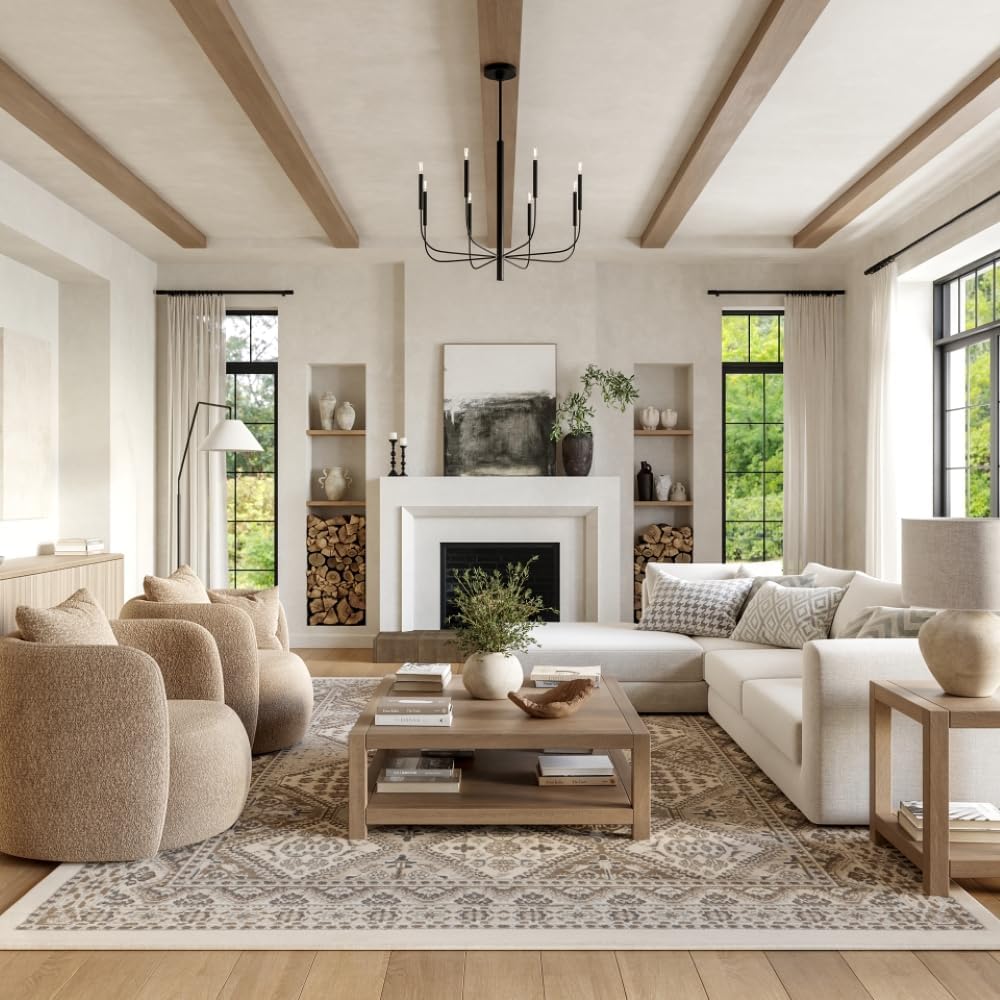
3. RUGPADUSA Dual Surface Rug Pad (the pad that matters)
A studio rug is the largest single object on the floor, and you do not skip the pad for it. The Dual Surface is 1/4-inch thick, felt on top, rubber on bottom, which gives you slip resistance plus enough cushion to feel under socked feet. Cuts down to size if your living zone is irregular. Shop the RUGPADUSA Dual Surface on Amazon
RUGPADUSA · 8′ x 10′ (rectangular) · 1/4″ thick, felt + rubber, made in USA · safe for hardwood, LVP, tile, laminate
Not for: thicker rugs with built-in rubber backing. Skip the pad (it lifts the rug too high and the edges curl).
Sleeping-zone anchor (the 5×7 or 5×8)
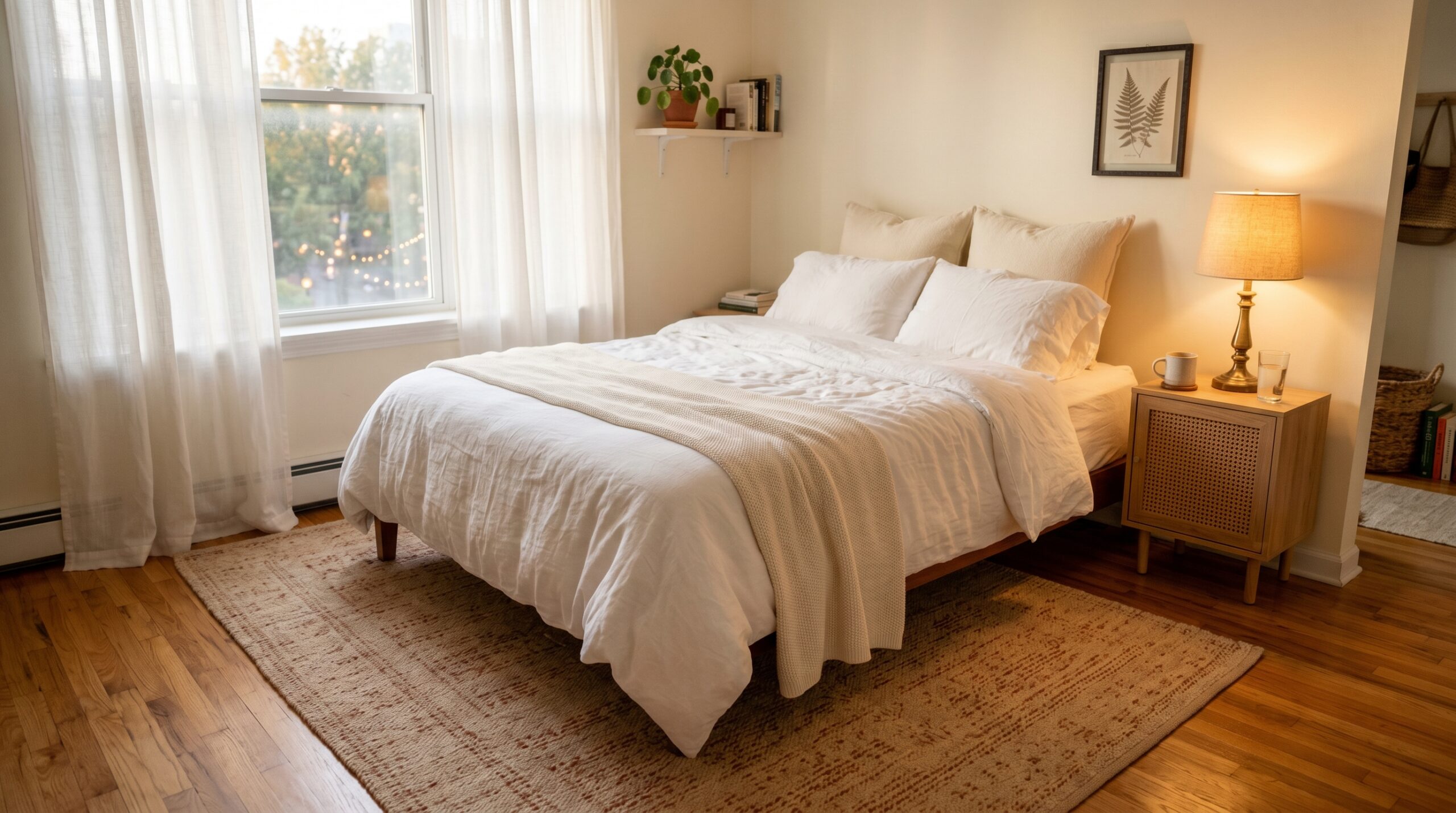
4. BILEEHOME Boho Neutral 5×7 (washable, warm)
The washable sleep-zone pick. Lint, foot dust, and dropped face-cream stains are real things next to a bed, and a 5×7 you can take to a laundromat is the only honest answer. Light tan and rust pattern pairs with the Becca living rug without matching it; the temperature is warm in both rugs. Shop the BILEEHOME 5×7 on Amazon
BILEEHOME · 5′ x 7′ (rectangular) · washable polyester, light tan with rust terracotta pattern · foldable, ultra-thin, non-slip backing
Not for: cool-palette studios. The rust reads orange against blue or grey.
5. Safavieh Classic Vintage 5×8 Cream and Grey (low-pile alternate)
When the BILEEHOME’s washability matters less than a flatter profile. The Safavieh sits lower under a bed frame, which matters if your bed is on a metal Ikea-style frame with caster wheels that catch on thicker rugs. Cream-and-grey palette stays quiet against a moodier headboard wall. Shop the Safavieh CLV306A on Amazon
Safavieh · 5′ x 8′ (rectangular) · 100% cotton flatweave, cream and grey, distressed oriental pattern
Not for: heavy foot traffic next to the bed. Cotton flatweaves wear faster than polypropylene.
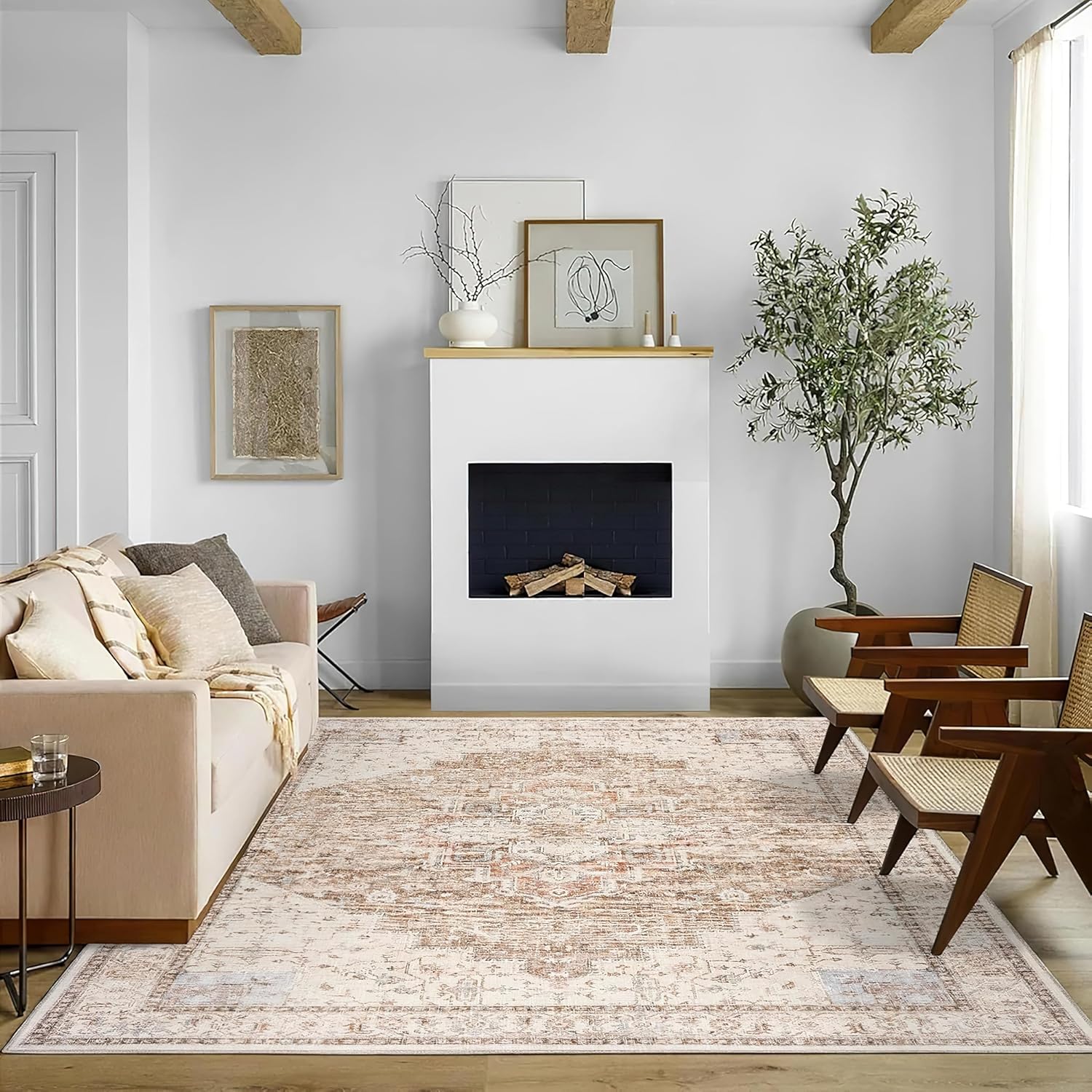
6. Safavieh Classic Vintage 5×8 Blue and Grey (cool-palette alternate)
The cool version of the Safavieh. Blue-and-grey medallion adds the second pattern when your living rug is the Moroccan Blythe, keeping the studio in one palette family. Shop the Safavieh CLV206M on Amazon
Safavieh · 5′ x 8′ (rectangular) · 100% cotton flatweave, blue and grey, handmade oriental medallion
Not for: warm-palette studios. Pair with the Moroccan Blythe living rug, not the Becca.
Galley kitchen zone (the runner)
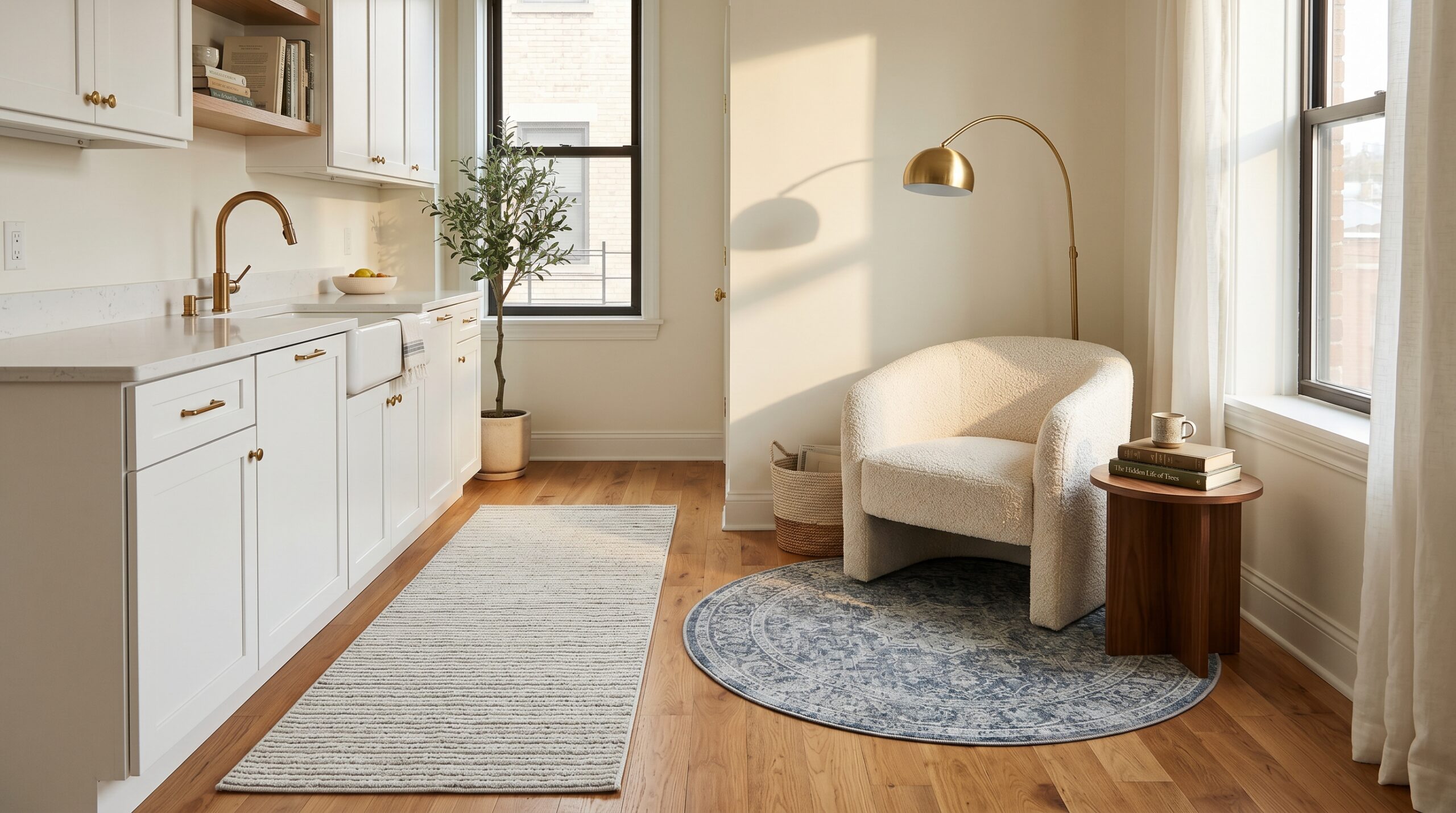
7. MaxRugrs Washable Runner 2’6″x6″, Ivory Grey
If your studio has a galley kitchen visible from the living zone, this is the third rug. Built-in non-slip backing (no separate pad needed), washable for olive-oil splashes, and ivory-grey is the neutral that bridges either warm or cool living-zone palettes. Shop the MaxRugrs Runner on Amazon
MaxRugrs · 2’6″ x 6′ (rectangular) · washable polyester, ivory grey, vintage print · built-in non-slip backing
Not for: studios with a single open kitchen-living-bed wall. Use the round (next pick) instead; a runner there reads like a hotel hallway.
Reading nook or entry circle (the break)
8. LIVEBOX Round 4ft, Blue and Grey Medallion
The round breaks the studio’s grid of two rectangles, which a small studio needs. Anchors a reading nook (chair plus lamp plus side table) without committing to a third rectangle. Also works at the entry door if your studio dumps you straight onto hardwood. Shop the LIVEBOX 4ft Round on Amazon
LIVEBOX · 4 ft round · washable polyester, foldable, distressed boho medallion, blue and grey
Not for: studios that already have a busy living rug. If the Becca or Moroccan is doing the heavy pattern work, use a solid jute (next pick) instead.
Layering and renter add-ons
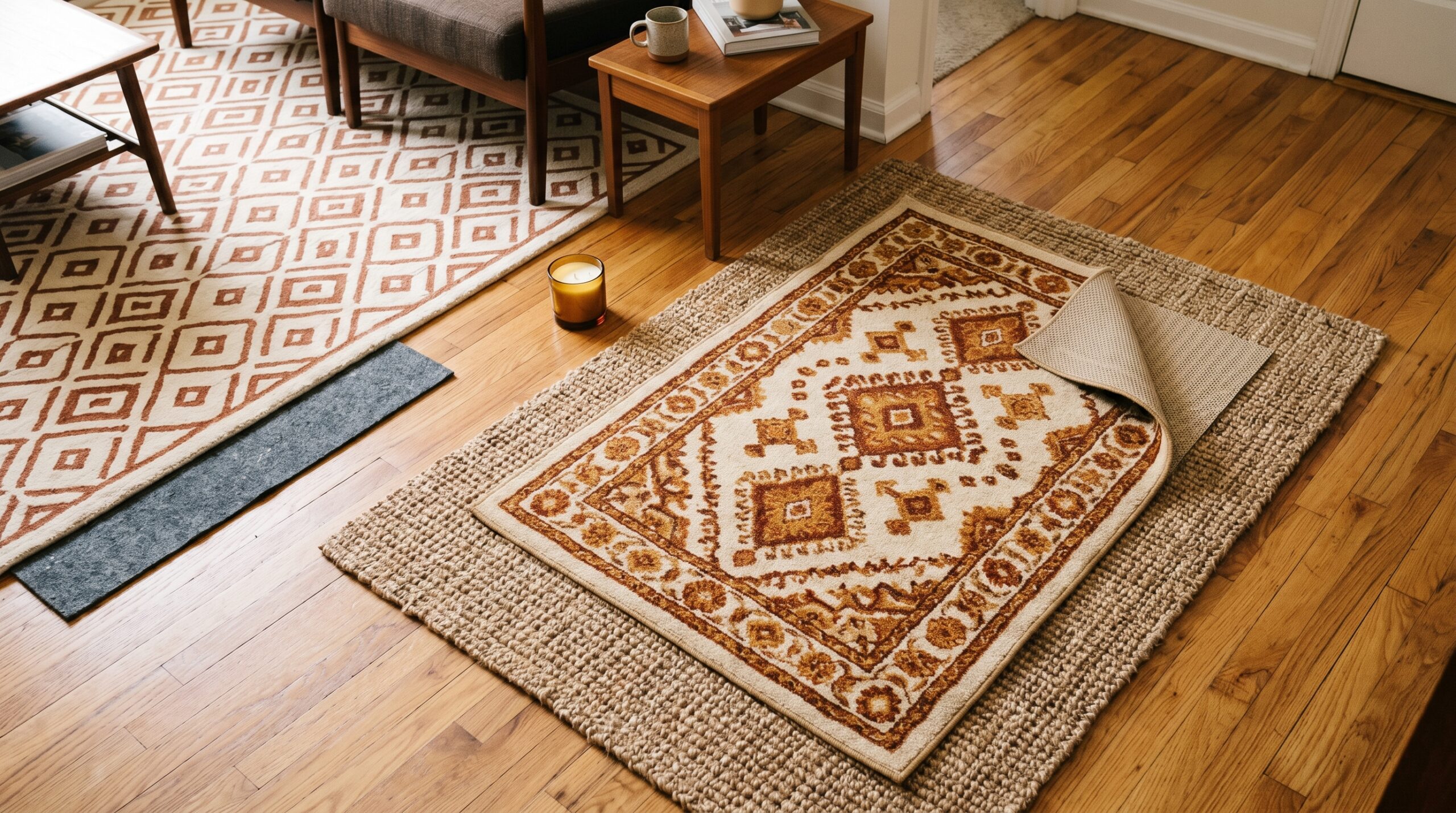
9. Washable Easy Jute 5×7 (the layering base)
When the sleep zone or reading nook wants a layered look (jute base plus smaller patterned topper), this is the base. Reads as jute, washes like polyester, lays flat under a thinner accent rug without the lump real jute creates at the seams. Shop the Washable Easy Jute 5×7 on Amazon
Washable Easy · 5′ x 7′ (rectangular) · washable jute-look weave, natural color · indoor/outdoor
Not for: under the 8×10 living rug. Layering an 8×10 over a 5×7 is backwards; the base should be smaller, the topper larger.
10. GORILLA GRIP Rug Gripper Pads, 8-pack
The corner-curl fix. A two-rug zoning setup means 8 rug corners minimum, and the ones at the zone transitions curl first because that’s where everyone walks. Reusable, leaves no residue, peels up clean at move-out. Shop the Gorilla Grip 8-pack on Amazon
Gorilla Grip · 8 pads per pack, 8″ x 6.5″ each · double-sided adhesive, reusable, renter friendly
Not for: thick high-pile rugs where the corner sits more than 1/4 inch off the floor.
What to look for in a studio zoning rug
Footprint over pattern. Browse by size first. An 8×10 in the wrong pattern is fixable. An 8×10 in the right pattern at the wrong size is a return and a reshipping fee.
Low pile for both zones. A studio’s two-rug setup means you walk between zones daily, and higher pile catches at the transition. Stay under 1/2 inch pile for both. Flatweaves under 1/4 inch are ideal for the sleep zone.
Washable or wipeable in the sleep zone. The living-zone rug can be polypropylene with a non-shed claim. The sleep-zone rug has to be washable. Skin cells and dropped lotions both end up in the sleep-zone rug. Plus the occasional spilled coffee. You will need to wash it.
Warmth match between zones. Pick a temperature (warm or cool) and stay there. Pairing a warm beige with a cool grey across two zones is the single most common reason a studio’s two-rug setup reads off.
A rug pad for anything 5×7 or larger. Two rugs without pads on hardwood lasts about three weeks before someone slides. Pad cost is 10 to 20 percent of the rug cost. Pay it.
For an outside read on rug sizing in small spaces, see Apartment Therapy’s guide to studio rug sizing.
FAQ
Can I use one big rug to cover the whole studio instead of two rugs?
You can, but then you’re not zoning, you’re carpeting. A single 9×12 across a 400-square-foot studio reads as wall-to-wall and removes the visual separation that makes a studio feel like multiple rooms. If your goal is open-concept, one rug works. If your goal is making the sleep zone feel separate, you need the two-rug rule.
What size rug goes under a queen bed in a studio?
A queen bed is 60 inches by 80 inches. A 5×8 positioned so the bottom 2/3 of the bed sits on the rug is the right size for most studios; 5×7 works if the bed is pushed against a wall. The rug extends 12 to 18 inches past the foot and 18 to 24 inches past each side. Go to 6×9 only if the bed is freestanding and visible from all four sides.
Should the living-zone rug and the sleep-zone rug match?
No. They should be in the same temperature family (both warm or both cool), but the pattern, scale, or secondary color should differ. Matching rugs read as a hotel suite. Coordinated-but-different rugs read as a home.
Do I need a rug pad under both zones?
Yes, unless the rug has built-in rubber backing (the washable runner and the BILEEHOME both do). For the 8×10 living rug and the 5×8 sleep rug, a pad is standard. The 1/4-inch RUGPADUSA covers the living zone; a thinner 1/8-inch works for the sleep zone if the rug is a flatweave.
Can I put a third rug between the two zones, like a runner?
Skip it. The bare floor between the zones is what makes the zoning work. A connecting runner cancels the visual break and the studio reads as one room with three rugs in it.