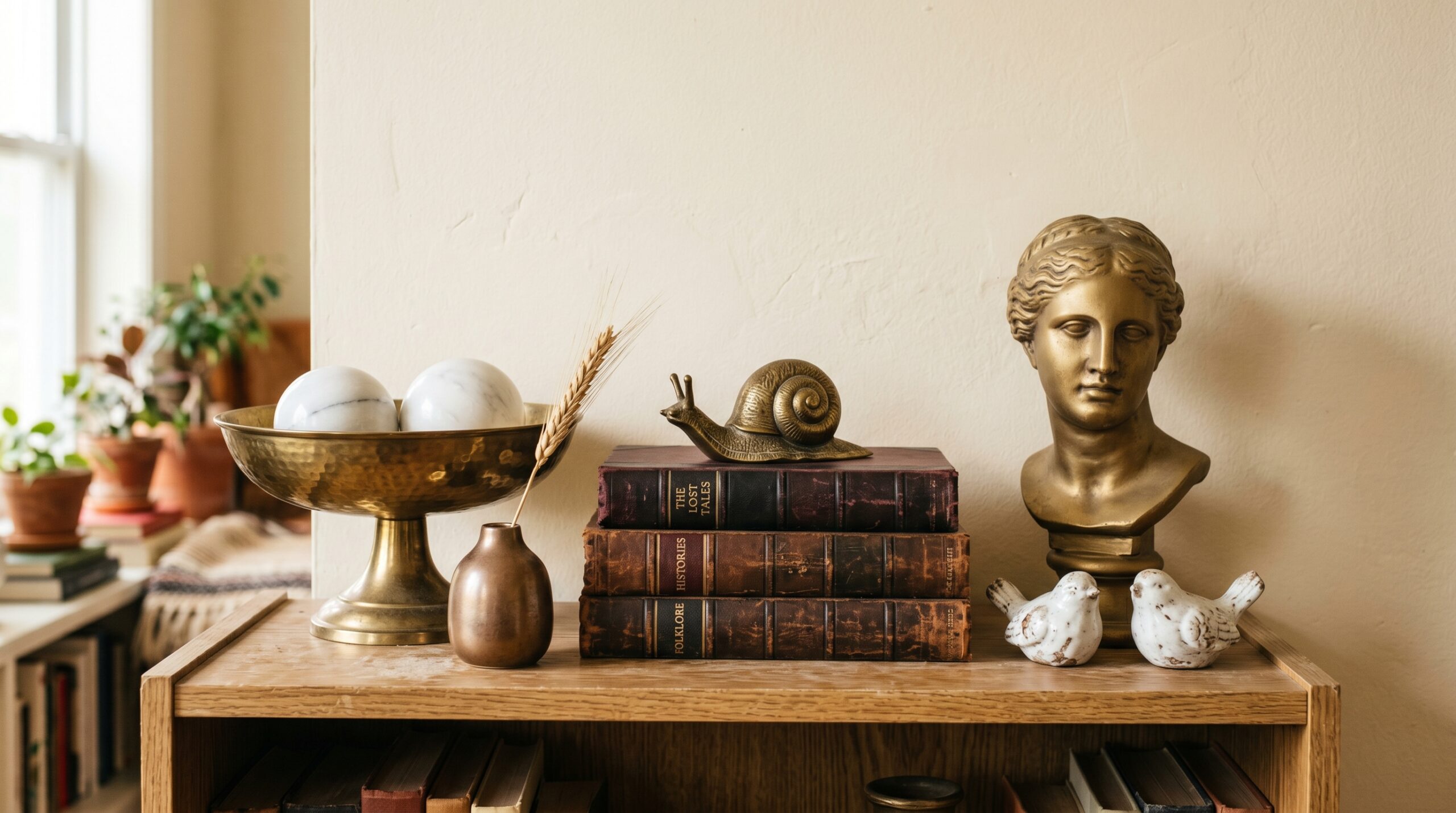
Cluttercore reads as charm when the objects look collected and as chaos when they look bought. The aesthetic depends almost entirely on the individual pieces, which is the part most starter guides skip. They tell you to layer trinkets, fill the shelf, build the vignette, and then leave you to figure out what those trinkets actually are.
I have spent a year buying, returning, and slowly curating the small-object layer of a 480 square foot studio. The picks below are the ones that earned their shelf space. Every one of them is on Amazon, every one has been verified in stock this week, and every one is small enough to fit in a real apartment without doubling as a tripping hazard.
I sorted them into three groups: the animal and insect figurines that give a shelf its personality, the sculptural focal points that anchor the eye, and the containment pieces that turn nine small objects into one composed arrangement. Buy across all three if you can. Cluttercore that pulls from one category alone reads as a collection, not a room.
This post contains affiliate links. If you buy something through one of my links, I may earn a small commission at no extra cost to you. I only recommend products I’d actually use myself.
As an Amazon Associate I earn from qualifying purchases.
How I picked
A long list of cluttercore knickknack guides exists on the internet, and most of them are recycled lifestyle photography with no actual buying advice. Here is what I tested for before recommending anything.
- It has to read across a room. The piece should announce itself from six feet away. Three-inch ceramic mice get lost. A two-inch brass snail does not, because the silhouette is unusual enough to register.
- The finish has to look aged on arrival. Cluttercore depends on patina. A shiny chrome figurine looks like a Christmas ornament; an antique brass one looks like it has been in the family.
- It plays well with one through-line material. Mine is brass. Yours might be wood or ceramic. Every pick below pairs cleanly with a brass-heavy shelf, but most also work with wood-led or ceramic-led palettes.
- It is small enough to rotate. Cluttercore stays alive when you swap objects between shelves seasonally. A piece bigger than nine inches tall is hard to rotate; everything below stays under that ceiling.
- It is buyable now. I verified every ASIN this week on the live Amazon page. No vintage one-offs, no “great if you can find one at an estate sale” picks.
The animal and insect figurines
This is the group that gives a shelf its personality. One of each, scattered between books and frames, does more work than any single large object.
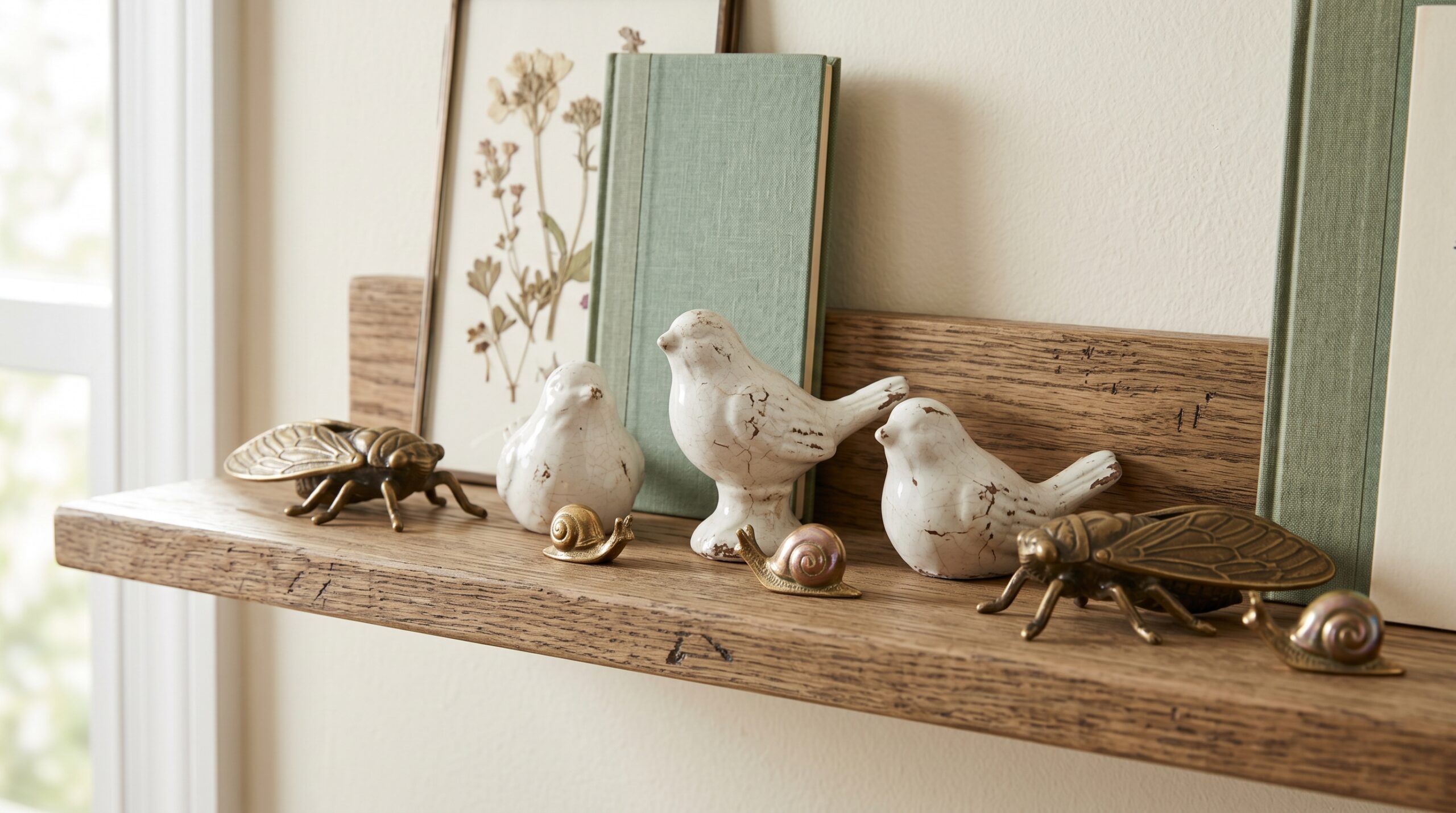
1. 5-Piece Brass Snail Statue Set (my budget starter pick)
The cheapest set on this list and the one I would buy first. Five tiny solid brass snails, each under two inches, scattered between books on a shelf or tucked beside a candle on a console. The shell shape is unusual enough to register from across the room, and the antique brass finish ages the rest of whatever surface you set them on. I have one nesting in the crook of a stack of poetry, one on the bathroom shelf next to an amber bottle, and three living together on the kitchen windowsill.
See the 5-Piece Brass Snail Set on Amazon →
Brass snail set · 1.61″L x 0.71″W x 0.94″H per piece · set of 5 · solid brass with antique finish
Not for: anyone who wants matching uniform figurines. These read intentional precisely because they are scattered, not lined up.
2. SnowOwl 6-Piece Brass Cicada and Beetle Set
If snails are the small move, beetles and cicadas are the bigger one. Six solid brass insect figurines in mixed sizes, finished in antique bronze. The cicada silhouette is unmistakable from across the room, which is exactly what a cluttercore shelf wants. I keep mine grouped on a single picture ledge as a “specimen drawer” effect, and rotate one or two onto other surfaces when I want a brass moment elsewhere. The bronze finish has held up six months without flaking, which I cannot say for the painted-resin insects I tried first.
See the SnowOwl Brass Cicada Beetle Set on Amazon →
SnowOwl · approx 3.54″L x 3.54″W x 1.18″H · 6-piece set · solid brass with bronze finish
Not for: anyone squeamish about insect imagery. They are stylized but they are recognizably bugs.
3. FICITI Distressed Ceramic Bird Figurines (set of 3)
Three plump-bodied birds in glazed ceramic with a hand-distressed finish, each about four and a half inches tall. The crackle glaze is the reason to buy this one. Most ceramic bird figurines on Amazon arrive looking like new outlet pottery; these arrive looking like they came from an estate sale. I have one on the bedroom dresser, one on the kitchen open shelf, and one in the bathroom on top of a stack of books. Spreading the set across rooms is the move; clustering all three together reads as repetition rather than collection.
See the FICITI Distressed Ceramic Birds on Amazon →
FICITI · 3.5″L x 2″W x 4.5″H each · glazed ceramic · distressed finish · set of 3
Not for: anyone wanting matching twin birds. These three are intentionally mismatched in posture and tone.
Cluttercore that pulls from one category reads as a collection, not a room.
The sculptural focal points
Every shelf needs one piece that the eye lands on first. Without it, the small objects compete for attention and the whole arrangement flattens. These are the three I keep returning to.
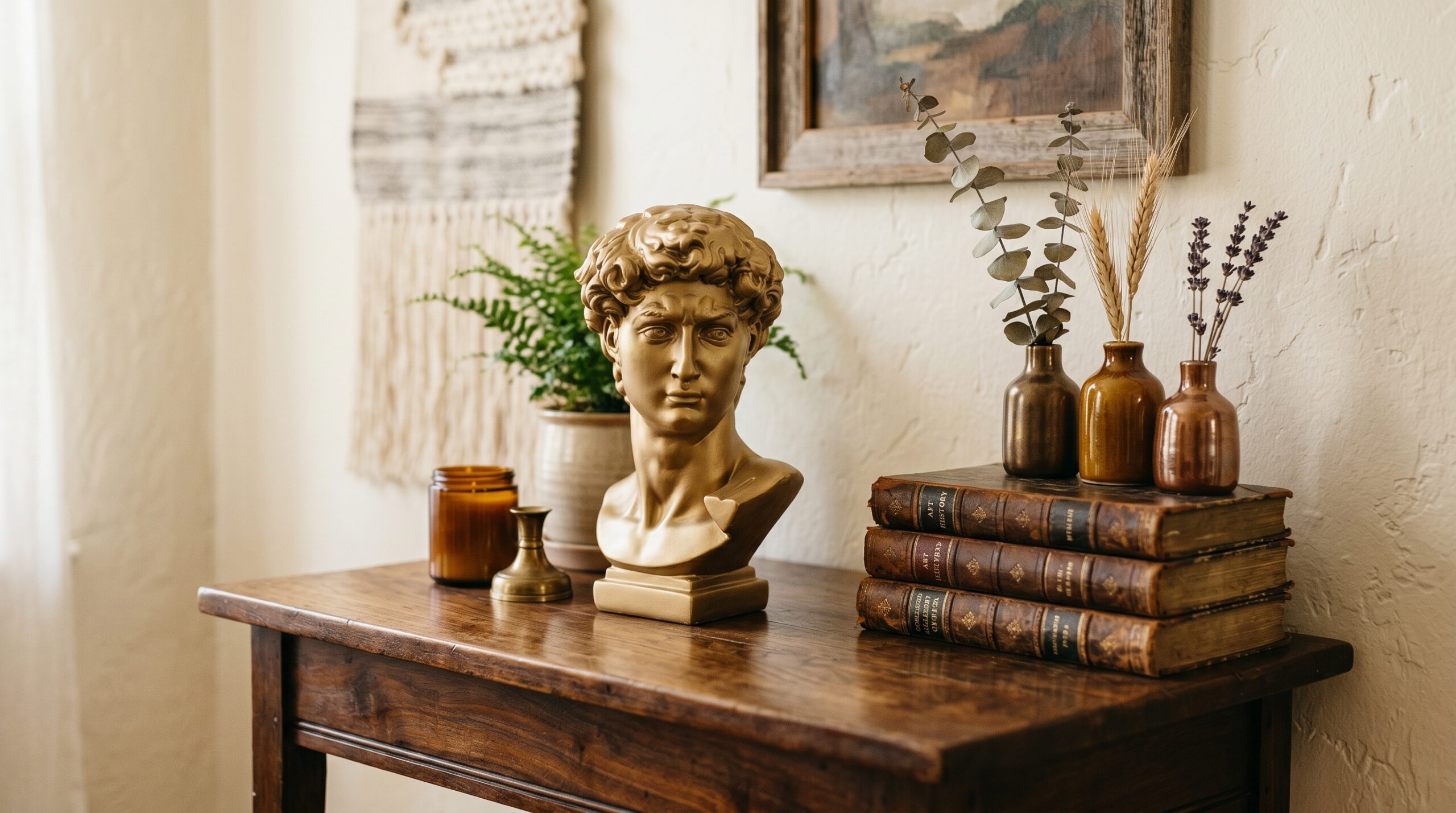
4. BOIHEGU 8-Inch Gold David Bust (the focal-point splurge)
The single most useful piece on this list and the only one that has to be a focal point rather than a layer. An 8-inch resin replica of Michelangelo’s David in a gold finish, sized to sit on a bookshelf or console without dominating the wall. The dark academia corner of cluttercore is built on classical busts, and this one is the cheapest credible version I have found. Three-and-a-half inches wide, felt pad on the base so it does not scuff a wood shelf, weighty enough to feel like more than craft-store resin.
See the BOIHEGU 8″ David Bust on Amazon →
BOIHEGU · 3.75″D x 3.5″W x 8″H · solid resin with gold finish · felt-padded base
Not for: anyone after a minimalist shelf. This piece is loud, and it should be.
5. Guichifun Resin Classical Fake Books
A single resin block sculpted to look like a stack of three antique hardcovers. I was skeptical of decorative books for two years before I tried this one. The detail on the spines is what sold me. Most faux-book stacks look obviously fake from across the room; this one passes for actual hardcovers until you pick it up. It does not open, it has no storage compartment, it is pure decor object. That is the point. It anchors a shelf the way a real book stack would but stays put when you dust.
See the Guichifun Decorative Books on Amazon →
Guichifun · 5.5″D x 4.5″W x 7.5″H · solid resin · dark academia palette
Not for: anyone who would rather use real books. If you have shelf space for real ones, do that. This is for the spots where you want the look without the depth.
6. ComSaf Ceramic Bud Vases (set of 3)
Three small ceramic bud vases in graduated metallic browns, each holding a single dried stem. Cluttercore wants vessels almost as much as it wants figurines, because vessels give the eye somewhere to rest between the busy objects. The metallic brown finish reads vintage rather than rustic, which keeps the set from skewing farmhouse. I scatter mine across surfaces with a single dried wheat stem or eucalyptus sprig in each; clustered together they read as one piece rather than three.
See the ComSaf Ceramic Bud Vases on Amazon →
ComSaf · 3.15″L x 3.15″W x 2.91″H largest · 100% ceramic · set of 3 in graduated browns
Not for: anyone wanting a single statement vase. These are filler vessels, not focal points.
The containment that makes it look composed
The piece nobody photographs in cluttercore tutorials is the tray or the bowl that pulls the rest together. Without containment, small objects scatter and the room reads as undusted. With it, the same objects look curated.
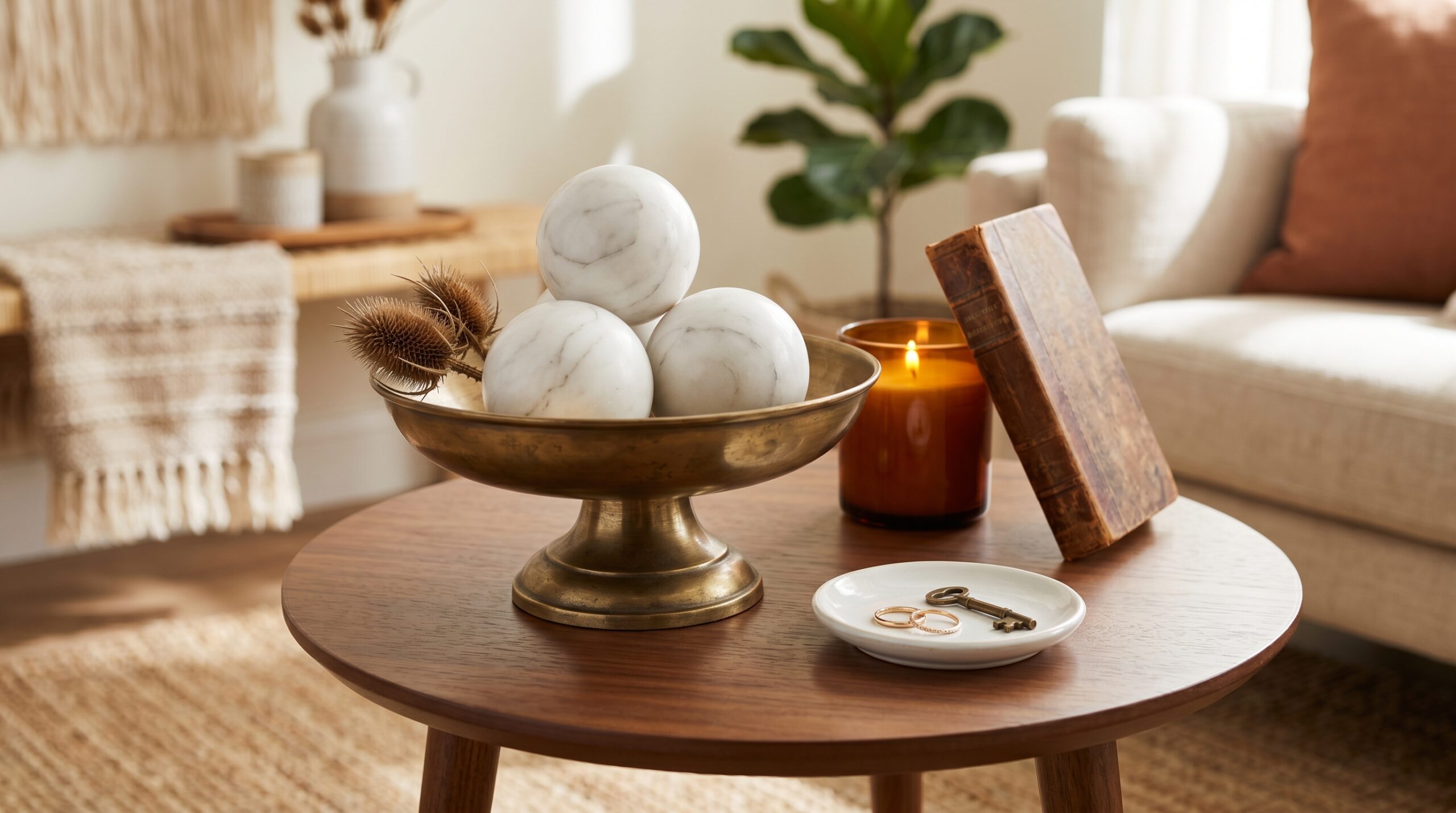
7. Serene Spaces 10-Inch Antique Brass Pedestal Bowl
The piece I would buy second after the David bust. A 10-inch pedestal bowl in antique brass-tone aluminum, light enough to move between rooms but visually heavy enough to anchor a console. I use mine on the entryway console with two of the marble spheres and a dried flower head; on rotation it sits on the coffee table holding three of the cicada figurines and a candle. Compote silhouettes are the cluttercore detail that signals collected rather than accumulated. This is the cheapest credible version I have found in brass tone.
See the Serene Spaces Brass Pedestal Bowl on Amazon →
Serene Spaces · 10″L x 10″W x 6.75″H · brass-tone aluminum · single bowl
Not for: anyone after solid brass. This is aluminum with a brass finish, which is why it stays under $50 and stays light.
8. Natural Marble Decorative Spheres
Real marble spheres, about two and a half inches in diameter, with natural gray veining. These are bowl filler more than standalone pieces. Two or three of them in the brass pedestal turn the bowl from “empty vessel” into “composed centerpiece,” and the cool white tone gives the warm brass a foil that keeps the palette from looking monotonous. I also pile one beside a stack of books and beside the David bust; the white sphere next to the gold figure reads as deliberate every time.
See the Marble Decorative Spheres on Amazon →
2.36″ diameter each · natural marble with gray veining · multi-piece set
Not for: anyone expecting matching spheres. Each piece has its own veining, which is the point but also the disclaimer.
9. COLLECTIVE HOME Ceramic Jewelry Tray
The personal-collection layer. A small round ceramic dish, just under five inches across, that holds the things you actually touch. I use mine on the nightstand for rings and the cuff I wear most days; a friend uses hers on the entryway console for keys and one earring she keeps losing. The dish itself reads as a cluttercore object even when empty, and when it holds something personal it gives the shelf a lived-in layer the brass and ceramic figurines cannot.
See the COLLECTIVE HOME Ceramic Jewelry Tray on Amazon →
COLLECTIVE HOME · 4.75″D x 4.75″W x 0.75″H · lead-free ceramic · white glaze
Not for: anyone wanting a deeper bowl. This is a flat dish, not a vessel for piling.
Common mistakes I keep seeing on cluttercore shelves
A few patterns that show up across the cluttercore tag on Pinterest and instantly read as Amazon-haul rather than collected.
Matching sets clustered together. Buying the FICITI bird trio and lining all three up on one shelf reads as the gift-shop display they came from. Spread the set across rooms, or break it up with two other figurines between them.
No through-line material. Pulling one brass piece, one ceramic, one wood, one resin onto the same surface with no repeated material reads as random. Pick one material that recurs across every shelf, no matter how minor the appearance. Mine is brass.
Skipping the bowl filler. A brass pedestal with nothing in it reads as a vessel waiting for a job. Three marble spheres or two small ceramic figurines inside it complete the composition.
Everything at one height. Cluttercore wants tall, mid, and small in every vignette. A David bust beside two ceramic birds beside one brass snail at the front reads composed. Three objects at the same height read as a row.
If you want the structural framework instead of the objects
Knickknacks alone do not make cluttercore work. The shelf they sit on, the trays they cluster on, the cloches and risers that frame them, all of that is the structural layer. I wrote about the cluttercore structure for a small apartment separately, and the framework there is what holds the objects in this post together.
If you want the moodier sister aesthetic, the dark cottagecore bedroom in a small apartment uses the same collected-object instinct in a deep-green and burgundy palette instead of the warm brass-led one here. For a more glam reading, the mob wife aesthetic in a small apartment leans on velvet and gold rather than brass and ceramic.
Frequently asked questions
What counts as a cluttercore knickknack?
A small decorative object with no functional purpose, ideally with some visual weirdness. Figurines, busts, paperweights, single ceramic vases, small framed objects, taxidermy or faux-taxidermy specimens. The defining trait is that it earns shelf space on aesthetics alone, not utility.
How many knickknacks does one small apartment need?
I aim for roughly one piece per linear foot of shelf or surface, across the whole apartment. A 480 square foot studio with two bookshelves, two console tables, and a kitchen open shelf can absorb around 30 to 40 small objects before the eye stops reading them as collected and starts reading them as crowded.
Can I do cluttercore with all-new Amazon orders?
Yes, if you mix categories. The reason all-Amazon cluttercore reads staged is that buyers grab one each of figurines, vases, books, and bowls from a single page and end up with no through-line. The picks above are deliberately a mix of brass, ceramic, resin, and marble so that the assembled shelf does not look like one cart.
How do I know which pieces to put together?
Start with the biggest piece (here, the David bust or the pedestal bowl), then layer in two or three medium pieces (vases or the ceramic birds), then scatter the small pieces (snails, cicadas) between them. Leave one empty corner of the shelf so the eye has somewhere to rest.
Will any of this damage rented shelves or surfaces?
No. Every piece in this post is tabletop or shelftop, not wall-mounted. The brass pedestal is the heaviest at around three pounds, and the felt-padded base of the David bust is the only piece designed to protect a wood surface. The rest are light enough to skip the felt pad question entirely.
The bottom line
Cluttercore knickknacks work when they look collected, and they look collected when you mix categories, repeat one through-line material, and contain the small pieces inside a tray or pedestal. The nine picks above are the working set I have actually used in a real small apartment, all current on Amazon, all under nine inches tall, all stripped of the “you should also love this” upsell that usually rides along with starter-pack guides.
The trend itself is tracked under cluttercore in the Pinterest Predicts 2026 report, which is where I watch for whether the aesthetic is still rising before I add another shelf.