This post contains affiliate links. If you buy something through one of my links, I may earn a small commission at no extra cost to you. I only recommend products I’d actually use myself.
As an Amazon Associate I earn from qualifying purchases.
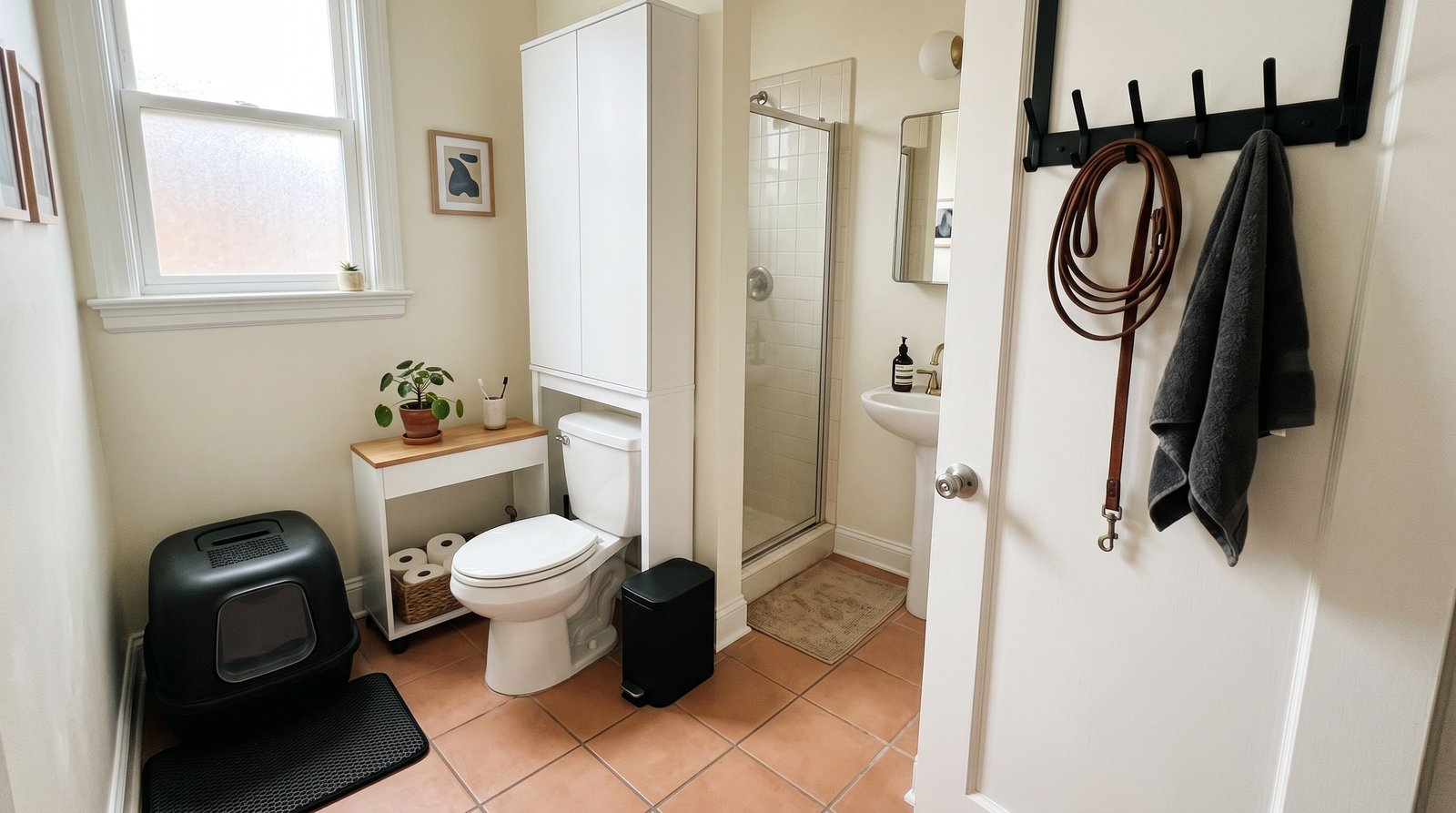
A tiny bathroom can fit a litter box. It can fit grooming supplies. It can fit a leash, a harness, a treat jar, and a paw cleaner. What it cannot do is fit all of those things and look like a bathroom instead of a pet supply closet.
I have lived in three rentals under 700 square feet with cats, and one with a small dog who treats every walk as a mud assignment. The bathroom always ends up being the pet utility room because there is nowhere else for litter scatter, wet leashes, and dirty paws to go without ruining the apartment. The fix is not “buy a bigger bathroom.” It is admitting which surfaces are pet zones and stacking storage upward so the floor stays clear.
These are the eight moves that turn a tiny bathroom into one that handles pet logistics without looking like one.
Step 1: Anchor the litter setup with a scatter-trap mat
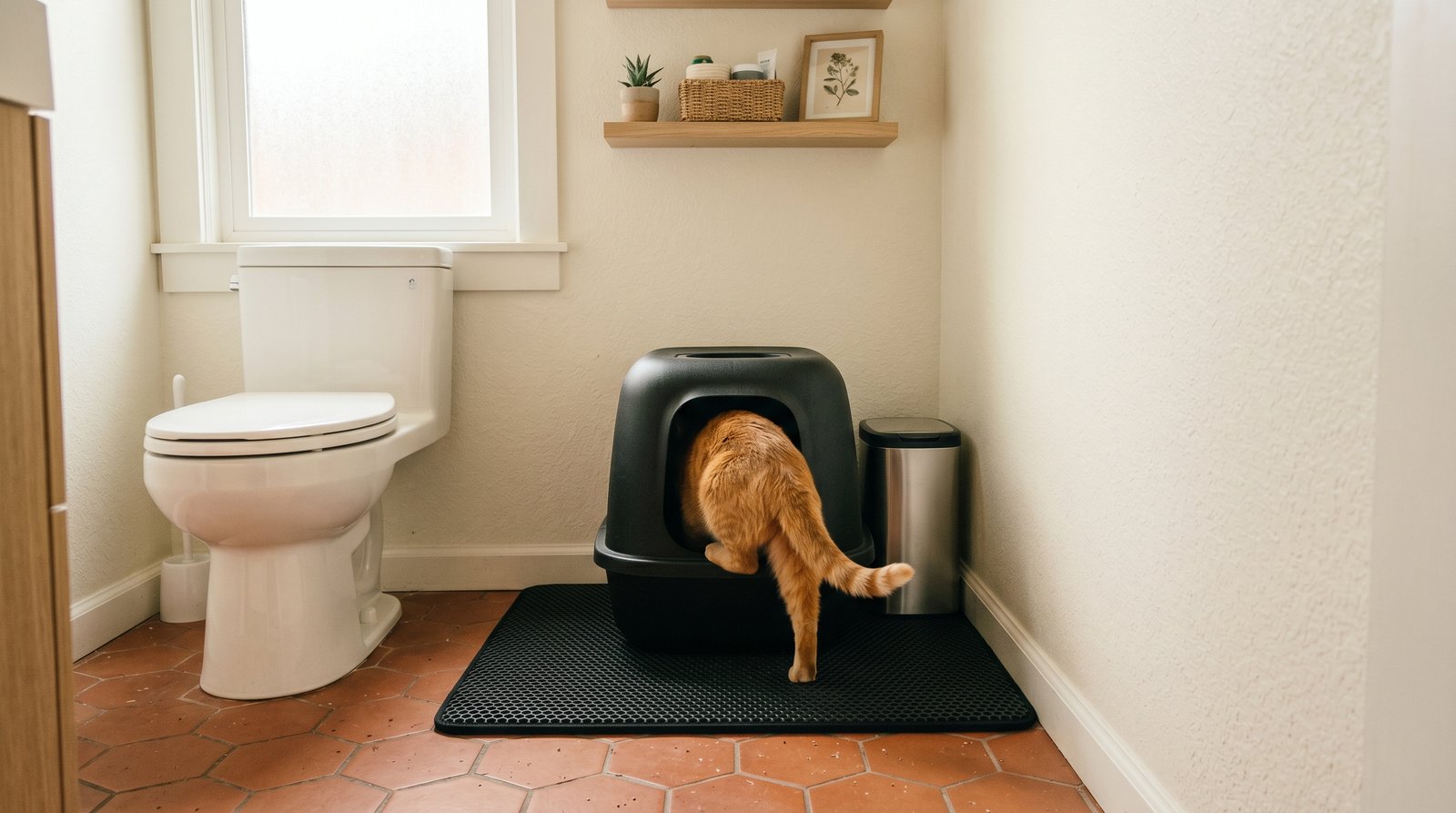
The footprint problem starts with litter scatter. In a normal bathroom, scattered litter is annoying. In a tiny one, scattered litter is the entire floor. The fix is a double-layer trapping mat that goes under the box and catches what falls off the cat’s paws. The honeycomb top layer lets the litter drop through to a sealed waterproof bottom, so the floor stays clean and the mat rinses off in the shower when it gets gross.
Pair the mat with a top-entry litter box. Top-entry boxes do two things that side-entry boxes cannot in a tiny bathroom. First, the grooved lid scrapes litter off the cat’s paws as they jump out, which cuts scatter by maybe 70 percent. Second, the hood contains odor and visual mess, so the litter box stops being the visual focal point of a 30-square-foot room.
Place the box in the gap between the toilet and the wall, or under the sink if there’s no plumbing in the way. The mat sticks out a few inches; that’s fine, the mat is the whole point.
Step 2: Put odor control next to the box, not the kitchen trash
The biggest mistake I see in pet-owner bathrooms is scooping the litter, walking it to the kitchen trash, and walking it back. The hallway picks up the smell. The kitchen trash gets full. The cat watches you do it every day.
A Litter Genie pail parked beside the litter box solves the round trip. The multi-layer refill bag seals odor for up to eight weeks, and the pail holds two weeks of soiled litter for one cat before it needs emptying. From the makers of Diaper Genie, so the sealing tech is the same one that hides actual newborn diapers.
The pail is compact enough to fit in the gap between the toilet and the wall, beside the litter box itself. One workflow, one corner of the bathroom, no laps through the apartment.
Step 3: Build a vertical wall over the toilet (with doors)
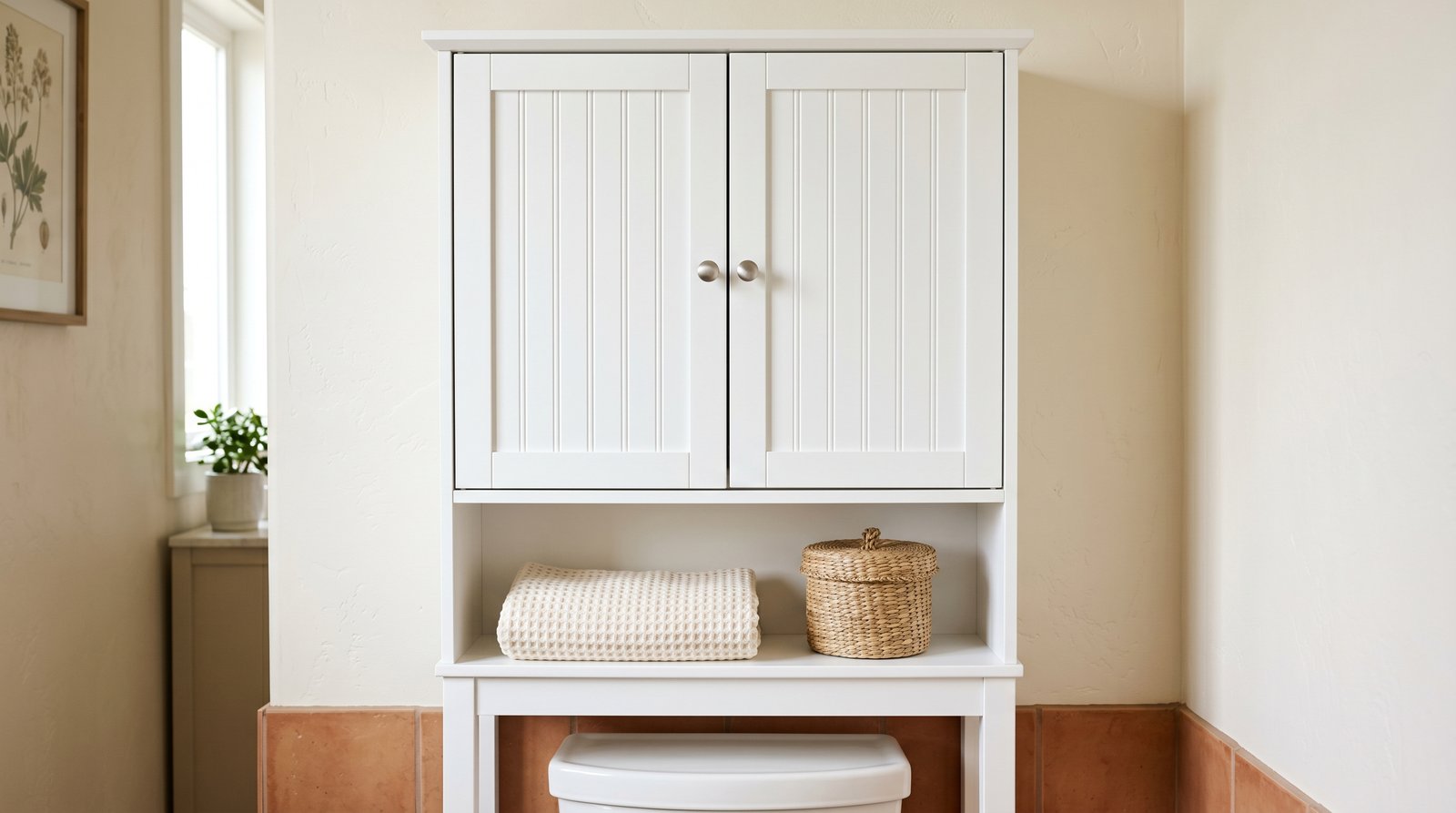
Pet supplies are ugly. Treat pouches, brushes, nail clippers, ear wipes, syringes for flea meds: none of it photographs well. The solution is hiding it inside a cabinet with doors instead of leaving it on an open shelf.
The Spirich over-toilet cabinet is the workhorse for this. It mounts over the toilet (33-inch clearance fits standard heights), has double doors that hide everything inside, plus an open lower shelf for grab-it-fast items like a hand towel or a roll of paw wipes. The beadboard paneling reads as bathroom rather than utility.
Inside the cabinet: brushes, nail clippers, ear wipes, the unfinished bag of treats, the spare flea collar. Outside, on the open lower shelf: only the things that look fine being seen. A seagrass basket, a candle, a hand towel.
Step 4: Use the toilet-wall gap (the 5 inches you’ve been wasting)
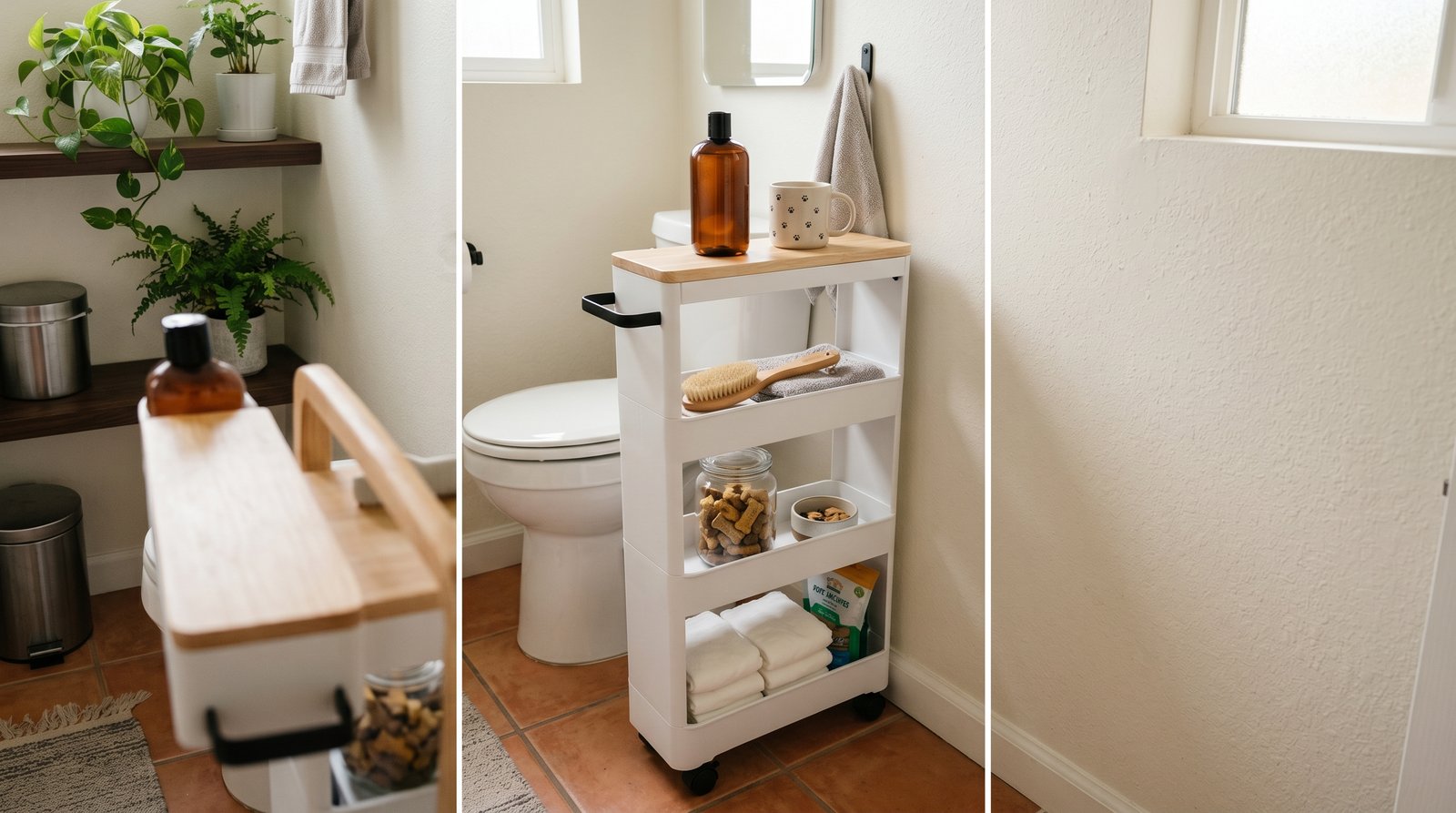
The gap between the toilet and the wall is usually four to six inches wide. Nothing standard fits there, so it stays empty. A 5-inch slim rolling cart is the answer.
This is the cart I use for grooming-day supplies that I do not want to dig through the cabinet for: pet shampoo, the wider brush, paw wipes, the treat jar that gets refilled monthly. Four tiers, 80-pound total capacity, wheels lock so it doesn’t roll when I yank a bottle off the top. The wooden top doubles as a surface for a soap dish or a small candle, so the cart blends into the bathroom palette instead of reading as a utility item.
When I need supplies, I roll the cart out by the handle. When I don’t, it lives flush against the wall and visually disappears.
Step 5: Send leashes and harnesses to the door
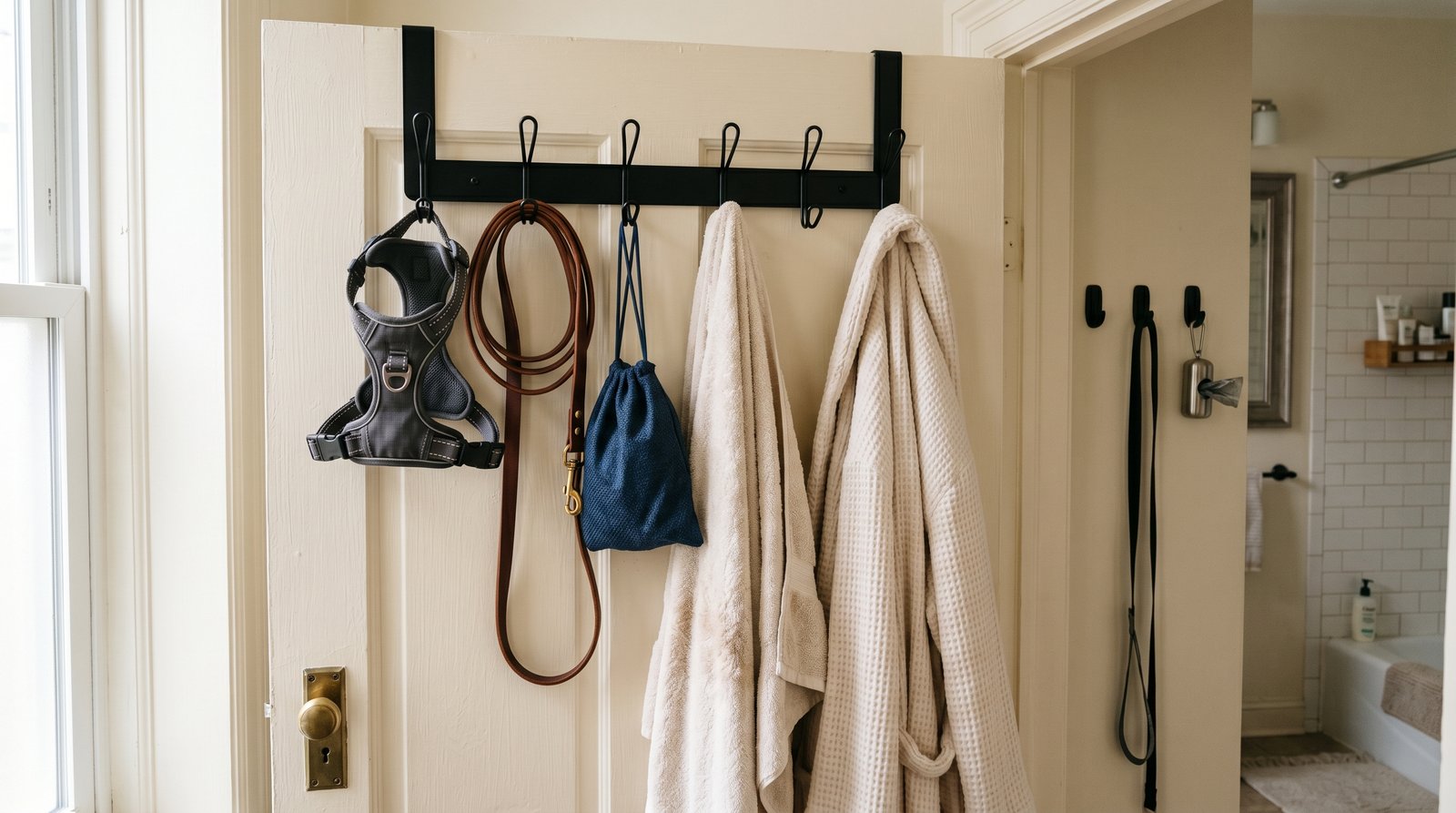
Leashes pile up. They get tangled. They drip after a wet walk and ruin whatever surface they land on. The bathroom door is the right place for them because the floor underneath is already tile, and a leash hung over the door drips into the tub or onto tile without ruining anything.
An over-door 6-hook rack installs in about 30 seconds (no drilling, no hardware). The sponge-padded back prevents door scratches, which matters for renters. Six double hooks handle: harness, leash, wet bath towel, poop-bag holder, and two human towels or robes. The bracket is thin enough that the door still closes flush.
If your bathroom door is already in use for towels, layer in Command 5-pound utility hooks on the tile next to the litter box. The product copy explicitly rates them for dog leashes; each hook holds 5 pounds, and the seven-pack handles a typical leash + harness + scoop + brush set without spilling onto the door.
Step 6: Hide everything that doesn’t look like decor
Open shelves in a tiny bathroom expose everything. Open shelves with a pet in the house expose treats, brushes, half-used bottles of ear cleaner. Even an organized open shelf reads as cluttered when the items on it are pet-coded rather than bathroom-coded.
A seagrass basket with a lid on the lower over-toilet shelf turns “pile of pet stuff” into “decor object that happens to contain pet stuff.” Roughly 9 inches by 5 inches, fits brushes, a few packets of dental treats, and a roll of paw wipes. The button-secured lid stays put so a cat does not paw it open.
This is the rule I follow: anything that is pet-functional but not pet-aesthetic goes in a closed container. The bathroom stops looking like a pet supply closet the moment you can’t see the pet supplies.
Step 7: Swap the trash can for one with a sealing lid
A regular open trash can in a pet-owner bathroom is asking for trouble. Dogs raid it. Cats fish out wipes. Smells from used flea-treatment packaging escape. The fix is a slim trash can with a soft-close sealing lid.
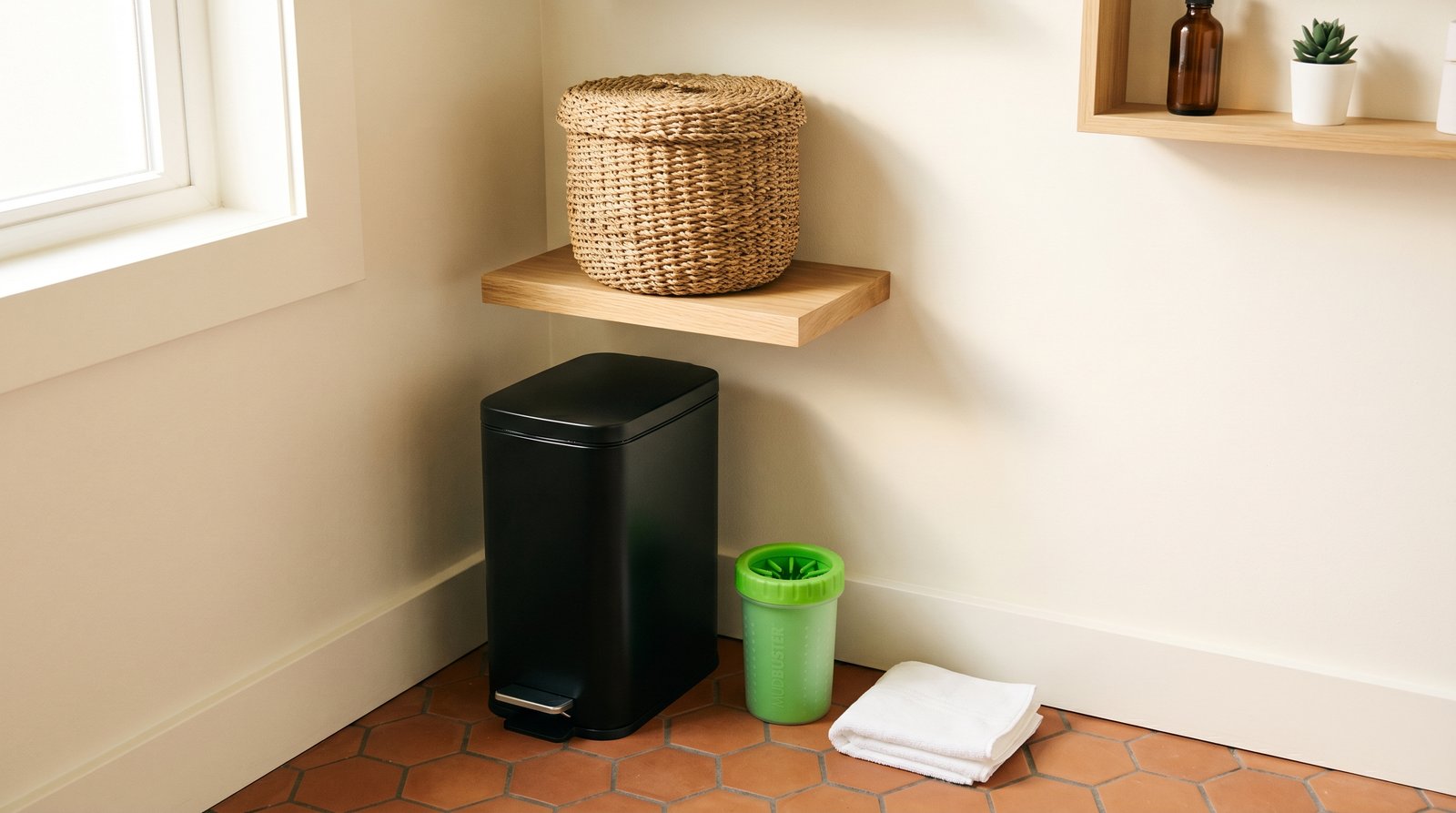
The 1.6-gallon capacity is right for a tiny bathroom; the step pedal keeps it hands-free (so you can dump poop bags and used wipes without touching anything); and the sealed lid blocks both odor and pet curiosity. Matte black hides fingerprints and disappears into a darker corner.
Replace your existing trash can in this order: pull the open one, slide the sealing one in the same spot, transfer the bag. Three minutes, no fuss, and the bathroom stops smelling like flea-treatment packaging the day after every dose.
Step 8: Put the paw cleaner where paws actually arrive
After a muddy walk, the dog gets carried to the bathroom and the paws get rinsed. In a tiny bathroom, the sink is too high to dunk paws into and the tub is too far. A Dexas MudBuster paw cleaner lives on the floor next to the sink and turns paw cleanup into a 15-second routine.
Fill it with water, dip the paw in, twist gently. The silicone bristles loosen mud without scrubbing. Dump and rinse, then dry with a microfiber towel from the over-door hook. The whole flow happens on tile, so no mud touches the rest of the apartment.
Size matters: small is for paws up to 2 inches across, medium for 1.5 to 2.5 inches, large for 2.5 to 3.5 inches. Measure your dog’s actual paw width before ordering; the wrong size either misses mud or makes the dog uncomfortable.
Common mistakes I keep seeing
Putting the litter box in the hallway “just for now.” It never goes back to the bathroom. The hallway becomes the litter room, and the bathroom stays unused-pet-supply-storage. Pick the bathroom corner once and commit.
Stacking everything on open shelves. Open shelves in a tiny bathroom amplify visual clutter. The cabinet-with-doors at Step 3 is the single biggest aesthetic win in this list.
Hanging the leash on a flimsy adhesive hook. Leashes plus the weight of a wet dog can yank a cheap adhesive hook off the wall. The Command 5-pound rating is the floor; do not use under-rated hooks for anything you’ll attach to a moving animal.
Skipping the sealing lid on the trash. Every reader who has a dog already knows why. If you have a cat, you’ll learn within a week.
Buying matching baskets without measuring shelves first. The shelf depth is the binding constraint, not the cuteness of the basket. Measure the over-toilet cabinet’s lower shelf depth, then shop.
Shop the look
The full system in one place:
- Litter mat: Honeycomb double-layer trapping mat
- Litter box: IRIS top-entry box
- Odor pail: Litter Genie Standard Pail
- Over-toilet cabinet: Spirich double-door cabinet
- Slim cart: XYZLVSI 5-inch rolling cart
- Over-door hooks: WEBI 6-hook rack
- Wall hooks: Command 5-pound utility hooks (7-pack)
- Lidded basket: Seagrass basket with lid
- Sealing trash can: Cesun 1.6-gallon matte black
- Paw cleaner: Dexas MudBuster
Frequently Asked Questions
Where should the litter box go in a tiny bathroom?
The gap between the toilet and the wall is the right slot if it’s at least 14 inches wide, since most top-entry boxes need that footprint. Under the sink works if the plumbing doesn’t get in the way. Avoid placing the box in front of the tub or against the door swing; both interrupt daily flow and make the bathroom feel smaller than it is.
Will an over-toilet cabinet hold pet supplies safely?
Yes, with the anti-toppling fitting anchored to the wall. Standard over-toilet cabinets are sized for toiletries (3 to 5 pounds per shelf), which covers brushes, treat bags, and grooming bottles without strain. Heavier items like a litter genie or a bagged litter refill belong on the floor below, not inside the cabinet.
Can I do all of this without drilling holes (renter setup)?
Eight of the ten products are no-drill. The over-toilet cabinet uses an anti-toppling fitting that anchors to one stud or two drywall anchors (a single small hole most landlords ignore), but you can skip the anchor and rely on the cabinet’s weight if it sits between two walls. The over-door rack, slim cart, Litter Genie, mat, top-entry box, lidded basket, trash can, and paw cleaner all require zero hardware.
What about the odor when the litter box is in the bathroom?
The Litter Genie pail next to the box is doing 80 percent of the odor work. The remaining 20 percent comes from scooping daily (not every few days) and running a quiet bathroom exhaust fan when you can. Avoid air fresheners that mask rather than absorb; charcoal bags inside the over-toilet cabinet are cheap and actually pull odor out of the air.
Does the paw cleaner replace a full bath after a muddy walk?
For routine mud and dust, yes. For full mud-bath territory (deep puddles, beach sand), the MudBuster handles the first pass and a quick tub rinse handles the rest. The point is that 90 percent of muddy-paw days are just dusty paws, and the MudBuster makes those a 15-second routine instead of a tub setup.
Keep reading
For more no-drill tiny-bathroom setup that works alongside this pet system: small bathroom storage ideas that skip the drill, small bathroom corner storage that actually holds up, and closet-door hanging organizers for renters. For broader pet-friendly small-space advice, the ASPCA’s general cat care guidance is a useful starting point for anything beyond bathroom logistics.